Vitamin B12 Deficiency: Symptoms, Causes & How to Treat It
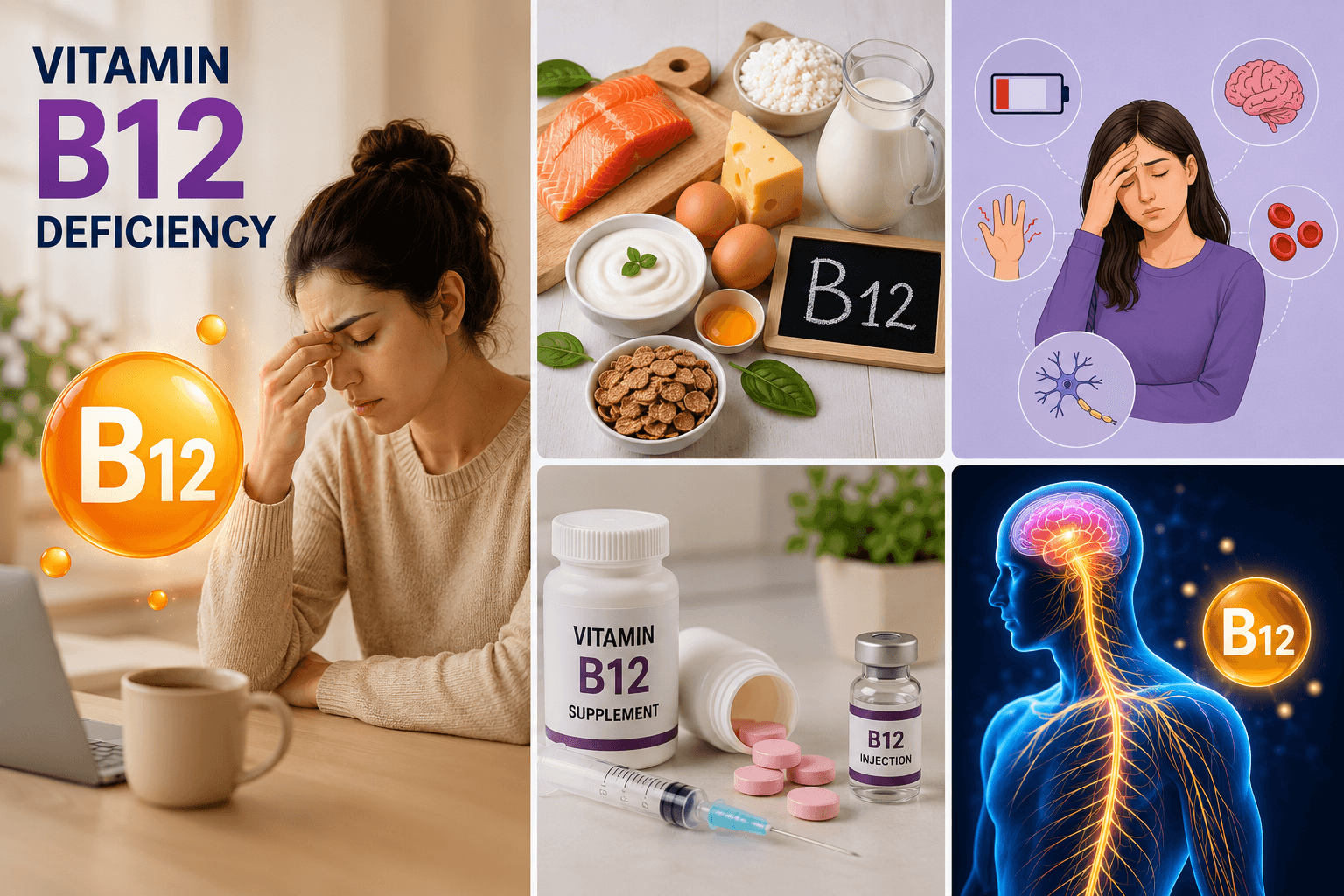
Vitamin B12 Deficiency is a common but often overlooked health condition that can develop slowly over time. Vitamin B12 (also called cobalamin) is a water-soluble vitamin essential for healthy nerve function, red blood cell formation, and DNA synthesis. When the body does not get enough of this important nutrient, it can lead to tiredness, weakness, memory problems, numbness, and, if left untreated, permanent nerve damage. Early diagnosis and proper treatment are key to preventing serious complications.
Vitamin B12 is obtained mainly from animal-based foods and fortified products. Its absorption depends on adequate stomach acid and a protein called intrinsic factor. Conditions such as atrophic gastritis, bariatric surgery, certain medications, or strict vegetarian and vegan diets can reduce absorption and increase the risk of deficiency. This guide explains the symptoms, causes, diagnosis, treatment, and prevention of Vitamin B12 deficiency using evidence-based information.
What is Vitamin B12 and Why It Matters
Vitamin B12 (cobalamin) is essential for healthy nerves and blood. It acts as a cofactor for enzymes in DNA synthesis and myelin formation. B12 deficiency impairs DNA production, leading to megaloblastic anaemia (large, immature red blood cells) and disrupts myelin in nerves. Without enough B12, homocysteine and methylmalonic acid accumulate, which may damage nervous tissue. Adults need about 2.4 μg/day; poor intake or absorption over years can deplete liver stores and trigger symptoms.
Symptoms of Vitamin B12 Deficiency
Vitamin B12 deficiency can affect multiple body systems. Common symptoms (which often appear gradually) include:
- Neurological symptoms: Numbness or “pins and needles” in hands and feet, tingling, muscle weakness, unsteady gait or poor coordination, and balance problems. Some people experience memory problems, confusion, mood changes or depression. In severe cases, subacute combined degeneration of the spinal cord can occur (leading to loss of vibration sense and reflex changes). Vision disturbances and even dementia-like symptoms can happen in chronic deficiency.
- Haematological (blood) symptoms: B12 deficiency causes macrocytic (megaloblastic) anaemia. Symptoms include fatigue, weakness, shortness of breath on exertion, palpitations, and pale skin. Signs of hemolysis (like mild jaundice) may appear due to fragile red blood cells. Uncommonly, low platelets or leukopenia can occur.
- Other symptoms: Patients may have a smooth, red, sore tongue (glossitis) and mouth ulcers. Gastrointestinal symptoms like nausea, vomiting or diarrhea can occur. Some experience appetite loss, weight loss, or general malaise. Psychological effects include irritability or depression.
Because these symptoms are non-specific, B12 deficiency is often overlooked. Importantly, neurological symptoms may occur even without anaemia. A thorough history should note diet, medications and GI problems.
Causes and Risk Factors
Vitamin B12 deficiency arises from inadequate intake or poor absorption of B12. Key causes include:
- Dietary insufficiency: Strict vegan or vegetarian diets (no meat, fish, dairy or eggs) lack natural B12. Without fortified foods or supplements, vegetarians can become deficient after a few years. Worldwide, B12 deficiency is much more common in populations with low animal food intake.
- Malabsorption: Conditions affecting the stomach or ileum can prevent B12 uptake. Pernicious anaemia (autoimmune destruction of intrinsic factor or parietal cells) is a common cause in older adults. Gastric bypass or gastrectomy surgeries remove the B12 absorption site or IF source. Chronic gastritis (e.g. due to H. pylori) also reduces acid and IF. Any disease of the terminal ileum (Crohn’s disease, celiac disease, tropical sprue, tapeworm infection) or pancreatic insufficiency impairs B12 absorption.
- Medications and toxins: Long-term use of proton pump inhibitors or H2-blockers (for reflux) and metformin (for diabetes) can reduce B12 absorption. Recreational nitrous oxide (laughing gas) inactivates B12 and can precipitate acute deficiency.
- Other risk factors: Older age (>60 years) often leads to lower stomach acid and higher deficiency risk. Certain genetic or rare conditions (e.g. congenital IF deficiency) can cause early deficiency. Pregnancy or breastfeeding in a deficient mother can also put infants at risk.
Red-flag risk factors: Table 1 lists common risk factors. If present, consider monitoring or early supplementation.
Table 1: Risk factors for Vitamin B12 deficiency
- Diet: Vegan/strict vegetarian diet
- GI surgeries: Gastric bypass, ileal resection, gastrectomy
- GI diseases: Pernicious anaemia (autoimmune gastritis), celiac, Crohn’s, H. pylori gastritis
- Medications: Metformin, long-term PPIs/H2-blockers, anticonvulsants
- Lifestyle: Excessive alcohol use, smoking
- Age/Ethnicity: Over 60s, some Asian diets low in B12
Diagnosis of Vitamin B12 Deficiency
Diagnosis begins with suspicion when patients have compatible symptoms or risk factors. Laboratory evaluation typically includes:
- Serum Vitamin B12: A low level suggests deficiency. Most labs use ~150–250 pg/mL as the cutoff. Levels <150 pg/mL (≈111 pmol/L) are generally considered deficient. However, ‘normal’ B12 doesn’t rule it out. Up to 30–40% of symptomatic patients may have levels in the low-normal range.
- Methylmalonic Acid (MMA): If B12 is low-normal or symptoms are strong, check MMA. Elevated MMA (>0.27 µmol/L) is a sensitive early marker of deficiency.
- Homocysteine: High homocysteine (>15 µmol/L) also indicates B12 (or folate) deficiency, though it’s less specific because folate or kidney issues can raise it.
- Complete blood count: Macrocytosis (MCV >100 fL) or megaloblastic anaemia supports the diagnosis. However, if folate is supplemented, anaemia may be masked; one should not rely solely on CBC to rule out B12 deficiency.
- Autoantibodies: If pernicious anaemia is suspected (especially with gastrectomy history or other autoimmune disease), test anti-intrinsic factor and anti-parietal cell antibodies. Positive anti-IF is very specific for pernicious anaemia.
Treatment of Vitamin B12 Deficiency
According to the NIH Office of Dietary Supplements,https://ods.od.nih.gov/factsheets/VitaminB12-HealthProfessional/ treatment depends on the underlying cause and the severity of the deficiency. Mild cases may improve with oral vitamin B12 supplements, while severe deficiency or poor absorption may require vitamin B12 injections prescribed by a healthcare provider.
Treatment replaces B12 and addresses the cause. Key options:
- Diet and Oral Supplements: For dietary deficiency or mild cases, high-dose oral B12 can replenish stores. Foods naturally rich in B12 include meat, poultry, fish (especially salmon, tuna), shellfish (clams, oysters), dairy (milk, cheese, yogurt) and eggs. Fortified foods (breakfast cereals, nutritional yeast, fortified plant milks) are crucial for vegans. Over-the-counter B12 supplements (cyanocobalamin or methylcobalamin) in doses of 1,000–2,000 µg daily can correct most dietary deficiencies. A typical approach is 1 mg (1000 µg) orally every day or every other day until levels normalize, then maintenance with 25–100 µg/day or continued high intake.Food SourceServingVitamin B12 (mcg)%DVBeef liver (cooked)3 oz (85 g)70.72,945%Clams (cooked)3 oz17.0708%Oysters (cooked)3 oz14.9621%Salmon, Atlantic (cooked)3 oz2.6108%Tuna, canned (water)3 oz2.5104%Ground beef (lean)3 oz2.4100%Milk (2% fat)1 cup1.354%Plain yogurt (non-fat)6 oz (170 g)1.043%Fortified cereal (1 serving)Varies (25% DV)0.625%Cheddar cheese1.5 oz (42 g)0.519%Egg (large, cooked)1 egg0.519%Fortified nutritional yeast~1/4 cup (15 g)8.3–24346–1,000%Table: Vitamin B12 content of select foods. (DV = 2.4 mcg, daily value.) Many foods high in B12 are of animal origin. Fortified cereals or yeasts can be essential for vegans.
- Oral vs Intramuscular Therapy: In pernicious anaemia or severe malabsorption, intramuscular (IM) injections of B12 (usually hydroxocobalamin in the UK or cyanocobalamin in the US) are often used. UK guidelines recommend 1 mg IM three times a week for two weeks (until improvement), then maintenance (often 1 mg every 2–3 months). In the US, a common regimen is 1000 µg IM weekly for 4–8 weeks, then monthly. High-dose oral cyanocobalamin (1–2 mg daily) can also be effective even in pernicious anaemia because a small percentage is absorbed passively. The advantage of injection is faster repletion, but oral is easier and less costly. Both routes normalize blood B12 levels comparably after a few months. Evidence indicates 1000–2000 µg/day oral is as effective as IM for most patients.
- Supplement forms: Most supplements use cyanocobalamin, but methylcobalamin or hydroxocobalamin are alternatives. There is no clear difference in absorption between forms. Sublingual tablets or nasal gels exist, but oral tablets are usually sufficient.
- Monitoring and Follow-up: After starting treatment, clinicians often check blood counts and reticulocytes in 1–2 weeks to confirm response. Haemoglobin and MCV typically normalize within ~8 weeks. Routine B12 level checks are usually unnecessary unless symptoms recur. If neuropathy was present, improvement may lag; patients should be re-assessed clinically and with blood tests at intervals. Address the underlying cause (e.g. lifelong supplements if pernicious anaemia).
Recovery Timeline and Outcomes
With treatment, haematological improvements are rapid: reticulocyte count rises in 3–4 days and anaemia often lifts by 2–3 weeks. Neurological recovery starts more slowly; patients often notice reduced tingling and improved strength within 1–2 weeks of adequate therapy. However, longstanding nerve damage may take 3–6 months (or longer) to substantially improve. One review notes most neuropathy symptoms improve within several months, though sensory deficits may take up to a year to resolve. Prognosis is best when treatment begins early. Younger patients and those without severe deficits recover fully, while older patients or those with advanced symptoms may have residual issues.
Expected timeline: Blood levels and energy often improve first (days–weeks). Follow-up blood counts at ~1 and 8 weeks can confirm treatment success. Never stop therapy prematurely; even if you feel better, continue as prescribed to replenish stores and prevent relapse.
Prevention of Vitamin B12 Deficiency
Preventing B12 deficiency relies on a B12-inclusive diet or supplements:
- Diet: Eat animal foods regularly (meat, fish, dairy, eggs) or B12-fortified foods (cereals, plant milks, nutritional yeast). Check nutrition labels to ensure adequate B12 content.
- Supplements: Vegans and vegetarians should take a B12 supplement (e.g. 25–100 µg daily) or consume fortified foods daily. Patients on long-term metformin or PPIs may benefit from periodic B12 screening or low-dose supplementation.
- Special groups: Older adults (over 60) often have reduced absorption; routine moderate supplementation (even as part of a multivitamin) can be wise. Pregnant and breastfeeding women should ensure enough B12 for fetal/infant needs.
- Awareness: Doctors and pharmacists should monitor at-risk patients. There is no general population screening, but anyone with suggestive symptoms (unexplained neuropathy, anaemia) should be tested. In areas with malnutrition, WHO recommends fortification of foods (though B12 fortification is not as widespread as folate).
By maintaining B12 stores, you avoid the debilitating effects on nerves and blood. If you have risk factors, discuss B12 status with your healthcare provider.
Frequently Asked Questions
Q1: What are the first signs of B12 deficiency?
Early signs are often fatigue, weakness, and pallor from developing anaemia. Neurologically, you may notice subtle numbness or “pins and needles” in fingers and toes. Mood changes like irritability or mild memory lapses can also appear. Because symptoms are gradual, they are often attributed to other causes until more severe.
Q2: Who is most at risk for vitamin B12 deficiency?
Risk is highest in vegans or strict vegetarians (no B12 foods), people with pernicious anaemia or stomach surgery, those with Crohn’s or celiac disease, and the elderly (over 60). Long-term users of acid-reducing drugs (PPIs, H2 blockers) or metformin (for diabetes) should also be aware, as these can reduce B12 absorption. A family history of pernicious anaemia (an autoimmune condition) also raises risk.
Q3: How is vitamin B12 deficiency diagnosed?
Your doctor will order blood tests. A low serum B12 level (typically <150–250 pg/mL) is suggestive. Often, a complete blood count shows high MCV (macrocytosis). If the diagnosis is uncertain, elevated methylmalonic acid (MMA) and homocysteine levels confirm deficiency. If pernicious anaemia is suspected, anti-intrinsic factor antibodies can be tested. Early diagnosis (before nerve damage) is ideal.
Q4: Can B12 deficiency cause nerve damage? Is it permanent?
Yes, prolonged B12 deficiency can cause subacute combined degeneration of the spinal cord, leading to numbness, ataxia, and even paralysis. Fortunately, early treatment often reverses symptoms. Full recovery may take months. If deficiency is chronic, some nerve damage (especially vibration sense) can persist. Hence, don’t ignore symptoms like tingling or balance problems – see a doctor promptly.
Q5: What foods are highest in B12?
Top sources include clams (shellfish), liver (beef or lamb), fish (salmon, tuna), meat, poultry, dairy and eggs. For example, a 3-oz serving of cooked beef liver has about 70 µg (almost 30,000% DV), while 3 oz of cooked salmon has ~2.6 µg (110% DV). Fortified foods like cereals or nutritional yeast can provide B12 to vegetarians. See Table above for details.
Q6: How fast do B12 supplements work?
Oral or injectable B12 usually corrects blood levels within weeks. Red blood cell production starts improving in 3–4 days (via reticulocyte surge), and anaemia often lifts by 2 months. Neurological symptoms begin to abate after 1–2 weeks, but full nerve recovery may take 3–6 months. If severe symptoms persist or worsen after several weeks, follow up with your doctor.
Conclusion
Vitamin B12 deficiency is common and treatable. By recognising symptoms (fatigue, anaemia, numbness) and understanding the causes (diet, malabsorption, medications), you can seek timely testing and management. Treatment with diet changes, supplements or injections is highly effective. Prevention – through a B12-rich diet or supplements, especially for vegans and older adults – ensures you keep your nerves and blood healthy. Always discuss any concerns with a healthcare professional.
Calls to Action: If you have symptoms or risk factors, consider getting a B12 blood test. Share this article to spread awareness about B12 deficiency. Talk to your GP about B12 supplements if you follow a strict vegetarian diet or take long-term acid-reducing medication. Stay proactive about your B12 health.