Top 10 High-Protein Fruits for Weight Loss and Muscle Support
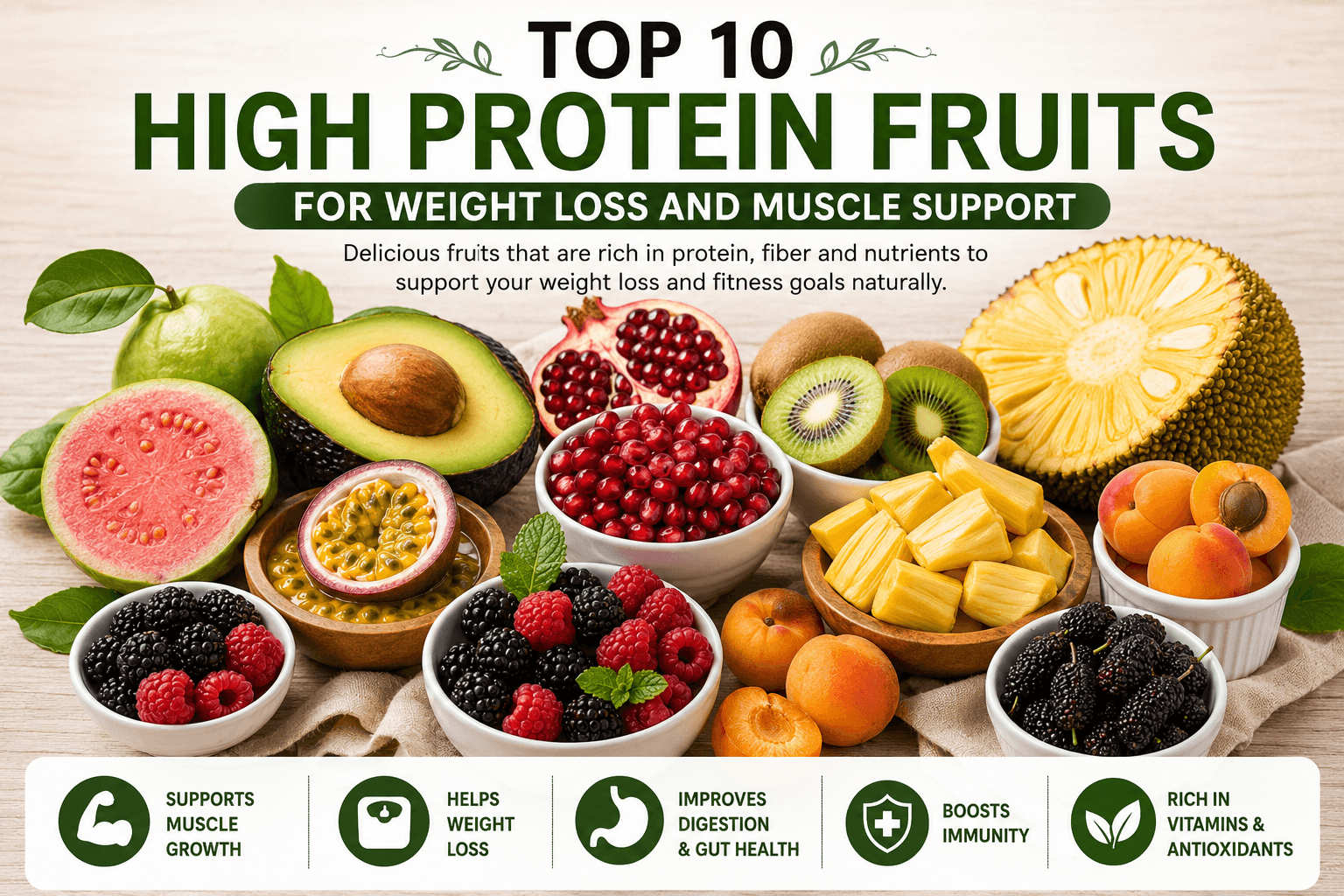
Focusing on high-protein fruits can help boost satiety and support muscle repair while keeping calories relatively low. Many fruits like guava, passionfruit, and berries deliver notable protein along with fiber, water and nutrients that aid weight loss. For example, 165g of guava (1 cup) provides ~4.2g protein, 8.9g fiber, and only 112 kcal. Similarly, a medium avocado has ~3g protein, 10g fiber and ~240 kcal, making it a filling, nutritious choice. In this guide we analyse Top 10 High-Protein Fruits for Weight Loss and Muscle Support, giving USDA-backed protein, calorie and fiber values per serving, plus practical tips, recipes, storage and allergy notes. We include a comparison table and a meal-plan flowchart.
How High Protein Fruits Help with Weight Loss and Muscle Support
High-protein fruits can modestly contribute to daily protein goals, aiding muscle recovery and maintenance. Even small protein amounts (often 1–5g per serving) help curb hunger and reduce cravings. Combined with high fiber and water, they promote fullness: diets rich in fibrous fruits correlate with slight weight loss over time. For example, one study found that increasing berry intake (high in fiber) was linked to a 1–1.5 lb weight loss over 4 years. Fruits’ fiber slows digestion and adds bulk, boosting satiety with minimal calories. In short, high-fiber, protein-containing fruits can help replace higher-calorie snacks and support a balanced diet.
Comparison Table of the Best High Protein Fruits
Source: Protein, calorie, and fiber values are based on the USDA FoodData Central database https://fdc.nal.usda.gov/
| Fruit | Protein (per 100g) | Protein (typical serving) | Calories (per serving) | Fiber (per serving) | Best Uses |
|---|---|---|---|---|---|
| Guava | 2.6 g | 4.2 g (1 cup, 165g) | 112 kcal (1 cup) | 8.9 g | Smoothies, salsas, snacks (eat raw or grilled). |
| Avocado | 2.0 g | 3 g (½ medium, ~100g) | 120 kcal (½ medium) | 5 g (½ medium) | Toast, salads, smoothies, healthy dressings. |
| Passionfruit | 2.2 g | 5.2 g (1 cup, 236g) | 229 kcal (1 cup) | 24.5 g | Yogurt, oatmeal toppers, juices or sauces for chicken/fish. |
| Jackfruit | 1.7 g | 2.8 g (1 cup, 165g) | 157 kcal (1 cup) | 2.5 g | Stir-fry “pulled pork” substitute, curries, smoothies or chips. |
| Blackberries | 1.4 g (≈2 g in 144g) | 2 g (1 cup, 144g) | 62 kcal (1 cup) | 8 g | Salads, yogurt toppings, low-calorie desserts, quick snacks. |
| Raspberries | 1.2 g (≈1.5 g in 123g) | 1.5 g (1 cup, 123g) | 64 kcal (1 cup) | 8 g | Smoothies, salads, cereals, jams (high fiber!). |
| Kiwi | 1.1 g | 2.1 g (1 cup, 180g) | 110 kcal (1 cup) | 5.4 g | Fruit bowls, smoothies, salsa, chia puddings (also vitamin C boost). |
| Pomegranate | 1.7 g | ~1.5 g (½ cup arils ~87g) | ~72 kcal (½ cup) | ~3 g | Salads, grain bowls, marinades (antioxidant-rich arils). |
| Apricots | 1.4 g | 2.2 g (1 cup halves, 155g) | 74 kcal (1 cup) | 3.1 g | Dried fruit mix, oatmeal top-ups, chutneys, compotes. |
| Mulberries | 1.4 g (≈2 g in 140g) | 2 g (1 cup, 140g) | 60 kcal (1 cup) | 2.4 g | Smoothies, snacking (milder taste), homemade jams, cereals. |
Top 10 High Protein Fruits You Should Eat
1. Guava – The Best High Protein Fruit
This tropical fruit tops our list for protein: one cup (165g) of raw guava yields ~4.2 g protein, 8.9 g fiber and only 112 kcal. Guava is also exceptionally high in vitamin C and potassium. Its high fiber content slows digestion, enhancing fullness. Use: Add guava to smoothies, fruit salads or salsa (it pairs well with pineapple or chili), or simply slice and enjoy raw. To store, refrigerate ripe guavas for up to 5 days; wash before eating. Allergy note: Rare but possible latex-fruit syndrome (latex allergic people may react).
2. Avocado – A Healthy High Protein Fruit
A nutrient powerhouse, avocado provides healthy fats, fiber and moderate protein (about 2 g per 100 g). A medium avocado (~150 g of edible flesh) contains ~3 g protein, 10 g fiber and 240 kcal. Its creamy texture makes dishes more satiating. Use: Mash avocado on whole-grain toast for a protein-and-fiber-rich breakfast, blend into smoothies (adds creaminess), or dice it into salads and grain bowls. Store avocados at room temp to ripen; move to fridge once ripe to slow further softening. Allergy note: Some people with latex-fruit syndrome react to avocado.
3. Passion Fruit – A Fiber-Rich High Protein Fruit
Passionfruit seeds are a fiber bomb. One cup (236 g) of passionfruit pulp provides ~5.2 g protein and a staggering 24.5 g fiber, for 229 kcal. The pulp is also rich in vitamin C and potassium. Use: Spoon the tangy pulp over yogurt or cereal, or strain it into dressings and marinades for a flavor kick. Blend into smoothies for extra fiber. Store passionfruit at room temperature until wrinkled (ripe), then refrigerate up to 1 week. Allergy note: Generally safe; seeds are edible.
4. Jackfruit – A Tropical High Protein Fruit
Jackfruit flesh (green or ripe) contains ~1.7 g protein per 100 g, so about 2.8 g per cup (165 g). It’s high in carbs and water, with 157 kcal per cup, and provides ~2.5 g fiber. Young jackfruit is a popular vegan meat substitute (shredded texture). Use: Cook young jackfruit in stews, curries or as “pulled pork”. Ripe jackfruit tastes sweet (mango-like) – eat raw or in smoothies. Store whole jackfruit at room temp; cut fruit in fridge for up to 5 days. Allergy note: Rare; if allergic to birch pollen you may get cross-reactivity.
5. Blackberries – High Protein Fruits for Weight Loss
A cup of raw blackberries (144 g) delivers ~2 g protein, 8 g fiber and just 62 kcal. They’re low in sugar (7 g) yet full of antioxidants and vitamins C/K. Use: Sprinkle blackberries on oatmeal, salad or cereal for extra protein and fiber. Blend into smoothies or make a fresh salsa (great with fish or chicken). Store berries unwashed in fridge and use within a few days (they bruise easily). Allergy note: Generally safe; wash well to remove any residue.
6. Raspberries – Low-Calorie High Protein Fruits
Similarly, one cup (123 g) of raw raspberries gives ~1.5–2 g protein and 8 g fiber for 64 kcal. Their high fiber keeps you full. Use: Toss raspberries into yogurt, smoothies or whole-grain cereal. They make a tangy topping for desserts and even protein pancakes. Keep raspberries refrigerated (in original container) and consume within 3–4 days. Allergy note: Rare latex cross-reaction; check with a doctor if concerned.
7. Kiwi (Kiwifruit)
One cup (180 g) of sliced green kiwi provides ~2.1 g protein, 5.4 g fiber and 110 kcal. Kiwi is also extremely high in vitamin C and potassium. Use: Slice kiwi into cereal or cottage cheese for breakfast. Blend kiwi in a smoothie or chunk it into fruit salsas. The entire fuzzy skin is edible (though often peeled). Store unripe kiwis at room temp; refrigerate ripe ones up to 1 week. Allergy note: Some people (especially latex-sensitive) may react to kiwi.
8. Pomegranate Seeds (Arils)
Pomegranate arils are juicy and high in antioxidants. They provide ~1.7 g protein, 4 g fiber and ~83 kcal per 100 g. A typical ½-cup (87 g) serving has ~1.5 g protein, ~3 g fiber and ~72 kcal. Use: Add pomegranate seeds to salads, grain bowls or oatmeal. Juice them or sprinkle on yogurt for a nutrient boost. Store whole pomegranates at cool room temperature; seeds (arils) refrigerated in an airtight container for 3–4 days or frozen. Allergy note: Rare; avoid if sensitive to berries.
9. Apricots
Fresh apricots pack ~1.4 g protein per 100 g, or about 2.2 g in 1 cup halves (155 g), with 3.1 g fiber and only 74 kcal. They’re a good source of vitamin A and C. Use: Snack on sliced apricot, mix into cereal or blend into smoothies. Dried apricots concentrate these nutrients (but have more sugar/calories). Keep fresh apricots at room temp to ripen, then refrigerate up to 2 days. Allergy note: Usually safe; peels can be tart.
10. Mulberries
Mulberries are a lesser-known berry rich in protein for their size: 1 cup (140 g) raw yields ~2 g protein, 2.4 g fiber and only 60 kcal. They also have iron and vitamin C. Use: Toss mulberries into smoothies or oatmeal. They can be dried or made into jams. Store fresh mulberries in fridge (they’re delicate) and eat within 2–3 days. Allergy note: Generally safe; like other berries, wash before use.
How to Add High Protein Fruits to Your Daily Meals
Eat these fruits throughout the day to boost nutrition. For example:
AddBreakfastGreek yogurt + guava slicesSmoothie with blackberries & spinachWholegrain toast + mashed avocado
Mid-Morning SnackCottage cheese + kiwi chunksLunchLeafy salad + pomegranate arils & grilled chickenQuinoa bowl with jackfruit curry
Afternoon SnackOvernight oats + raspberriesDinnerTofu stir-fry + mixed vegetables and apricotBerry smoothie (raspberries, mulberries, yogurt)Show code
This sample plan uses high-protein fruits (guava, blackberries, avocado, kiwi, pomegranate, jackfruit, raspberries, apricot, mulberries) at every meal and snack, combining them with protein sources (yogurt, cottage cheese, chicken, tofu) for satiety and muscle support. You can mix and match: for instance, breakfast might be avocado toast and a fruit smoothie; a mid-morning snack of berries and cottage cheese; lunch could be a salad topped with chicken and arils or a jackfruit curry; snacks of yogurt with fruit; dinner with a protein and a fruit-based salsa or dessert.
Tips for Choosing, Storing, and Eating High Protein Fruits
- Serving Suggestions: Blend fruits into protein smoothies or yogurt bowls, toss into salads (especially berries and pomegranate), or use them in savory salsas (e.g. mango or guava salsa with fish or chicken). Try grilled fruits (peaches, apricots) as a dessert.
- Meal Prep: Pre-wash and pre-cut fruits (berries, melons) for easy snacking. Freeze berries and sliced fruits to add to smoothies. Cook jackfruit and portion it into meals for the week.
- Allergies/Contraindications: Most fruits are well-tolerated, but a few people may react to certain proteins (latexin-fruit cross-reactivity: avocado, kiwi, banana, jackfruit are known triggers). Always wash fruits to remove pesticides. Diabetics should monitor portions of higher-sugar fruits (jackfruit, ripe mango, bananas). As with any food, consume high-fiber fruits gradually to avoid digestive upset.
- Storage: Refrigerate berries, grapes and cut fruits; keep stone fruits (peaches, apricots) and tropical fruits (banana, kiwi, mango, pineapple) at room temperature to ripen. Avocados ripen at room temp; move to fridge when ripe. Pomegranate seeds can be refrigerated or frozen. Proper storage helps preserve nutrients and shelf-life.
Conclusion
High-protein fruits, combined with their fiber, vitamins and low calorie count, are valuable additions to a weight-loss or muscle-building diet. They help you feel full longer, curb overeating and contribute useful protein to meals. Incorporate guava, avocado, passionfruit, berries, kiwi, pomegranate, apricots, mulberries and similar fruits daily in smoothies, salads or snacks. While they won’t replace a high-protein meat or supplement source entirely, these fruits can boost overall protein intake and deliver essential nutrients. Remember to balance fruit intake with other protein-rich foods (eggs, dairy, beans, fish or lean meat) for optimal muscle repair and weight management.
FAQ
- Are fruits really a good source of protein for muscle building? Fruits generally contain less protein than animal or legume sources. However, some fruits (like guava, avocado, passionfruit) have higher protein per serving than others, and their combination of protein plus fiber can support muscle recovery when paired with protein foods. They should complement, not replace, core protein foods in a strength-training diet.
- Which fruit has the most protein per cup? Among common fruits, guava and passionfruit top the chart. One cup of raw guava has ~4.2 g protein, and one cup of passionfruit pulp ~5.2 g. Other notable ones per cup are blackberries (~2 g) and raspberries (~1.5–2 g).
- Can eating fruit help me feel full and lose weight? Yes. Fruits are high in water and fiber, which take up space in the stomach and slow digestion. Studies show that higher fruit intake (especially high-fiber fruits like berries and apples) is associated with modest weight loss over time. Swapping higher-calorie snacks for fruits reduces net calorie intake while boosting nutrients and satiety.
- How much protein do fruits contribute to a diet? Typically 1–5 g per serving (e.g. cup or piece). They won’t meet your daily protein needs alone, but every bit helps. For reference, the recommended protein intake is ~0.8–1.2 g/kg body weight, higher if you’re very active. Use fruits as a supplement to protein sources (dairy, meat, legumes).
- Any side effects of too much fruit? Generally not, if overall sugar/carbs are managed. The high fiber can cause gas or discomfort in some if suddenly increased; go gradually. Very high intake of fructose (fruit sugar) could affect blood sugar if you have diabetes, so pair fruits with protein or fat to slow sugar absorption. Also, some fruits (citrus, pineapple) can irritate mouths in sensitive people.