Alum Block Benefits: Uses, Safety, and Side Effects
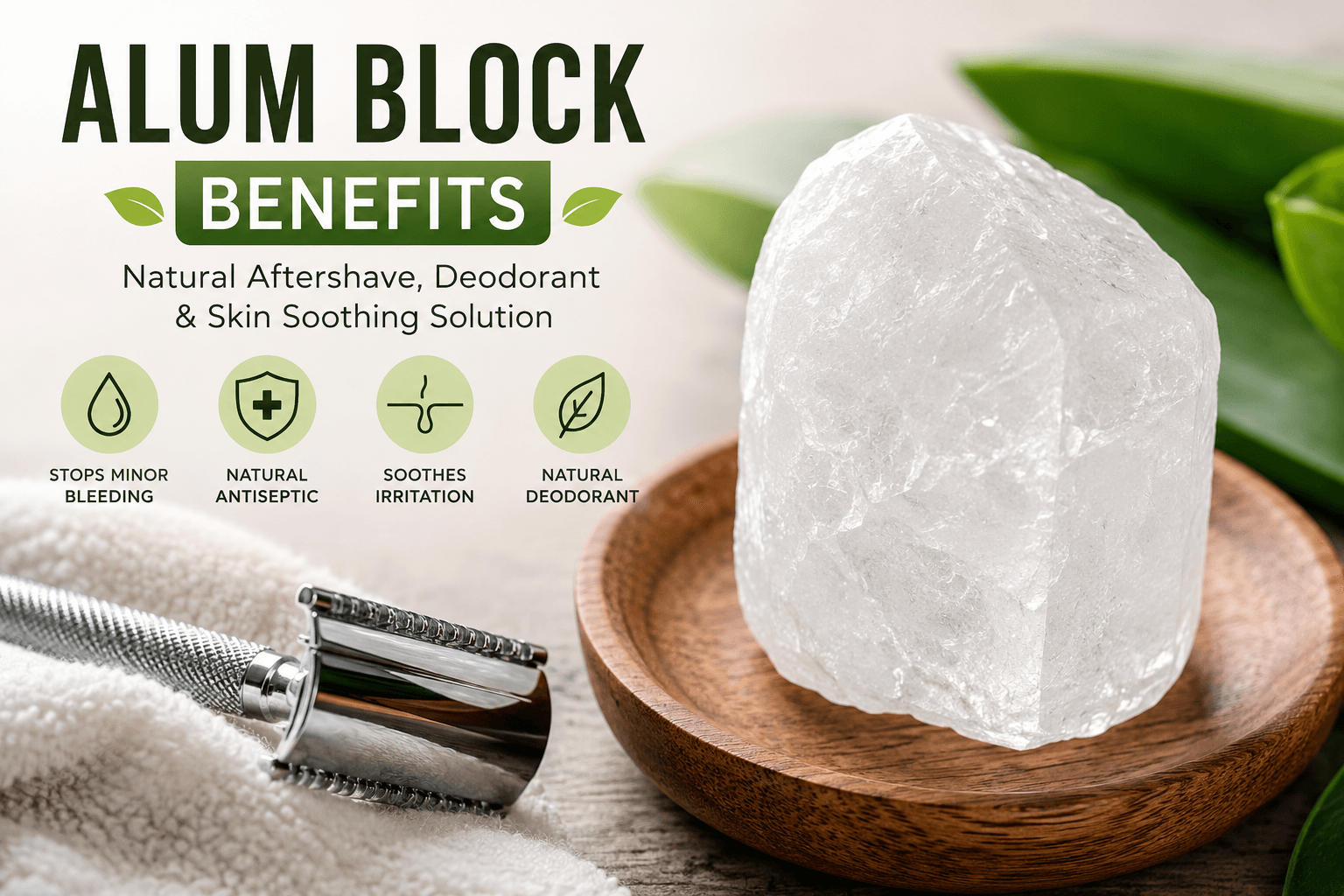
Alum block benefits come from the natural crystal salt potassium alum (KAl(SO₄)₂·12H₂O), which is the primary ingredient in alum blocks.. People have used them for centuries in shaving and personal care because of their astringent, antiseptic, and hemostatic properties. Ancient Egyptians and Romans also used alum for water purification, food preservation, and textile dyeing.
Today, many people use alum blocks as post-shave treatments, natural deodorants, and first-aid aids for minor shaving cuts. They help reduce minor bleeding by constricting small blood vessels, create a temporary skin-tightening effect, help reduce the growth of surface bacteria, and soothe shaving-related irritation. Research suggests that alum-based aftershave formulations can reduce post-shave redness and microbial growth while showing low toxicity and a low risk of allergic reactions when used as directed.
Despite these benefits, prolonged or excessive use may cause temporary tingling, dryness, or irritation, especially on sensitive or damaged skin. This article explores alum block composition, uses, scientific evidence, proper application, safety, side effects, regulatory considerations, and alternatives such as styptic pencils, witch hazel, and commercial deodorants.
What Is an Alum Block and What Are Its Benefits?
Composition of an Alum Block
Alum blocks are solid crystalline stones made primarily from potassium alum (KAl(SO₄)₂·12H₂O), a naturally occurring mineral salt widely used in shaving and personal care products. In chemistry, the term “alum” refers to a family of double sulfate salts that contain aluminum and another positively charged ion, such as potassium or ammonium.
Potassium alum is the most common type used in alum blocks and other personal care products because of its astringent and antiseptic properties. Manufacturers commonly use potassium alum, also known as potash alum, in alum blocks, shaving products, and other personal care products.
Types of Alum Used in Personal Care
Another form, ammonium alum (ammonium aluminum sulfate), is also available and is used in some cosmetic products. Both types are odorless, water-soluble salts that naturally form clear crystals.
For personal care, experts recommend using cosmetic-grade or pharmaceutical-grade potassium alum because these products are manufactured to meet quality standards intended for skin contact. Industrial-grade alum is designed for non-cosmetic applications and should not be applied to the skin.
Properties of Alum Blocks
Alum crystals have natural astringent (tissue-tightening) and antiseptic properties. When applied to damp skin, they help constrict small blood vessels, reduce minor bleeding, and create a temporary skin-tightening effect. They may also help reduce the growth of surface bacteria.
Manufacturers sell alum as polished crystal stones (alum stones), molded sticks, and styptic pencils. They make styptic pencils by compressing finely powdered alum into a stick, allowing them to deliver a more concentrated application for persistent shaving cuts. In comparison, whole alum blocks provide gentler coverage across larger shaved areas and typically last longer with regular use.
Historical & Traditional
Alum has a long history in medicine and industry. Ancient Egyptians and Greeks valued alum for water purification and as an antiseptic. In medieval Europe, alum was a key mordant in dyeing cloth. Around shaving, alum’s record goes back centuries: straight-razor aficionados have used alum stone after shaving to disinfect cuts and tighten pores. Traditional Moroccan and Unani medicine even prescribe “alum stone” (Shibbe) for wound healing and oral sores. Folk uses include water clarification and even food pickling (food-grade alum) to preserve crispness. These historical uses exploit alum’s ability to coagulate organic material and fight microbes – principles that underlie today’s cosmetic and medicinal uses.
Modern Uses of Alum Blocks
Alum Block for Shaving Aftercare
One of the biggest alum block benefits is its ability to soothe freshly shaved skin and help stop minor shaving cuts from bleeding. Rinsing the skin and rubbing a wet alum block over the shaved area can help stop minor nicks from bleeding and soothe razor burn. Its astringent action constricts tissue around tiny cuts, helping reduce bleeding and irritation. Alum also has antiseptic properties that may help reduce surface bacteria on freshly shaved skin, lowering the risk of minor skin infections.
Many users notice a temporary tingling or stinging sensation after application, especially on razor nicks. This is normal and often indicates that the alum is working on freshly shaved skin. Unlike many traditional aftershaves, alum blocks are alcohol-free, making them a suitable option for people who want to avoid excessive dryness. Many manufacturers also offer alum in gels, sprays, and aftershave formulations, frequently blended with soothing ingredients like aloe vera or glycerin.
Alum Block as a Natural Deodorant
Many people use alum block crystals as natural mineral deodorants. When applied to clean, damp underarms, they help reduce body odor by limiting the growth of odor-causing bacteria. Unlike conventional antiperspirants containing aluminum chlorohydrate or aluminum chloride, potassium alum primarily forms a thin protective layer on the skin rather than significantly blocking sweat glands.
Because alum is fragrance-free and contains few ingredients, many people choose it as a natural alternative to conventional deodorants. With proper care, a single alum block can last for several months, making it an economical and eco-friendly option.
Skin Care and Minor Wound Care
Some people use alum blocks on oily or acne-prone skin because of their astringent properties. Current clinical evidence does not support using alum as an acne treatment, although laboratory studies suggest it has antimicrobial activity.. Some people also use alum as a traditional remedy for minor skin abrasions, canker sores, and post-waxing irritation.
For small shaving cuts or other minor nicks, pressing a wet alum block onto the affected area may help slow bleeding and provide temporary antiseptic protection.People generally choose alum blocks for larger shaved areas, while they rely on styptic pencils to stop persistent bleeding.
Other Traditional Uses
Beyond personal grooming, people have traditionally used alum for water clarification, food pickling (using food-grade alum), leather tanning, textile dyeing, and certain medically supervised procedures, such as controlling bladder bleeding with alum irrigationThese uses differ from cosmetic applications and require the appropriate type and grade of alum.
Overall, alum blocks remain a versatile personal care product. Their combination of astringent, antiseptic, and hemostatic properties makes them useful as an aftershave treatment, natural deodorant, and first-aid aid for minor cuts.
Evidence for Alum Block Benefits
Clinical and laboratory studies support several alum block benefits, particularly for post-shave care, minor bleeding, and odor control.. A recent review found that alum has astringent, hemostatic, antimicrobial, antioxidant, and anti-inflammatory properties that suit it for aftershave applications. In practice, alum-based aftershave formulations significantly reduce skin redness and bleeding from razor cuts and lower the microbial load compared to alcohol-based splashes. For example, protein precipitation by alum tightens capillaries and closes pores, quickly stemming minor bleeding.
Laboratory studies confirm alum’s antibacterial action. For instance, alum solutions inhibit growth of common skin bacteria (such as Staph species) on agar plates. However, researchers note that these “in-vitro” results don’t always translate to clinically proven acne or rash cures on people.Researchers have conducted only a limited number of controlled trials on alum blocks. However, comparative studies show that alum aftershave creams perform as well as or better than alcohol-based aftershaves at soothing the skin while causing fewer stinging side effects.
Importantly, the safety profile of topical alum is excellent. As one review concludes, alum shows “low systemic absorption, negligible toxicity, minimal mutagenic or allergic risk”.The Environmental Working Group (EWG) rates potassium alum as a low-hazard cosmetic ingredient. In the United States, the FDA allows potassium alum in certain over-the-counter personal care products when manufacturers use it according to applicable regulations Thus, the evidence supports alum’s benefits (hemostasis, antibacterial, pore-tightening) and indicates it is biocompatible and eco-friendly when used as intended.
How to Use an Alum Block (Step-by-Step)
After shaving or for deodorant use, the alum block is easy to apply. Follow these steps:
- Clean & wet: Rinse your shaved face (or clean underarms) with cold water. Wet the alum block with cold water (some soak it briefly).
- Apply gently: Glide the wet block evenly over the area. For shaving, move it slowly over the entire shaved area. The first contact (especially on nicks or razor burn) may sting or tingle — that’s normal and shows it’s working.
- Wait briefly: Let the remaining alum crystals sit on the skin for about 15–20 seconds, enough to tighten pores and stop bleeding.
- Rinse off: Wash away the residue with cool water and pat the skin dry. Avoid rubbing vigorously.
- Moisturize: Follow up with a balm or lotion to rehydrate the skin. Alum is a drying astringent, so applying a moisturizer (or a post-shave cream) rounds out the treatment.
Safety Profile & Side Effects
Although alum block benefits are well documented, users should still follow proper application guidelines to minimize the risk of dryness or irritation., but like any astringent they have some cautions. Most users feel only mild tingling or a cooling sting (from the astringent action) when first applying a wet alum block. Common minor effects include transient tightness, dryness, or itchiness, especially on sensitive, chapped, or already irritated skin. These are usually self-limited once the alum is rinsed off. Rarely, some individuals report persistent redness or burning; in such cases, discontinue use as it may indicate sensitivity.
Avoid eyes and mucous membranes: Aluminum salts can severely irritate or damage eyes. If alum gets into your eye(s), flush immediately with room-temperature water for 15–20 minutes and seek medical help. Do not use alum blocks on large open wounds, only minor nicks.
Ingestion hazard: You should not swallow alum (it is not a food – FDA forbids it in foods). Accidentally licking a bit off your skin is unlikely to hurt, but larger ingestions can cause nausea, vomiting, or stomach upset. People with kidney disease should be cautious: while topical use leads to negligible absorption, any significant ingestion might require medical advice.
Allergy/Contraindication: If you have a known allergy to aluminum compounds, or very sensitive/reactive skin, avoid alum. Otherwise, standard use (post-shave a few times a week) is considered low-risk. No serious systemic side effects have been documented for topical alum. Long-term skin exposure has not been conclusively linked to breast cancer or Alzheimer’s; current evidence finds no proven causal link. In summary, use alum blocks in moderation: they are a safe natural alternative to alcohol splashes, but err on the side of gentleness (don’t overuse or rub too aggressively).
Contraindications & Interactions
Alum blocks have few formal contraindications. Primarily, avoid if allergic or hypersensitive to aluminum salts. Do not use an alum block on open deep wounds (styptic pencils only on small cuts). If the skin is extremely raw or eczema-prone, test on a small area first. There are no known drug interactions for topical alum, since it’s minimally absorbed. However, take care if also using other strong astringents or exfoliants (e.g. glycolic acids); combined use could over-dry or irritate skin. There is no interaction concern like “antigen un-binding” with beta-blockers (which arises with alum in injected allergy shots, not relevant to DIY use). Lastly, always rinse alum off after the indicated time to avoid cumulative irritation.
Regulatory & Quality Considerations
In the U.S., potassium alum is recognized by the FDA as a Generally Recognized as Safe (GRAS) substance and is approved for use in OTC products. It may be listed on antiperspirant drug monographs and antifungal monographs, reflecting its long use. However, it is prohibited as a food additive, so only cosmetic/pharmaceutical grades should be used on the body.
For consumers: buy alum blocks labeled “pure potassium alum” and ideally “USP” or “cosmetic grade”. This ensures minimal heavy metal impurities (lead, iron, arsenic). Low-quality “industrial” alum stones may stain skin or contain contaminants. Reputable grooming brands often certify their alum as free of heavy metals and balanced in pH. Check packaging or labelling for purity (≥99%) and source. Store alum blocks dry; they dissolve over time if kept wet. No special license is needed, but using a verified product guarantees consistent benefits and safety.
Alum vs. Alternatives (Comparison Table)
| Feature | Alum Block | Styptic Pencil | Witch Hazel | Commercial Deodorant/Aftershave |
|---|---|---|---|---|
| Primary Use | Post-shave astringent & antiseptic; natural deodorant | Emergency styptic for deeper cuts | Soothing astringent toner/aftershave | Odor control (sprays/sticks) |
| Mechanism | Potassium alum crystals tighten skin, kill bacteria | Same material, powdered form: seals wounds fast | Plant tannins tighten skin, reduce redness | Often aluminum salts block sweat; can include antibacterials |
| Benefits | Multi-purpose (shave, deodorant, wound); long-lasting block; alcohol-free | Strongest hemostatic effect; quick clotting | Calming, anti-inflammatory; good for oily skin | Convenient, widely available; often moisturizing |
| Limitations | Can sting on sensitive skin; must be kept dry; less effective on heavy bleeding | Single-use till stub; can break; contains alum salt (drying) | Less effective for actual cuts; can feel harsh (often contains alcohol) | May contain fragrances/alcohol (irritant); not antibacterial for nicks |
| Quick Use Notes | Wet block and apply to skin; rinse after 15-20s | Wet tip, press on nick until bleeding stops | Dab or spray on skin post-shave; pat dry | Apply per label (usually directly to underarms or skin) |
5-Point Quick-Use Checklist alum block benefits
- Prep skin: Rinse shaved area with cold water; ensure skin is soap-free.
- Wet block: Dip or spray alum block in water (some soak for 30s).
- Apply gently: Rub across entire shaved area (or wet underarms) for ~10–20s.
- Rinse off: Cool rinse alum residue thoroughly; pat skin dry.
- Moisturize: Finish with a balm or lotion to counteract dryness.
(Each check emphasizes cleaning, moistening the block, gentle application, rinsing, and post-care.)
Conclusion alum block benefits
Alum blocks combine age-old tradition with modern grooming, offering a natural, multi-use aftershave and deodorant. Their main benefit is providing an astringent antiseptic effect without alcohol or synthetic chemicals. This makes them excellent for stopping minor bleeding, tightening pores, and controlling odor. Scientific studies and cosmetic experts affirm alum’s effectiveness and safety, citing minimal toxicity. Users should choose high-quality alum stones and follow proper usage to avoid irritation. In comparison to alternatives (styptic pencils, witch hazel, synthetic deodorants), alum blocks stand out for their versatility and eco-friendly profile. Overall, “alum block benefits” include soothing post-shave skin, disinfecting cuts, and freshening without harsh side effects – a valuable tool in any grooming kit.
Frequently Asked Questions (FAQs)
1. What exactly is an alum block?
An alum block is a solid crystal made of potassium aluminum sulfate. It’s a natural astringent and antiseptic. When wet, the block can be rubbed on skin to tighten tissues, stop minor cuts from bleeding, and inhibit bacteria (alum acts like a mild disinfectant).
2. How do I use an alum block after shaving?
After you shave, rinse your skin and wet the alum block. Gently glide it over the shaved area—especially any nicks—and hold for about 15–20 seconds before rinsing off. You’ll feel a tingling sensation. Then apply your usual moisturizer. This calms irritation and seals tiny cuts.
3. Is alum safe for everyone?
For most people, yes. Topical alum is low-risk when used properly. Avoid it if you have a known aluminum allergy or extremely sensitive skin. Don’t use it on deep wounds or in the eyes. Rarely, it may cause dryness or temporary burning on very delicate skin.
4. Can alum block replace deodorant?
A wet alum block can serve as a natural deodorant. Rubbing it on clean underarms kills odor-causing bacteria. Unlike antiperspirants, it doesn’t block sweat completely. It’s unscented and contains no alcohol or parabens. People often use it daily or as needed for odor control, but it won’t stop heavy perspiration.
5. Any side effects or concerns?
Side effects are usually mild. You might feel temporary stinging or skin tightness. Long-term toxicity is not a concern for topical use. However, swallowing alum can upset the stomach and kidney-impaired individuals should avoid ingesting it. Ensure you rinse it off after use.
6. How does alum block compare to a styptic pencil?
Both use similar ingredients, but a styptic pencil is powdered alum pressed into a small stick, while a block is a single crystal. The styptic pencil releases more salt and is better for actively bleeding cuts. The alum block gives a milder dose, ideal for whole-area use (no strong nick to stop) and lasts longer per use. It’s essentially a gentler, multi-purpose tool, whereas the pencil is for emergencies.