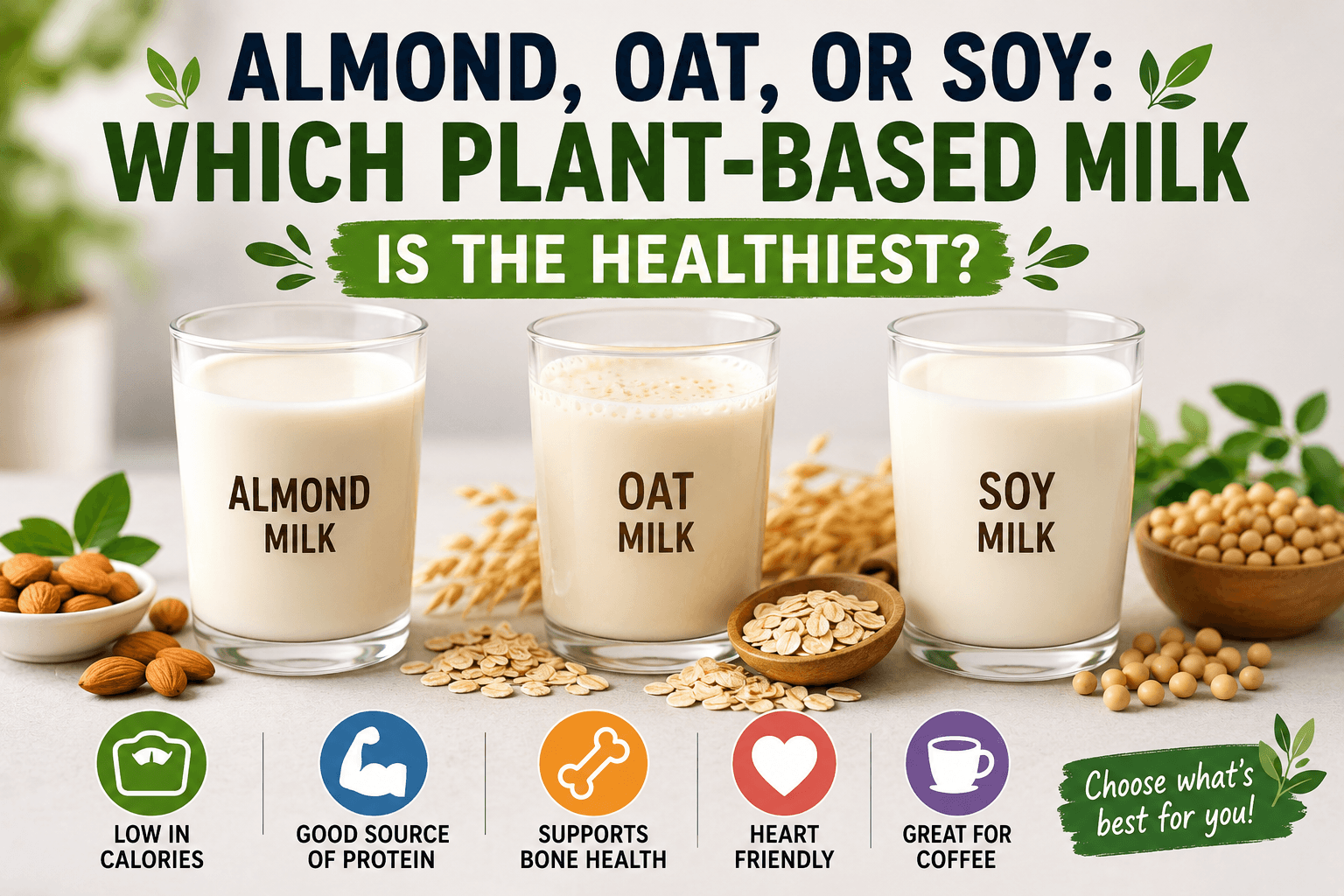
Almond, Oat, or Soy: Which Plant-Based Milk Is the Healthiest?
Choosing the Healthiest Plant Based Milk can feel confusing because there are so many options available, including almond, soy, oat, coconut, and pea milk. Each type offers different nutritional benefits, calories, protein, and vitamins. While some are better for weight loss, others are ideal for muscle health, heart health, or people with lactose intolerance. In this guide, you’ll discover how different plant-based milks compare, their health benefits, and how to choose the Healthiest Plant Based Milk based on your nutrition goals and lifestyle.
Healthiest Plant Based Milk Nutrition Comparison (Per Cup)
The table below summarizes typical values for unsweetened, fortified plant milks (sources: USDA, registered dietitians). Note that actual nutrition varies by brand and recipe (especially sweetened vs unsweetened).
| Milk Type | Calories | Protein (g) | Calcium (mg, %DV) | Added Sugars (g) | Fat (g) |
|---|---|---|---|---|---|
| Almond | ~ 39 kcal | 1 g | 480 mg (≈45% DV) | 0 g (unsweetened) | 2.5 g |
| Oat | ~ 120 kcal | 3 g | 350 mg (≈27% DV) | 0 g (unsweetened)* | 5 g |
| Soy | ~ 80–90 kcal | 7 g | ~300 mg (≈30% DV) | 0 g (unsweetened) | 4 g |
*Note: The 7 g “sugars” in oat milk from [16] are naturally occurring from oats; unsweetened varieties have no added sugar.
Each milk is usually fortified with calcium and vitamins (A, D, B12). Soy milk often has comparable vitamin D and B12 to cow’s milk. Read labels: key nutrients like protein, calcium, vitamin D are on the Nutrition Facts label. Choose products with higher protein and calcium and lower saturated fat and added sugars.
Source: USDA FoodData Central nutrition database.https://fdc.nal.usda.gov/
Healthiest Plant Based Milk for Protein
A major difference is protein. Soy milk packs ~6–8 g of protein per cup (comparable to cow’s milk), including all nine essential amino acids. This makes it a “complete” plant protein and valuable on a vegan or high-protein diet. By contrast, almond and oat milk have only ~1–3 g protein per cup. In particular, almond milk’s protein is very low (≈1 g), so it won’t keep you full the way cow’s or soy milk does.
Pro Tip: If your goal is muscle maintenance or a protein-rich diet, choose soy milk (or combine plant milks with other protein sources). Registered dietitians note that soy protein quality is high, whereas nut/grain milks may lack some amino acids. Some brands add pea or rice protein to boost content, so check labels if protein is a priority.
Oat and almond milks do contain some protein (and in the case of oat milk, a bit of fiber), but if protein is a health goal, soy is typically the healthiest choice for that purpose.
Healthiest Plant Based Milk for Weight Loss
For weight loss or calorie control, almond milk has the edge. Unsweetened almond milk is very low-calorie (~30–40 kcal per cup), since it’s mostly water with a few almonds’ worth of flavor. Soy milk (~80–90 kcal) and oat milk (~120 kcal) have 2–4× more calories per cup. However, calorie isn’t everything: protein and fiber help with satiety. Soy’s higher protein (and small amount of fiber if any) may curb hunger more effectively than almond’s near-zero protein.
For blood sugar and satiety, all unsweetened versions have very low added sugars (0 g). Oat milk’s carbohydrates come largely from oats and include ~2 g fiber per cup (absent in almond milk). However, plain oats are quite starchy, and some commercial oat milks list ~7 g total sugars (maltose) per cup – again, this is from the grain, not added cane sugar. Look for unsweetened labels to avoid any sugar spike.
Caveat: Some “barista” or flavored versions add oils, sugars or stabilizers for texture. These can add extra fat or sugars, which may affect weight goals. Always compare Nutrition Facts.
Healthiest Plant Based Milk for Bone Health
By themselves, plant milks (except soy) are low in key nutrients. However, most commercial brands fortify with calcium, vitamin D, B12, etc. Typically, a fortified cup of any plant milk provides 20–30% DV of calcium or more. In our table above, almond milk was shown at ~45% DV (because many brands add extra calcium), oat ~27%, and soy ~30%. The FDA and USDA encourage consuming fortified soy milk because its calcium and vitamin D levels can match dairy.Dietary Guidelines for Americans (USDA) →https://www.dietaryguidelines.gov/
- Calcium: Even though almonds contain calcium, almost all almond/oat/soy milks have added calcium salt. So the calcium level depends on fortification. The table above reflects typical fortified products.
- Vitamin D: Cow’s milk is usually D-fortified. Check that plant milk also lists vitamin D on the label. Soy milks often include D (and vitamin A). The FDA notes that fortified soy milk can be included in the dairy group because of these added nutrients.
- Other nutrients: Oat milk can supply some B vitamins (B2, B12, folate) and iron from oats, but often also relies on fortification. Soy milk is often a good source of B12 if fortified (soybeans contain no B12 naturally). Almond milk may provide vitamin E naturally, which is an antioxidant.
In summary, for bone health, any fortified plant milk can contribute calcium and vitamin D – just as dairy does. If bone support is your focus, check for at least 20–30% DV of calcium and some D on the label, as recommended by health experts. Soy milk often leads here if fortified, but almond and oat can be equal with fortification.
How to Choose the Healthiest Plant Based Milk
“Healthiest” also means minimal unwanted extras. Here are common additives and tips:
- Added Sugars: Many plant milks come in “original,” “unsweetened,” and flavored varieties. Flavored (vanilla, chocolate, etc.) often have added sugar or sweeteners. For health, choose unsweetened or no-sugar-added versions. Even “original” almond or oat milks may contain 1–3 g of added sugars per cup. Sugared versions can be 50–100+ kcal higher.
- Thickeners/Stabilizers: To mimic milk’s creamy texture, manufacturers often use gums (locust bean gum, gellan gum, carrageenan) or added oils (canola, sunflower) in nut/grain milks. These are not harmful per se, but some people prefer “clean label” without carrageenan (which can irritate sensitive digestions). Read ingredients if this concerns you.
- Protein-enhanced Varieties: Some brands add pea or rice protein to almond/oat milks to boost protein. These have higher protein (and calories) – good if you need protein, but less ideal if you want very low cal.
- Natural Sugars: Even unsweetened oat milk contains naturally occurring oat sugars (~3–7 g per cup). They are not added, but if you need low-carb, be aware oat milk has more carbs than almond or soy.
- Sodium: Some fortified milks have added salt for flavor. Almond milk can have ~180 mg sodium per cup (~7% DV), soy around 170 mg, oat about 100 mg. If watching salt, check the label, or rinse with water (as some do).
In short, “healthiest” plant milks are unsweetened, lightly processed, and well-fortified. The FDA advises consumers to pick plant milks that are high in protein, calcium, vitamin D, and low in saturated fat and added sugars.
Best Plant Milk for Different Goals
The Healthiest Plant Based Milk isn’t the same for everyone. The best choice depends on your health goals, lifestyle, and nutritional needs. Here’s how almond, oat, and soy milk compare for different situations.
Weight Loss or Low-Calorie Diet
If you’re trying to lose weight, unsweetened almond milk is often the Healthiest Plant Based Milk because it contains only about 30–40 calories per cup. It’s a great choice for smoothies, cereal, or coffee. Unsweetened soy milk is another good option with around 80–90 calories, while oat milk is slightly higher at about 120 calories per cup. Always choose unsweetened varieties to avoid added sugars.
Muscle Growth and Protein Needs
For anyone focused on building muscle or increasing protein intake, soy milk is the clear winner. It provides 7–8 grams of protein per cup, making it the closest plant-based alternative to dairy milk. Oat milk contains around 3 grams, while almond milk offers only 1 gram of protein. Some brands also sell protein-fortified almond or oat milk if you need extra protein.
Bone Health and Calcium
Fortified plant-based milks can all support bone health. Fortified soy milk is recognized in the U.S. Dietary Guidelines as a nutritional alternative to dairy because it contains calcium and vitamin D levels similar to cow’s milk. Fortified almond and oat milk are also excellent choices—just check the nutrition label and look for at least 20% Daily Value of calcium per serving.
Heart Health and Cholesterol
All plant-based milks are naturally cholesterol-free and generally low in saturated fat. Almond milk contains the least saturated fat, while soy milk contains only a small amount and still supports heart health. Replacing full-fat dairy with unsweetened plant-based milk may help reduce saturated fat intake as part of a heart-healthy diet.
Best Plant Milk for Coffee
If you enjoy lattes or creamy coffee, oat milk is usually the best choice because it froths well and has a naturally smooth texture. Soy milk is another creamy option that works well in hot drinks. Almond milk can sometimes separate in coffee, although barista-style versions are specially formulated to perform better.
Allergies and Food Intolerances
Your choice also depends on allergies and dietary restrictions. People with nut allergies should avoid almond milk, while those with soy allergies should choose oat or another alternative. If you have lactose intolerance, all plant-based milks are naturally lactose-free. For people with celiac disease or gluten sensitivity, choose certified gluten-free oat milk.
Which Plant-Based Milk Is the Healthiest?
There isn’t a single Healthiest Plant Based Milk for everyone. Unsweetened almond milk is ideal for weight loss, soy milk is best for protein and balanced nutrition, and oat milk offers a creamy texture with some fiber. Whichever option you choose, look for unsweetened and fortified varieties to get the greatest nutritional benefits.
Which Healthiest Plant Based Milk Is Better for the Environment?
While not a direct nutrient factor, environmental health is part of “healthiest” in a broader sense. All plant milks have a far lower climate footprint than cow’s milk (roughly one-third or less greenhouse gases per cup). Among plant milks:
- Soy milk is one of the most eco-friendly: it has low emissions and water use and high protein output.
- Oat milk is also low-impact, especially in water use, although its protein is relatively modest. Oats can be grown in cooler climates, making oat milk popular in Europe and less water-intensive than almond.
- Almond milk has a mixed profile: its carbon footprint is low (similar to soy/oat), but almond trees require a lot of irrigation. In water-scarce California (which produces most US almonds), almond milk’s water footprint can rival or exceed cow’s milk.
- Other milks (bonus): Pea milk (not asked) has an even lower footprint, while coconut milk (in beverages) is moderate but can use more land in tropical areas.
Net Sustainability Takeaway: Soy (and pea) are generally “greener,” with oat also quite good. Almond’s water use is the main downside. All are far better than dairy.
Tips for Choosing the Healthiest Plant Based Milk
- Check the Label: Look for unsweetened versions (no added sugars) and note serving size (8 oz = 1 cup).
- Compare Protein and Calcium: If nutrition is a concern, pick one with ≥30% DV calcium and at least 5–7 g protein (soy or protein-enhanced blends).
- Serving Guidance: Most adults can safely consume 1–2 cups of fortified plant milk per day as part of their diet. The Dietary Guidelines count fortified soy as a dairy equivalent for calcium and protein. However, young children (under 2) should get pediatrician advice on milk alternatives.
- Moderation & Variety: Even the healthiest plant milks are best used as part of a balanced diet. Rotate between types if you like – each offers unique nutrients (e.g. vitamin E from almond milk, B vitamins from oat, isoflavones from soy) and variety of flavor.
Disclaimer: The information above is for general nutrition guidance only. Individual needs vary. Consult a registered dietitian or healthcare provider for personalized advice, especially if you have medical conditions (e.g. kidney disease, hormone-sensitive conditions) or dietary restrictions.
Final Thoughts on the Healthiest Plant Based Milk
There is no single “healthiest plant-based milk” for everyone. Each option has strengths:
- Soy milk generally wins for overall nutrition (highest protein, often best-fortified with calcium and vitamin D). It can fully substitute dairy from a nutrient standpoint.
- Almond milk is lowest-calorie and rich in vitamin E, making it good for weight control and heart health (no saturated fat), but it provides almost no protein.
- Oat milk offers fiber, B-vitamins, and a pleasant creamy texture, but it’s higher in carbs and calories.
Ultimately, the “healthiest” choice depends on your needs. Look for products with no added sugar, check the nutrient labels, and use your choice to fill dietary gaps (protein, calcium, low-calories) as needed. By making an informed choice—unsweetened and fortified—you can enjoy plant milk benefits (dairy-free, lower saturated fat, lactose-free) while meeting your nutritional goals.
Frequently Asked Questions (FAQ)
1. Which Plant-Based Milk Is the Healthiest Overall?
A: There’s no one-size-fits-all answer. Soy milk is often considered the closest to the Healthiest Plant Based Milk because it provides the highest amount of protein and is usually fortified with calcium and vitamin D, making it nutritionally similar to dairy milk. If your goal is weight management, unsweetened almond milk is an excellent low-calorie option. The healthiest choice ultimately depends on your nutritional needs, whether you prioritize protein, calories, or added nutrients.
2. Is Soy Milk Healthier Than Dairy Milk?
A: Fortified soy milk is one of the best dairy alternatives because it contains protein levels similar to cow’s milk along with added calcium and vitamin D. It is naturally cholesterol-free and lower in saturated fat. Scientific research also shows that moderate soy consumption is safe for most adults despite common myths about phytoestrogens. However, individuals with soy allergies or certain thyroid conditions should consult their healthcare provider before consuming it regularly.
: 3. Which Plant Milk Is Best for Weight Loss?
A: Unsweetened almond milk is usually the best option for weight loss because it contains only around 30–40 calories per cup. Unsweetened soy milk is another great choice, offering more protein while remaining relatively low in calories. Oat milk is slightly higher in carbohydrates and calories, so choosing an unsweetened variety and controlling portion sizes can help if you’re trying to lose weight.NIH Office of Dietary Supplements →https://ods.od.nih.gov/
4. Does Oat Milk Contain a Lot of Sugar?
A: Unsweetened oat milk contains no added sugar, but it naturally has small amounts of sugar produced from oats during processing. Most plain oat milk contains around 3–7 grams of natural sugar per cup. Always check the nutrition label and choose unsweetened versions, as flavored oat milks often contain added cane sugar.
5. Are Plant-Based Milks Healthy for Children?
A: Plant-based milks can be a healthy option for children who cannot consume dairy, but choosing the right type is important. Fortified, unsweetened soy milk is generally recommended as the closest nutritional alternative to cow’s milk for children over one year of age. Almond and oat milk are lower in protein, so they may not provide enough nutrition when used as a child’s primary milk source. Infants under 12 months should only receive breast milk or infant formula unless advised otherwise by a pediatrician.