Mutton vs Chicken Liver: Which Is Healthier?
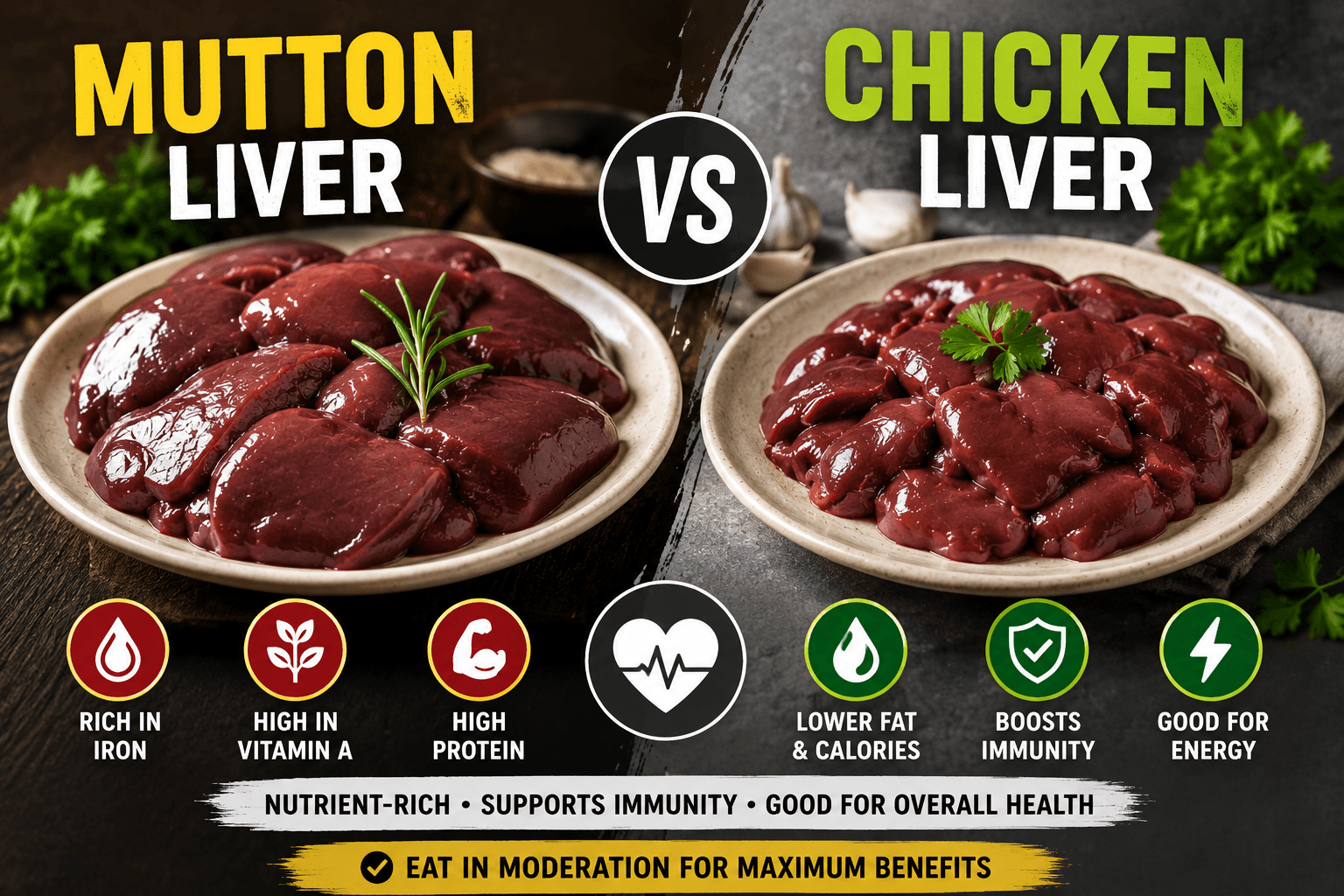
Mutton vs Chicken Liver is one of the most common comparisons among people looking for nutrient-dense foods rich in protein, iron, and essential vitamins. Both chicken and mutton (sheep) livers are nutritional powerhouses loaded with iron, B vitamins (especially vitamin B12 and folate), vitamin A, and high-quality protein. These nutrients support red blood cell production, immune function, eye health, and overall wellness. Chicken liver is leaner, providing around 116 calories, 16.9 g of protein, and 4.8 g of fat per 100 g, while mutton liver contains about 139 calories, 20.4 g of protein, and 5 g of fat. Mutton liver also provides higher amounts of vitamin B12 and vitamin A but contains slightly more cholesterol than chicken liver. Both are excellent sources of heme iron, making them beneficial for preventing iron-deficiency anemia when consumed in moderation. However, because they are very high in vitamin A and cholesterol, eating large amounts regularly may increase the risk of vitamin A toxicity and may not be suitable for everyone.
Mutton vs Chicken Liver: Nutrition Comparison (Per 100g)
| Nutrient | Chicken Liver | Mutton (Lamb/Sheep) Liver |
|---|---|---|
| Calories | 116 kcal | 139 kcal |
| Protein | 16.9 g | 20.4 g |
| Total Fat | 4.8 g | 5.0 g |
| Iron | 9.0 mg | 7.4 mg |
| Zinc | 2.7 mg | ~3.9 mg |
| Vitamin A | 3323 µg (RE) | 7391 µg (RE) |
| Vitamin B12 | 16.6 µg | 90.1 µg |
| Folate (B9) | 588 µg | ~280 µg (estimated) |
| Cholesterol | 345 mg | 371 mg |
Health Benefits Mutton vs Chicken Liver
When comparing Mutton vs Chicken Liver, both are packed with essential nutrients, but each has unique advantages depending on your health goals.
- Combats Anaemia: Both livers are excellent sources of heme iron, folate and vitamin B12 – nutrients crucial for haemoglobin synthesis. This makes liver especially beneficial for people with iron-deficiency or megaloblastic anemia (e.g. pregnant women, young children). The heme form in liver is well absorbed.
- Supports Immunity & Skin Health: The high vitamin A in liver (especially mutton liver) enhances vision, skin and mucosal health, and bolsters immune defenses. Zinc is vital for immune cell function and wound healing; chicken liver supplies ~24% DV. Vitamin C (17.9 mg per 100g in chicken liver) and other antioxidants aid collagen and immune response.
- Energy & Metabolism: Rich B-vitamins in liver support energy metabolism and brain function. For example, chicken liver provides 691% DV B12, 147% DV folate, 137% DV riboflavin and 125% DV pantothenic acid. B12 deficiency can cause fatigue and neuropathy; eating liver helps prevent these.
- Protein: Both livers are very high-quality protein sources (17–20g/100g) for muscle repair and overall nutrition. They also contain bioactive nutrients like CoQ10 (important for heart health) and taurine (nerve function).
Mutton vs Chicken Liver: Risks and Who Should Avoid Them
Although Mutton vs Chicken Liver offers impressive nutritional benefits, both should be eaten in moderation because of their high vitamin A, cholesterol, and purine content.
- Vitamin A Excess: Liver has very high preformed vitamin A. Regularly eating liver (>1x/week) can cause hypervitaminosis A (bone loss, birth defects). NHS advises no more than one liver a week, and pregnant women should avoid liver completely.
- Cholesterol: Both are high in cholesterol (345–371mg/100g). People with high LDL or heart disease should limit portions. (Modern guidelines focus on saturated fat more, but moderation is still wise.)
- Gout (Purines): Organ meats like liver are high in purines. Individuals prone to gout or kidney stones should avoid chicken/mutton liver, as they can raise uric acid.
- Hemochromatosis (Iron Overload): Those with hemochromatosis should avoid or strictly limit liver due to its easily absorbed heme iron. (Diet plays a small role, but iron-rich foods are generally discouraged.)
mermaidCopyflowchart LR
    A[Are you healthy?] --> B{Special Condition?}
    B -->|Pregnant or TTC| C[Avoid liver (Vitamin A risk)]
    B -->|High cholesterol| D[Eat sparingly; choose chicken liver]
    B -->|Gout or kidney stones| E[Avoid organ meats (high purines)]
    B -->|Hemochromatosis| F[Avoid due to high heme iron]
    B -->|None of above| G[You can enjoy liver ~once a week]
Mutton vs Chicken Liver: Safe Serving Size and Cooking Tips
To enjoy the benefits of Mutton vs Chicken Liver without increasing health risks, stick to recommended serving sizes and healthy cooking methods.
- Portion: Aim for ~75–100g per meal (about 2–3 small chicken livers or one mutton liver). This provides benefits without excessive vitamin A or cholesterol. NHS suggests eating liver at most once weekly.
- Cooking: Always cook liver thoroughly to 70°C (destroy pathogens). Avoid raw liver. Pan-fry or grill quickly with minimal oil; liver cooks fast. Trim off visible fat or membranes if desired. Marinating or soaking liver in milk/lemon can reduce any metallic taste.
- Pairing: Serve with vitamin C–rich vegetables (e.g. bell peppers) to aid non-heme iron absorption (though liver’s iron is heme). Balance with fiber-rich foods to moderate blood sugar.
Final Verdict
Both chicken and mutton liver are healthy when eaten wisely. Chicken liver has a slight edge for most people due to its lower fat and cholesterol, while still being extremely nutrient-dense. Mutton liver offers higher B12 and A per gram, but also more iron and cholesterol – making it a super-supplement in small amounts. The best approach is variety and moderation: enjoy both types occasionally as part of a balanced diet rich in fruits, vegetables and lean proteins. Always heed the “once a week” guidance and avoid intake during pregnancy.
FAQs
- Is chicken or mutton liver higher in iron?
Both are rich, but chicken liver (~9.0mg/100g) is slightly higher than mutton (~7–9mg/100g depending on source). All liver iron is highly bioavailable heme-iron, beneficial for anemia. - Which liver is better for weight loss?
Chicken liver is leaner (≈116 kcal/100g vs 139 kcal for mutton). Both are high-protein and nutrient-dense, which helps satiety. Focus on chicken liver or smaller portions if calorie intake is a concern. - Can diabetics eat liver?
Yes, in moderation. Liver is low in carbs and high in protein, making it suitable for blood sugar control. Its high vitamin A and zinc can also support immune health. However, people with kidney disease or gout (often comorbid with diabetes) should be cautious due to purine content. - How often can I safely eat liver?
Health authorities advise no more than 1 serving (75–100g) per week. This prevents vitamin A overload. If you want liver benefits, consider smaller portions (e.g. 50g) twice a week instead of one large portion. Pregnant women should avoid liver entirely. - Does cooking method affect liver nutrition?
Yes. Boiling or poaching liver may lose some water-soluble nutrients (like B vitamins). Quick pan-frying or grilling helps retain vitamins while ensuring safety. Avoid deep frying (adds unwanted fat) or charring (creates toxins). - Is liver safe for children?
Occasional liver (e.g. once a week) can be good for children’s growth due to iron and vitamins. However, keep portion sizes small (children’s portion ~25–50g) and do not give to infants. Avoid liver before the age of 6 months, and limit intake of cod liver oil (vitamin A) similarly.