7 Best Foods for Gut Health That Improve Digestion Naturally
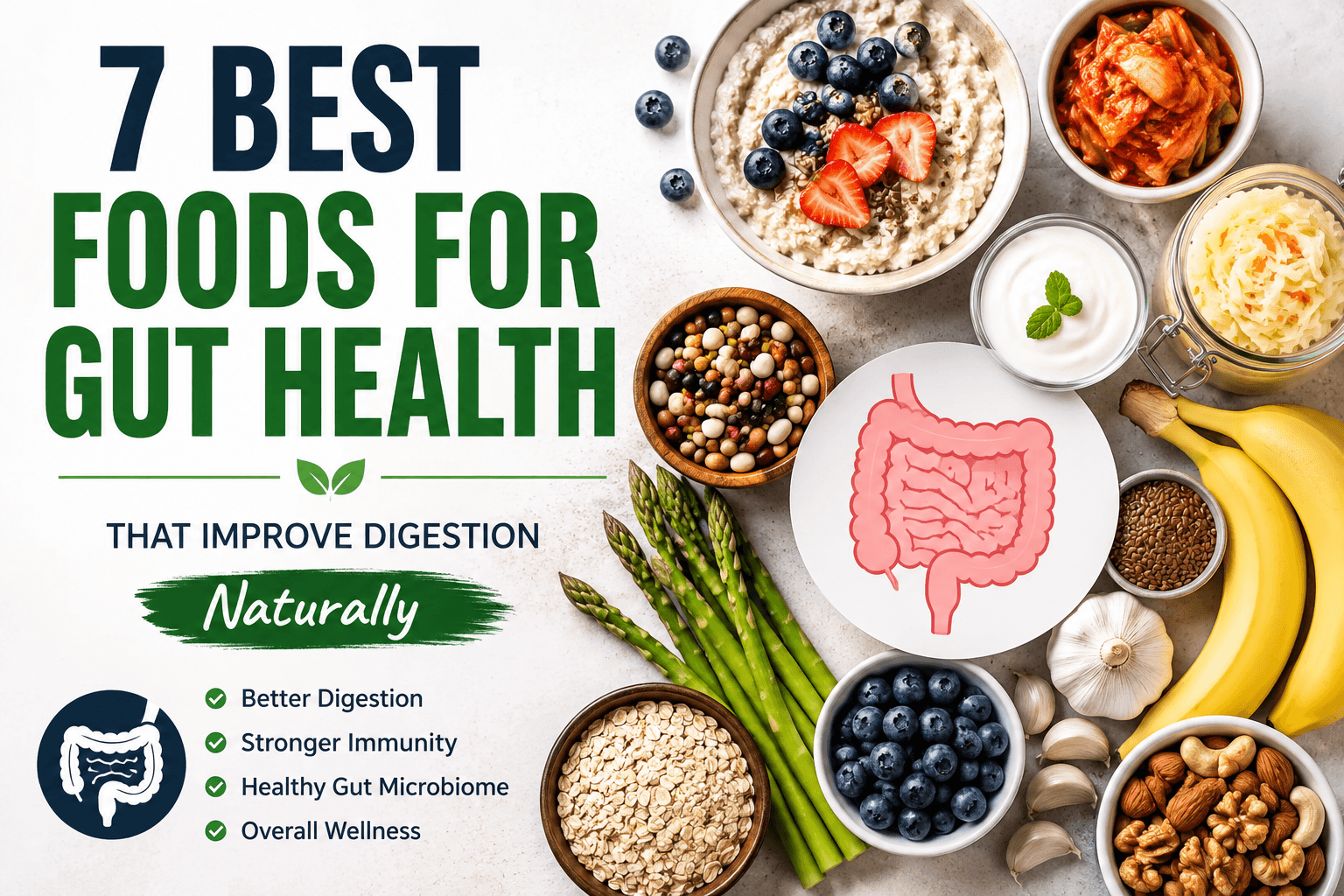
Choosing the right foods for gut health is one of the easiest ways to improve digestion naturally, support a healthy gut microbiome, and strengthen your immune system. A healthy gut starts with fibre-rich plant foods and fermented options that nourish beneficial gut bacteria. Overall, fruits, vegetables, whole grains, legumes, and cultured dairy products—rich in fibre, polyphenols, and probiotics—support good digestion and gut microbe diversity. The UK’s public health advice also recommends getting around 30 g of fibre daily from a variety of sources such as wholemeal bread, brown rice, beans, fruits, and oats. Below, we explore seven gut-friendly foods, their science-backed benefits, and simple ways to include them in your daily diet.
1. Yogurt and Kefir: Best Foods for Gut Health
Suggested caption: A cup of yogurt topped with berries — a fermented food rich in live cultures that help balance gut bacteria. (Alt text: Cup of yogurt with fruit.)
Fermented dairy like yogurt and kefir contain live probiotic bacteria (e.g. Lactobacillus, Bifidobacterium) that can help restore gut flora balance. Studies show that diets high in fermented foods (yogurt, kefir, kombucha) significantly increase gut microbiome diversity and reduce inflammation. The NHS notes that live (active culture) yogurt is a natural probiotic source. Enjoy plain unsweetened yogurt or kefir for maximum benefit – add fresh berries or honey for flavour. Try a breakfast parfait with yogurt, granola and kiwi (a prebiotic fruit), or make a kefir smoothie with banana and spinach for a probiotic-rich start to your day.
2. Fermented Vegetables: Foods for Gut Health and Better Digestion
Fermented vegetables like kimchi, sauerkraut and pickles are naturally rich in probiotics. Regular consumption of these foods has been linked to improved gut flora health and better digestion. For example, one study found that a high-fermented-food diet (including kimchi) boosted gut microbial diversity and lowered inflammatory markers. Kimchi (spicy fermented cabbage) and sauerkraut (fermented cabbage) supply fibre plus beneficial lactic acid bacteria. Include a small serving (2–4 tbsp) of kimchi or sauerkraut with meals – on top of soups, grain bowls or salads – to introduce friendly bacteria. When buying or making them, choose raw unpasteurized versions to preserve live cultures. Even a glass of non-alcoholic fermented drinks like kombucha can contribute probiotics to your gut.
3. Oats and Whole Grains: High-Fibre Foods for Gut Health
Oats are an excellent source of soluble fibre (beta-glucan) that feeds gut bacteria and eases bowel movements. NHS guidelines emphasize that more dietary fibre – from whole grains, fruits and vegetables – supports healthy digestion and prevents constipation. Soluble fibre dissolves in water to form a gel that slows digestion, softens stools and helps food move smoothly through the intestine. Include steel-cut or rolled oats in your diet: have a porridge with berries for breakfast, or use oats in overnight oats recipes. Other whole grains like barley and quinoa similarly provide fibre. Pair grains with legumes or nuts to boost fiber and protein (e.g. an oatmeal with almond butter and banana).
4. Beans, Lentils and Pulses: Plant-Based Foods for Gut Health
Legumes (beans, lentils, chickpeas) are gut-friendly superfoods. They pack both soluble and insoluble fibre and significant resistant starch – nutrients that “feed” the microbiome. Pulses provide up to one third of the day’s fibre in a single portion. Fibre helps increase stool bulk and bowel regularity, while resistant starch (especially from cooled cooked beans) acts like a prebiotic promoting short-chain fatty acid (SCFA) production in the colon. Beans are also a source of vitamins (folate, B vitamins), iron and plant protein. For easy serving: add kidney beans to a chilli, toss lentils in a salad, or make a lentil soup. A homemade hummus (blended chickpeas, garlic, olive oil) with whole-grain pita makes a gut-healthy snack (the garlic adds additional prebiotic fiber too).
5. Garlic, Onion and Asparagus: Prebiotic Foods for Gut Health
Alliums and certain vegetables are rich in prebiotic fibres like inulin and fructooligosaccharides (FOS). For example, garlic, onions, leeks and asparagus contain inulin, which selectively nourishes beneficial Bifidobacterium bacteria. Studies show inulin boosts good bacteria populations in the gut. Asparagus also provides insoluble fibre to add bulk to stool. Eating raw or lightly cooked garlic and onions (when tolerated) can help feed friendly flora. Add minced garlic or diced onions to sauces, soups or stir-fries; roast or steam asparagus as a side. (Note: those with IBS or FODMAP sensitivities may need to moderate large amounts of garlic/onion.)
6. Nuts and Seeds: Healthy Foods for Gut Health
Nuts and seeds (e.g. almonds, chia, flax) are dense in fibre, healthy fats and plant compounds. Almonds specifically provide soluble fibre and monounsaturated fats that promote SCFA production by gut bacteria, strengthening the gut lining. Chia and flaxseeds are especially rich in soluble fibre (mucilage) – just 2 tbsp chia seeds gives ~10 g fibre. This fibre swells in the gut, feeding microbes and easing digestion. Omega‑3 fats in walnuts or flax may also have anti-inflammatory benefits. Sprinkle nuts and seeds on yogurt, cereal or salads, or blend them into smoothies. For example, a chia pudding or overnight oats with flaxseed is an easy way to incorporate these gut-friendly ingredients daily.
7. Berries and Bananas: Fruits for Gut Health
Fruits like blueberries and bananas support gut health. Blueberries are rich in polyphenols (antioxidants) that stimulate growth of beneficial microbes (e.g. Akkermansia). Bananas (especially slightly green) are high in resistant starch and fructans (prebiotic fibres). Both provide soluble fibre to aid stool formation. Enjoy 1–2 servings of fruit per day as part of a balanced diet. For instance, top your morning oats with sliced banana and berries, or snack on a handful of mixed berries. These fruits also supply vitamins and antioxidants, supporting overall immunity.
Foods to Avoid for Better Gut Health
To keep your gut happy, limit highly processed and high-fat foods. The NHS advises that fatty, fried and spicy foods can be harder to digest and may trigger heartburn or discomfort. Saturated fats (found in fatty cuts of red meat, butter, lard, pastries) can reduce gut bacterial diversity. Refined carbohydrates (white bread, pastries, sugary snacks) lack fibre and can worsen constipation. Also avoid excessive artificial additives and sweeteners, which may disturb gut microbes. Instead of processed snacks, choose whole foods: lean proteins, vegetables, whole grains and fruits. Moderation is key – occasional treats are fine, but the bulk of your diet should be whole, fibre-rich foods.
Sample One-Day Gut-Friendly Meal Plan
Breakfast: Oat porridge made with milk or fortified plant milk, topped with fresh blueberries and a spoonful of flaxseed.
Snack: Greek yogurt with sliced banana and a drizzle of honey. (Probiotics from yogurt + soluble fibre from banana.)
Lunch: Lentil and vegetable soup (lentils, garlic, onions, carrot, spinach) with a side of fermented sauerkraut on whole-grain bread. (Legumes, prebiotic veggies, probiotics from sauerkraut.)
Snack: Handful of almonds and an apple. (Nuts for fiber and fats, apple skin for fiber.)
Dinner: Grilled salmon (or tofu) with roasted asparagus and quinoa or brown rice.
Evening: A cup of herbal tea and a small bowl of kefir or kombucha. (Hydration and extra probiotics to finish the day.)
Nutritional Breakdown of These Gut-Friendly Foods
Below is a table summarising the key nutrients, probiotic/prebiotic status, and best form for each highlighted food:
| Food | Key Nutrients | Probiotic/ Prebiotic | Best Form to Eat |
|---|---|---|---|
| Yogurt/Kefir | Protein, calcium, B-vitamins; live cultures | Probiotic | Plain (unsweetened) yogurt or kefir with fruit |
| Kimchi/Sauerkraut | Vitamin C, K, fiber, lactic cultures | Probiotic | Raw fermented (check label) as side dish or condiment |
| Oats (whole grains) | Soluble fibre (beta-glucan), manganese | Prebiotic (soluble fibre) | Steel-cut/rolled oats porridge or muesli |
| Beans & Lentils | Protein, fibre (soluble+insoluble), folate, iron | Prebiotic (resistant starch) | Cooked in soups, stews, salads (e.g. lentil soup, hummus) |
| Garlic & Onions | Inulin, organosulfur compounds | Prebiotic (inulin/FOS) | Raw or lightly cooked (soups, dressings, sauces) |
| Nuts & Seeds (almonds, chia, flax) | Fibre, omega-3 ALA, magnesium, antioxidants | Prebiotic (soluble fibre) | Mixed into oats, smoothies, salads, or as snacks |
| Berries (e.g. blueberries) | Vitamin C, fibre, polyphenols (anthocyanins) | Prebiotic (polyphenols) | Fresh in yogurt/oats or as snack, or blended in smoothies |
| Bananas | Potassium, vitamin B6, fibre (FOS) | Prebiotic (resistant starch) | Slightly green to ripe banana, in cereal or smoothies |
- Soluble fibre (in oats, beans, fruits) helps soften stool and nourish gut microbes.
- Insoluble fibre (in vegetables, whole grains) adds bulk to stool, easing passage.
- Probiotic foods (yogurt, kimchi) supply live bacteria to balance gut flora.
- Prebiotic foods (garlic, onions, asparagus, bananas) contain special fibers (inulin, FOS, resistant starch) that feed beneficial bacteria.
- Polyphenol-rich foods (berries, olive oil, nuts) support microbial diversity and reduce inflammation.
Conclusion
Eating a variety of gut-friendly foods every day is one of the most effective ways to improve digestion . Incorporating fermented foods (yogurt, kefir, kimchi), plenty of fibre (oats, beans, fruits, veggies) and prebiotics (garlic, onion, asparagus) helps nourish the gut microbiome. Over time (often a few weeks) you may notice smoother digestion, reduced bloating and stronger immunity as your gut flora thrive. For sustainable results, aim for balanced meals with plants, whole grains and fermented items daily. Small changes like adding a side of sauerkraut or starting your day with fiber-rich oats can make a big difference in gut health.
Summary:
- Eat fermented yogurts (with live cultures) daily for probiotics.
- Load up on fibre: whole grains, beans, fruit and veg.
- Include prebiotic foods: garlic, onions, asparagus, bananas.
- Snack on nuts/seeds and berries for fibre and polyphenols.
- Limit processed, fried or very fatty foods and refined carbs.
- Stay well-hydrated (water, herbal teas) to help fibre work.
Day  1Mon Yogurt parfait +oatmeal + salad +beans + kefirDay
 2Tue Fruit smoothie +vegetable soup +lentil stew + kimchisideDay
3Wed Overnight oats +grilled chicken salad+ quinoa bowl +kombuchaDay
4Thu Wholegrain toast +minestrone soup +fish/veggies +yogurt snackDay
5Fri Pancakes withberries + chickpeacurry + brown rice +sauerkrautDay
6Sat Chia pudding +veggie stir-fry +beans & rice + kefirsmoothieDay
 7SunBanana-toppedcereal + grilledsalmon + lentils +fermented pickles
FAQs
1. What is the difference between probiotics and prebiotics? Probiotics are live beneficial bacteria (found in fermented foods like yogurt and kimchi) that can help restore a healthy gut flora. Prebiotics are non-digestible fibres (found in foods like garlic, onions, bananas, oats) that feed and nurture these good bacteria.
2. How do these foods improve digestion? High-fibre foods (whole grains, beans, fruits, veggies) increase stool bulk and soften it, making bowel movements regular. Fermented foods with probiotics help balance gut bacteria, which can reduce bloating and improve gut lining function. Prebiotic fibres ferment in the colon to produce short-chain fatty acids (SCFAs), which fuel colon cells and reduce inflammation. Together, these effects lead to smoother digestion and less constipation.
3. Can improving gut health boost my immunity? Yes. About 70% of the immune system is linked to the gut. A healthy gut microbiome helps train immune cells and prevent harmful pathogens from taking hold. Diets rich in fibre and fermented foods tend to support a diverse microbiome, which is associated with stronger immunity.
4. How long does it take to see benefits from a gut-friendly diet? Improvements can appear within a few weeks. Research shows that dietary changes can shift gut microbiota and inflammation levels in 2–3 weeks. Many people notice softer stools and fewer digestive issues after a month of eating more fibre and probiotics. For lasting change, maintain these healthy eating habits consistently, as the gut ecosystem adapts over time.