7 Plant-Based Foods That Contain More Calcium Than Milk
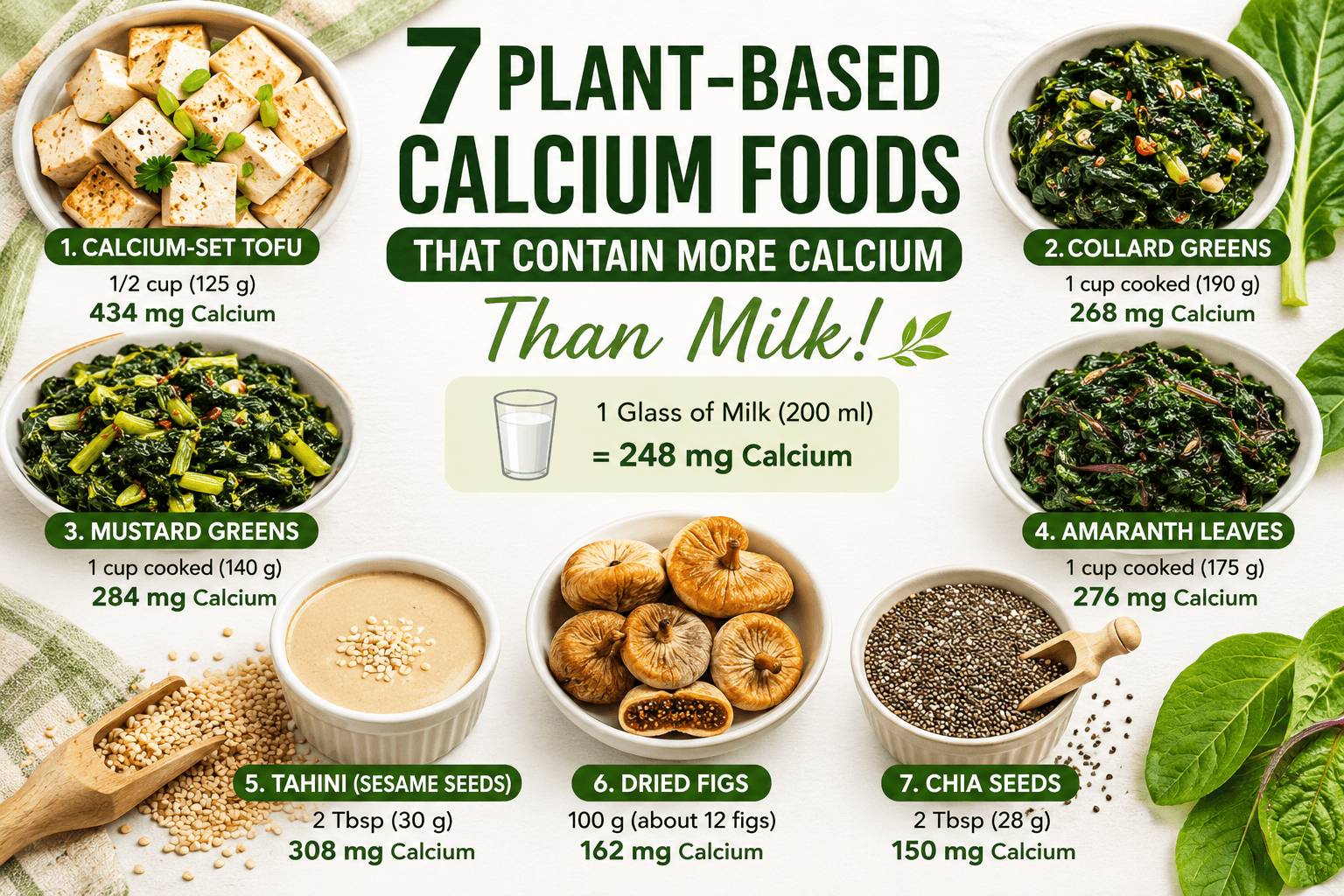
Milk often gets credit as the calcium champion, but did you know many plant foods rival or exceed its calcium content? This lively guide compares seven plant-based champions against whole cow’s milk (we use ~248 mg Ca per 200 ml as the milk benchmark). We’ll cover serving sizes and calcium (Ca) per serving, plus absorption tips. Key takeaways: Calcium-set tofu, dark leafy greens (like collards, mustard greens, amaranth leaves), sesame (and tahini), dried figs, and chia seeds all pack surprising amounts of Ca. Some even top a glass of milk! We’ll also compare them in a handy table, discuss bioavailability (oxalates and phytates can block Ca absorption), and share tips (like pairing with vitamin D-rich foods, blanching greens, or calcium-fortification). Our tone is friendly and engaging – it might even make you say “Plant-Based Calcium Foods benefits
High-Calcium Plant Foods (per serving, compared to milk)
Milk is often considered the gold standard for calcium, but several Plant-Based Calcium Foods can match or even exceed it. Here are seven nutrient-rich foods that naturally provide impressive amounts of calcium while also offering fiber, antioxidants, and other essential nutrients.
1. Calcium-Set Tofu – The Ultimate Calcium Champion
- ½ cup (125 g): 434 mg calcium
- More calcium than one glass of milk.
- Rich in complete plant protein.
- Best for stir-fries, curries, grilled tofu, or salads.
- Pro Tip: Choose tofu made with calcium sulfate.
2. Collard Greens – Leafy Greens Loaded with Calcium
- 1 cup cooked: 268 mg calcium
- Excellent source of vitamin K and fiber.
- Delicious when sautéed with garlic and olive oil.
3. Mustard Greens – A Traditional Calcium Powerhouse
- 1 cup cooked: 284 mg calcium
- Even more calcium than milk.
- Perfect for sarson ka saag, soups, or stir-fries.
4. Amaranth Leaves – An Underrated Super Green
- 1 cup cooked: 276 mg calcium
- Also rich in iron and antioxidants.
- Great in Indian-style curries or mixed vegetable dishes.
5. Sesame Seeds (Tahini) – Tiny Seeds, Massive Calcium
- 2 tablespoons tahini: 308 mg calcium
- Easy to add to hummus, smoothies, sauces, and salad dressings.
- One of the richest Plant-Based Calcium Foods.
6. Dried Figs – Naturally Sweet Calcium Boost
- 100 g: 162 mg calcium
- Also provides fiber and potassium.
- Enjoy with oatmeal, yogurt, or as a healthy snack.
7. Chia Seeds – Small but Nutrient-Dense
- 2 tablespoons: 150 mg calcium
- Rich in omega-3 fats and fiber.
- Add to smoothies, overnight oats, or chia pudding.
Quick Comparison Table
| Food | Serving | Calcium |
|---|---|---|
| Milk | 200 ml | 248 mg |
| Calcium-set Tofu | ½ cup | 434 mg |
| Mustard Greens | 1 cup | 284 mg |
| Amaranth Leaves | 1 cup | 276 mg |
| Collard Greens | 1 cup | 268 mg |
| Tahini | 2 tbsp | 308 mg |
| Dried Figs | 100 g | 162 mg |
| Chia Seeds | 2 tbsp | 150 mg |
Plant vs Dairy: Calcium Content Table
| Food (Plant-Based) | Serving Size | Calcium (mg) | % of 700 mg RDI | Notes |
|---|---|---|---|---|
| Whole Cow’s Milk | 200 ml (glass) | 248 | 35% | Reference value |
| Calcium-set Tofu | ½ cup (~125 g) | 434 | 62% | Use the kind made with CaSO₄ (check label) |
| Collard Greens | 1 cup, cooked (~190 g) | 268 | 38% | High Ca, mild flavor when braised or sautéed |
| Mustard Greens | 1 cup, cooked (~140 g) | 284 | 41% | Spicy leaves; great in stews or saag |
| Amaranth Leaves | 1 cup, cooked (~175 g) | 276 | 39% | Also called “callaloo”; similar to spinach |
| Sesame (Tahini) | 2 tbsp (~30 g) | 308 (2×154) | 44% | Versatile paste; many uses (dressings, dips) |
| Dried Figs | 100 g (~12 figs) | 162 | 23% | Sweet snack; also high in fiber |
| Chia Seeds | 2 tbsp (~28 g) | ~150 (est.) | 21% | Tiny seeds with gel; boost absorption |
Table notes: Values are from USDA/NHS sources. Percentages assume a 700 mg Ca RDI (UK adults). These figures show calcium content per serving. Bioavailability (actual absorbed %) can be lower for some plants due to oxalates/phytates (see below).
Bioavailability: Oxalates, Phytates and Vitamin D
Getting calcium from plants isn’t just about the numbers – it’s about how much your body can absorb. Some plant foods (e.g. spinach, beet greens, rhubarb) contain oxalates, and many whole grains/nuts/seeds have phytates. These “antinutrients” bind calcium and reduce absorption. For instance, spinach has ~240 mg Ca per cup, but much is locked by oxalate – so only a fraction is absorbed.
On the other hand, many leafy greens have surprisingly good absorption. Dark greens like broccoli or kale (lower oxalate) let you absorb up to 50–60% of their calcium. ProVeg experts note that except for cheese, many dairy Ca absorption rates are lower than from greens. Notably, soy (tofu) has high Ca absorption despite some phytate – likely because it’s calcium-set.
Vitamin D matters too. Your body needs vitamin D to absorb dietary calcium efficiently. Aim for some sun exposure or eat D-rich foods (fatty fish, fortified milk/mushrooms) along with your Ca sources. In practice: have tofu curry with broccoli (D-pan = mushrooms?), or snack on figs and fortified orange juice.
In short: choose greens known to be lower in oxalates, soak/sprout beans and grains, and ensure vitamin D intake to maximize absorption.
Tips to Boost Plant Calcium Absorption
- Cook or blanch greens: Briefly boiling dark greens like collards, mustard, turnip greens or spinach can leach out some oxalates, making more Ca absorbable. (Save the cooking water for soup!)
- Soak/sprout legumes & seeds: Soaking beans, grains or seeds overnight reduces phytate levels. You’ll get more calcium (and iron) from soaked beans, nuts and seeds.
- Combine with vitamin D: Have Ca-rich meals with D sources. E.g. sprinkle chia/tahini on vitamin-D fortified cereal, or add tofu to a mushroom stir-fry.
- Avoid excessive caffeine/salt: High salt causes more urinary calcium loss. Keep caffeine moderate too, as it can slightly hinder absorption.
- Fortified options: Don’t forget fortified plant milks or juices if needed. For example, many almond or soy milks are fortified to match dairy (often ~300–450 mg per cup). Though not a “whole food,” they’re convenient calcium boosters.
Creative Serving Ideas
- Green Smoothie: Blend spinach or kale (high Ca dark greens) with almond milk, banana and tahini spoonful for a sweet, calcium-rich drink.
- Stir-Fry Medley: Sauté collard or mustard greens with garlic and a splash of lemon (a bit of lemon juice actually aids Ca absorption). Add tofu cubes for protein and a Ca punch. Serve over brown rice.
- Sesame Crunch: Use toasted sesame seeds (or tahini) in salad dressings or as a topping. For example, mix tahini with lemon juice and garlic as a dip for fresh veggies (cucumber, peppers) – it adds roughly 150+ mg Ca per 2 tbsp.
- Fig Breakfast: Chop dried figs into porridge or granola for natural sweetness and calcium. Three dried figs (~40 g) add ~65 mg Ca plus fiber.
- Chia Pudding: Soak chia seeds in almond milk with a dash of vanilla; top with fruit. A 3-tbsp chia pudding can supply ~225 mg Ca (3×75 mg), rivaling a milk-based pudding.
These dishes mix high-Ca plant foods with vitamin D or absorption enhancers (lemon, garlic, olive oil) to maximize benefits.
Conclusion
You absolutely can meet or exceed dairy calcium levels with plant foods. In fact, our “Plant-Based Calcium Foods से है” motto rings true: bright greens, legumes, nuts, seeds and even fruits hold their own. Calcium-set tofu, collards, mustard greens, amaranth, sesame products, chia seeds and even dried figs all contribute big doses. Remember to pair them wisely (with vitamin D, proper prep) for best absorption. With a varied plant-rich diet, even a vegan diet can supply plenty of calcium for healthy bones. So go ahead – swap that glass of milk for a tasty tofu curry or sesame-tahini salad and feel confident your bones will thank you!
Frequently Asked Questions About Plant-Based Calcium Foods
Can I Really Get Enough Calcium Without Dairy?
Yes. Plenty of Plant-Based Calcium Foods provide as much or even more calcium than milk. A well-planned diet that includes leafy greens, tofu, sesame seeds, chia seeds, legumes, and fortified foods can easily help most adults meet their daily calcium needs. Pair these foods with adequate vitamin D to improve calcium absorption.
Does Cooking Reduce Calcium in Vegetables?
Cooking may cause a small amount of calcium to leach into the cooking water, but it also reduces oxalates—natural compounds that limit calcium absorption. For vegetables like spinach, lightly blanching them can actually make their calcium more available. Using the cooking liquid in soups or curries also helps retain nutrients.
Which Plant-Based Calcium Foods Are Best Absorbed?
Some Plant-Based Calcium Foods are absorbed better than others. Low-oxalate vegetables such as kale, bok choy, broccoli, collard greens, and mustard greens have excellent calcium absorption. Calcium-set tofu is another highly bioavailable option. Foods high in oxalates, like spinach, should be eaten as part of a varied diet rather than your only calcium source.
Is Plant-Based Calcium as Good as Milk for Bone Health?
Yes. Research suggests that plant-based calcium supports healthy bones when your total calcium intake is adequate and you have sufficient vitamin D. Many plant foods also provide magnesium, vitamin K, antioxidants, and fiber, making them excellent choices for overall bone health.
What Happens If I Don’t Get Enough Vitamin D?
Vitamin D plays a key role in helping your body absorb calcium. Without enough vitamin D, even a calcium-rich diet may not be fully effective. Try to get regular sunlight exposure when possible and include vitamin D-rich or fortified foods in your diet. If recommended by your healthcare provider, a vitamin D supplement may also be beneficial.