6 High-Protein Breakfast Ideas With 20+ Grams of Protein
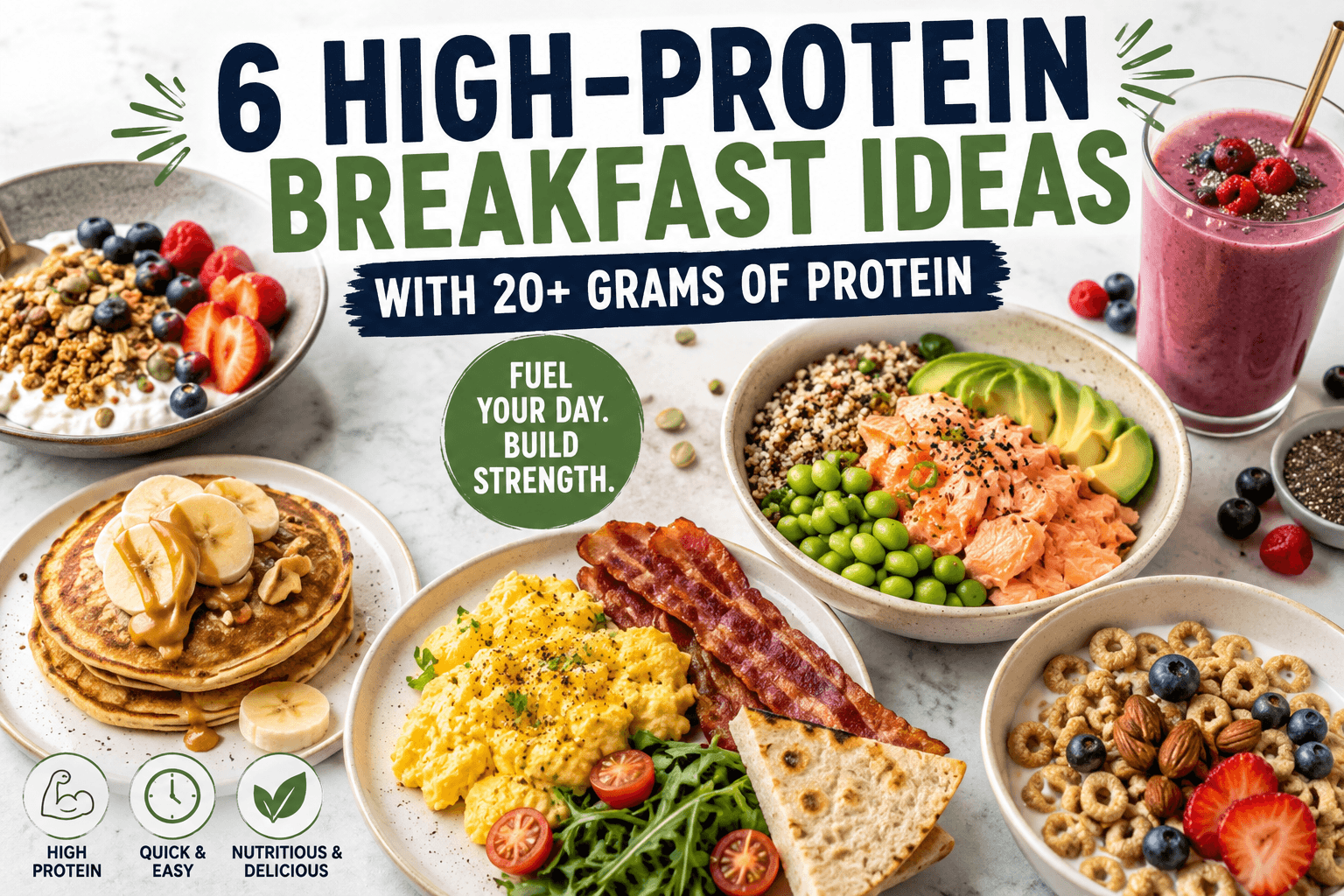
Looking for the best High-Protein Breakfast Ideas? Starting your day with a protein-rich breakfast helps fuel your morning, keeps you full for longer, and supports muscle growth and overall health. Health experts recommend spreading protein intake evenly throughout the day, making breakfast the perfect time to aim for around 20 grams of protein. The six High-Protein Breakfast Ideas below each provide 20+ grams of protein per serving, including both vegetarian and non-vegetarian options. From Greek yogurt and eggs to oats, legumes, and lean meats, these delicious breakfasts are quick to prepare, nutritionally balanced, and perfect for busy mornings. You’ll also find a handy comparison table and FAQs to help you choose the best breakfast for your lifestyle.
Comparison of the Best High-Protein Breakfast Ideas
| Breakfast | Key Ingredients | Protein (g) | Prep Time | Vegetarian? | Gluten-Free? |
|---|---|---|---|---|---|
| Greek Yogurt Bowl with Berries | Greek yogurt, mixed berries, seeds/nuts | ~25 | 5 mins | Yes | Yes (if GF granola) |
| Peanut-Butter Banana Pancakes | Oats, egg, banana, protein powder, yogurt | 28 | 20 mins | Yes | No (use GF oats/flour) |
| Berry Protein Smoothie | Berries, whey/plant protein, milk or soy | 20–30 | 5 mins | Yes | Yes |
| Bacon & Eggs with Flatbread | Eggs, lean bacon or sausage, flatbread | 22 | 15 mins | No | No |
| Salmon-Edamame Grain Bowl | Smoked salmon, edamame, rice/quinoa | ~31 | 15 mins | No | Yes |
| Protein Cereal & Milk | High-protein cereal, milk (or soya milk), nuts/fruit | ~20 | 5 mins | Yes | Depends on cereal |
(Vegetarian status: includes eggs and dairy as “Yes” for lacto-ovo veg. Protein values are approximate per serving.)
1. Greek Yogurt Bowl with Berries and Seeds
Prep: 5 mins | Protein: ~25 g
This is a classic high-protein breakfast. A 7-ounce (about 200 g) serving of plain nonfat Greek yogurt packs ~20 g protein. To this, add a handful of fresh berries (antioxidants and fibre) and a sprinkle of nuts or seeds. Walnuts, almonds or chia seeds add healthy fats and a few extra grams of protein. For example, 2 tablespoons of hemp or chia seeds add ~5 g more. Top it all with a drizzle of honey or maple syrup for sweetness. The result is a creamy parfait delivering roughly 25 g protein. You can also stir in a scoop of protein powder to boost it further. This meal is gluten-free and ready in minutes – perfect for busy mornings. (Bonus: dairy yogurt provides gut-friendly probiotics and calcium.)
2. Peanut Butter Banana Protein Pancakes
Prep: 20 mins | Protein: ~28 g
Fluffy pancakes get a protein boost in this recipe. Blend oats, 3 eggs, 1 banana and a scoop of protein powder into a batter. Cook on a hot pan (drizzle with oil) until golden. Stack them with a dollop of low-fat cottage cheese or Greek yogurt, sliced banana, and a spoonful of peanut butter on top. The eggs alone contribute ~18 g (6 g per egg), plus protein powder (~10–20 g) and peanut butter (~4 g) easily pushes the total to ~28 g per serving. (BBC GoodFood’s version of these “protein pancakes” reports about 28 g protein per serving.) These pancakes require about 20 minutes but can be made ahead or frozen for quick breakfasts. Use a nut butter you like – peanut or almond – for healthy fats and flavour. (Tip: For gluten-free pancakes, use gluten-free oats or a GF flour blend.)
3. Berry Protein Smoothie
Prep: 5 mins | Protein: 20–30 g
A blended breakfast smoothie is super-fast and portable. Start with 1 cup of Greek yogurt or 250 ml (1 cup) of milk (dairy or fortified soya) – that’s ~10–11 g protein by itself. Then add a scoop of whey or plant protein powder (typically 20–25 g protein per scoop). Toss in a cup of mixed berries (frozen or fresh) and a tablespoon of nut butter or seeds. Blend with ice. According to dietitians, a protein-packed smoothie can “meet your daily protein needs” in one go – often 20–30 g protein depending on ingredients. For a vegan twist, use soy milk and pea protein; for more fibre, add oats or spinach. The smoothie is gluten-free and ready in minutes – ideal for grab-and-go.
4. Bacon & Egg Breakfast Plate
Prep: 15 mins | Protein: ~22 g
Think of a modified “Full English” but lighter. Use 2 large eggs (free-range if possible) plus 2 slices of lean turkey bacon or low-sodium ham. Serve with grilled tomatoes and spinach for veggies. Add a toasted wholemeal pita or 2 small slices of whole-grain bread. Two eggs provide ~12 g protein, and a slice of lean bacon ~5 g, plus bread/milk adds the rest. In fact, BBC GoodFood’s poached-egg, broccoli and flatbread breakfast yields 22 g protein per serving. You can scramble the eggs with peppers and herbs or poach them. Serve immediately for a savory, satisfying meal. (Vegetarians can swap bacon for grilled halloumi or smoked tofu.) This plate is filling and gives healthy fats, iron and vitamin B12. Use gluten-free bread if needed.
5. Salmon & Edamame Grain Bowl
Prep: 15 mins | Protein: ~30+ g
A poke-style bowl packs protein from fish and legumes. Start with a base of cooked quinoa or brown rice (each ~5 g protein per cup). Top with ~100 g smoked salmon (≈22–25 g protein), which also adds omega-3 fats. Add ½ cup shelled edamame (young soybeans) – that’s another ~9 g protein. Toss in shredded spinach or cabbage, cucumber, and a soft-boiled egg for even more protein (~6 g). Drizzle with low-sodium soy sauce or sesame dressing. This colorful bowl is not vegetarian, but it’s gluten-free (omit soy sauce or use tamari for gluten-free). It takes about 15 minutes to assemble (especially if the grains are pre-cooked). Per serving, you get roughly 30–35 g protein from the salmon and edamame alone, making it one of the highest-protein breakfasts here.
6. High-Protein Cereal & Milk Bowl
Prep: 5 mins | Protein: ~20 g
Cereal need not be low-protein. Choose a high-protein cereal or granola (e.g. bran flakes or protein-fortified cereals), and pair it with milk. For example, 50 g of bran flakes (about 2/3 cup) has ~8 g protein, and 250 ml (1 cup) of skim milk adds 8 g – that’s 16 g already. Sprinkle in 2 tablespoons of chopped almonds or a spoonful of nut butter (+4–6 g). You can also mix in a scoop of protein powder or serve with low-fat cottage cheese on top. The final protein count can reach ~20 g per bowl. Add fresh berries or sliced banana for flavour. This option is vegetarian (and easily made gluten-free by choosing GF cereal). It’s ready in just a few minutes, making it perfect for the busiest mornings. (High-fibre milled cereals also help you feel full.)
Protein Intake Context
Spreading protein across meals is key for muscle repair and energy. For example, the NHS suggests breakfast sources like scrambled eggs on toast, porridge with milk, or yogurt with granola to hit your morning protein goal. Aim for at least 20 g of protein at breakfast if you want to meet ~55 g/day for men or ~45 g for women. Eating a high-protein breakfast may also help control appetite later in the day. Just remember to balance these meals with vegetables or fruit for fibre, and whole grains for sustained energy.
FAQ About High-Protein Breakfast Ideas
### Why should I eat 20+ grams of protein at breakfast?
Meeting around 20 grams of protein at breakfast helps kick-start your day with steady energy and keeps you feeling full for longer. It also supports muscle maintenance and may reduce mid-morning cravings. Spreading your daily protein intake across meals allows your body to use protein more efficiently.
### What are the best vegetarian high-protein breakfast ideas?
Vegetarians have plenty of delicious options to reach 20+ grams of protein. Greek yogurt bowls, cottage cheese, tofu scramble, protein oatmeal, smoothies with plant or whey protein, and edamame are all excellent choices. Combining dairy or legumes with whole grains also provides a complete protein profile.
### Can high-protein breakfast ideas help with weight loss?
Yes, they can. Protein helps increase satiety, meaning you stay full longer and are less likely to snack between meals. While a high-protein breakfast supports weight management, it works best when combined with a balanced diet and regular physical activity.
### What makes a cereal high in protein?
A high-protein cereal typically contains added soy, wheat, or pea protein, or naturally protein-rich grains. Pairing protein cereal with milk or Greek yogurt can easily increase your breakfast protein to 20 grams or more. Always check the nutrition label before buying.
### How can I prepare high-protein breakfasts faster?
Meal prep is the easiest solution. Prepare pancake batter, overnight oats, or cooked grains in advance. Keep ingredients like Greek yogurt, eggs, nuts, berries, and protein powder stocked in your kitchen so you can make a nutritious breakfast in just a few minutes.
Conclusion & Call-to-Action
By planning just one high-protein breakfast daily, you’ll meet nutrition goals and stay energized. These six ideas – from Greek yogurt parfaits to salmon grain bowls – are proven to give 20+ g of protein per serving (as confirmed by nutrition experts). Experiment by swapping ingredients to suit your taste and dietary needs. For more healthy recipe inspiration, explore reputable sources like the NHS Eatwell guides or registered-dietitian blogs on protein. Ready to try one? Gather some eggs, yogurt, or protein powder, and power up your morning!
f cWEXZ4aq#