5 Vegetarian Foods That Have More Protein Than Eggs
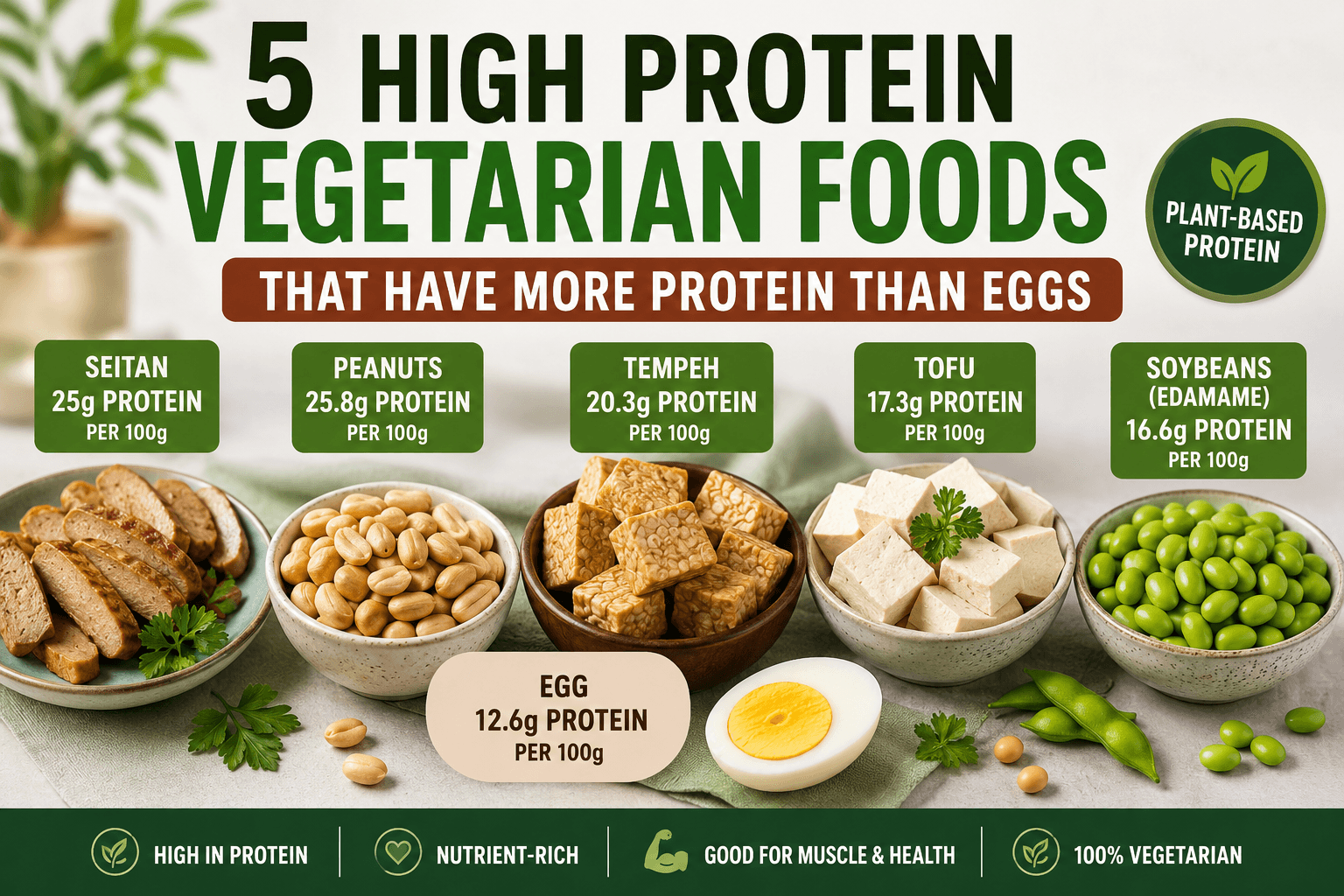
Eggs are a popular high-protein food, containing about 12.6g protein per 100g (≈ 6.3g per large egg). However, many plant-based/vegetarian foods exceed this protein density. Our analysis identifies five top vegetarian contenders – seitan, peanuts, tempeh, firm tofu, and soybeans (edamame) – each with more protein per 100g than eggs. This guide ranks these foods by protein content, compares their macros and serving sizes, and discusses benefits and downsides. A clear comparison table and bar chart illustrate the differences, and practical preparation tips are provided. All data are drawn from USDA sources and nutrition research
Introduction: Eggs vs. High Protein Vegetarian Foods
Eggs (whole, raw) pack about 12–13g protein per 100g, along with 155 kcal. They’re a complete protein (all 9 amino acids) and nutrient-rich, making them a diet staple. However, many vegetarian foods can provide higher protein density. In this article we rank 5 vegetarian foods with more protein per 100g than whole eggs (using egg=12.6g/100g as baseline). We compare nutrients per 100g and per common serving, note unique health benefits, and flag any cautions (allergies, antinutrients, etc.). This info is aimed at US readers seeking high-protein plant options.
High Protein Vegetarian Foods Ranked by Protein per 100g
- Seitan (vital wheat gluten) – ~25g protein/100g
- Peanuts (raw) – 25.8g protein/100g
- Tempeh (fermented soy) – 20.3g protein/100g
- Firm Tofu (calcium-set) – 17.3g protein/100g
- Soybeans (cooked edamame) – 16.6g protein/100g
All the above exceed the egg’s ~12.6g protein/100g.
Protein per 100gEggsSeitanPeanutsTempehTofuSoybeansFood302826242220181614121086420Protein (g)Show code
Bar chart: Protein content (g per 100g) for eggs vs. listed vegetarian foods.
Benefits of High Protein Vegetarian Foods
| Food (edible form) | Protein (g) | Calories | Fat (g) | Carbs (g) | Serving Size | Serv. Protein (g) | Source |
|---|---|---|---|---|---|---|---|
| Egg (whole) | 12.6 | 155 | 11.3 | 1.1 | 1 large egg (50g) | 6.3 | USDA/Healthline |
| Seitan | 25.0 | 140 | 0.5 | 9.0 | 3 oz (85g) | ~21.3 | NutriSnap |
| Peanuts (raw) | 25.8 | 567 | 49.2 | 16.1 | 1 oz (28g) – ~handful | ~7.2 | Healthline |
| Tempeh | 20.3 | 192 | 10.8 | 7.6 | 1 cup (166g) | ~33.7 | USDA (SR Legacy) |
| Firm Tofu | 17.3 | 144 | 8.7 | 2.8 | ½ block (126g; ½ cup cubed) | ~21.8 | USDA (FDC 172475) |
| Soybeans (cooked) | 16.6 | 173 | 9.0 | 9.9 | 1 cup (172g cooked edamame) | ~28.6 | USDA (FDC) |
Notes: Egg values are for whole raw egg. Serving protein rounded from per-100g values. Fat/carbs data from cited sources. If “–” appears, data unavailable.
Nutrition Details and Benefits
Seitan: A High Protein Vegetarian Food
Protein: ~25g per 100g | Calories: ~140
Seitan is one of the most protein-dense vegetarian foods and is relatively low in fat. Its chewy, meat-like texture makes it useful in stir-fries, sandwiches and stews. It also provides minerals such as iron, phosphorus and selenium.
Good to know: Seitan contains gluten and is not suitable for people with celiac disease or gluten sensitivity. It is low in lysine, so pair it with foods such as beans or lentils.
2. Peanuts: A Protein-Rich Vegetarian Food
Protein: ~25.8g per 100g | Calories: ~567
Peanuts provide protein along with healthy unsaturated fats, fiber, vitamin E, magnesium and niacin. A 1-ounce (28g) serving provides about 7–8g of protein, making peanuts an easy snack or addition to oatmeal and smoothies.
Good to know: Peanuts are calorie-dense, so portion size matters. They can also cause severe allergic reactions in people with peanut allergies.
3. Tempeh: A Complete Plant Protein
Protein: ~20.3g per 100g | Calories: ~192
Tempeh is made from fermented whole soybeans and provides protein, fiber, healthy fats and several micronutrients. Because soy is a complete protein, tempeh contains all nine essential amino acids.
Good to know: Tempeh works well in stir-fries, sandwiches and grain bowls. People with a soy allergy should avoid it.
4. Firm Tofu: A High-Protein Vegetarian Choice
Protein: ~17.3g per 100g | Calories: ~144
Firm tofu is a versatile complete plant protein. It can also provide calcium and iron, depending on how it is made. You can bake, grill, stir-fry or scramble it for an easy protein-rich meal.
Good to know: Choose calcium-set tofu when possible if you want additional calcium. Avoid tofu if you have a soy allergy.
5. Edamame: A Protein-Rich Vegetarian Food
Protein: ~16.6g per 100g | Calories: ~173
Edamame provides protein, fiber, potassium, B vitamins and naturally occurring isoflavones. It is easy to add to salads, soups, stir-fries and grain bowls.
Good to know: Soybeans can cause gas or bloating in some people because of their fiber content. Increase portions gradually if you’re not used to legumes.
Quick Takeaway
These foods show that high protein vegetarian foods don’t have to be boring. You can rotate seitan, peanuts, tempeh, tofu and edamame throughout the week to add variety while increasing your protein intake.
Health Benefits of Vegetarian Protein Sources
All five foods here are excellent plant protein sources, but note: they differ from eggs in fat and micronutrients. Eggs contain choline, lutein and other nutrients not abundant in plants. Plant proteins often come with healthy fats, fiber and antioxidants, but may lack certain vitamins (e.g. B12) or be allergens. Here’s a quick summary of benefits and cautions:
- Seitan: Low-carb, very low fat, nearly pure protein. Good for muscle-building and satiety. Caution: Contains gluten (avoid if celiac). Usually fortified poorly – not a vitamin source. High sodium in some products.
- Tempeh: Prebiotic probiotics (from fermentation), high protein and fiber, B-vitamins (B12 if fortified), iron, magnesium. Caution: Soy allergen. Fermented soy may upset some if gut-sensitive (start slow).
- Tofu: Calcium (if set with calcium), iron, beneficial omega‑3 fats, and isoflavones. Good for heart (lowers cholesterol). Caution: Soy allergy; check for heavy metals in processed tofu (rare).
- Edamame (Soybeans): Fiber for gut health, phytonutrients (genistein). Caution: Soy allergy, potential digestive upset (gas) if not used to high-fiber legumes.
- Peanuts: Heart-healthy fats (monounsaturated), niacin, magnesium, antioxidants. Caution: Extremely calorie-dense and common allergen. High in omega-6 (limit excess).
In general, combining these foods with a variety of grains, fruits and vegetables will ensure a balanced diet.
How to Use High Protein Vegetarian Foods
- Seitan: Available sliced, cubed or in strips. Marinate and grill or stir-fry as a chicken/beef substitute. It soaks up flavors (use soy sauce, garlic, BBQ rub). Ideal in stews or satays. Since it’s dry, simmer in broth after grilling for moisture.
- Peanuts: Eat raw or roasted (no salt/sugar for healthiest). Use peanut butter (natural) on whole-grain toast or in smoothies. Add chopped peanuts to salads or Asian-style noodles. Roast raw peanuts at home for fresh snack.
- Tempeh: Steam or simmer tempeh first to mellow bitterness, then marinate in soy or teriyaki sauce. Crumble into chili or pasta as a ground-meat replacement. Slice and pan-fry for salads or sandwiches.
- Tofu: Drain/press firm tofu to remove water. Cube and stir-fry, bake, or scramble like eggs. Marinate in soy/ginger sauce before baking for flavor. Blend soft tofu into smoothies or dips.
- Edamame: Boil or steam whole pods (season lightly). Pop beans out of pods to snack. Add cooked shelled edamame to grain bowls or pasta salads. Alternatively, use soy nuts (roasted soybeans) as crunchy snacks (24g protein/100g).
Each can be seasoned/paired to match cuisines (Asian, Mediterranean, etc.). Combining high-protein ingredients multiplies benefits (e.g., tofu + beans + veggies).
FAQs About High Protein Vegetarian Foods
Q: Are these proteins “complete”?
A: All five contain all essential amino acids, especially seitan, tempeh and soy (tofu, edamame). Peanuts are lacking in methionine, but pairing with grains or legumes ensures completeness.
Q: How do these compare in a diet?
A: You’d need smaller portions of seitan or tempeh to match an egg’s protein. For example, 50g seitan (~12.5g protein) vs. 50g egg (6.3g). In practice, 3-4 oz seitan or tempeh can replace 2–3 eggs.
Q: Is soybean protein as good as egg protein?
A: Soy proteins are high-quality plant proteins. They have slightly lower Biological Value than egg, but studies show soy can effectively support muscle growth and health.
Q: Are there any anti-nutrients?
A: Some (phytates, lectins) exist in soy/peas, but cooking/fermenting greatly reduces them. Balanced diets dilute any effect.
Q: Can I get these in common groceries?
A: Yes. Firm tofu and tempeh are common in supermarkets, seitan often in health-food sections (or make your own from vital wheat gluten). Edamame is often sold frozen. Peanuts are everywhere.
Q: How about almonds or seeds?
A: Almonds (21.2g/100g) and hemp seeds (31g/100g) are also high in protein. But we focused on widely used foods with full profiles.
Conclusion
In summary, vegetarian diets have plenty of options to “beat the egg” on protein. Seitan, tempeh, firm tofu, soybeans (edamame) and peanuts all deliver more protein per 100g than eggs, with unique nutrition packages. These plant foods are excellent for muscle-building, heart health, and satiety. By including them in meals (for example, tofu scramble instead of eggs for breakfast, tempeh stir-fry, peanut snacks, etc.), vegetarians and omnivores alike can achieve robust protein intake. Always consider portion size and balance (especially for high-fat nuts or gluten foods), and consult an allergist/dietitian if you have food sensitivities.