Whole Eggs vs Egg Whites: Which Offers More Protein and How
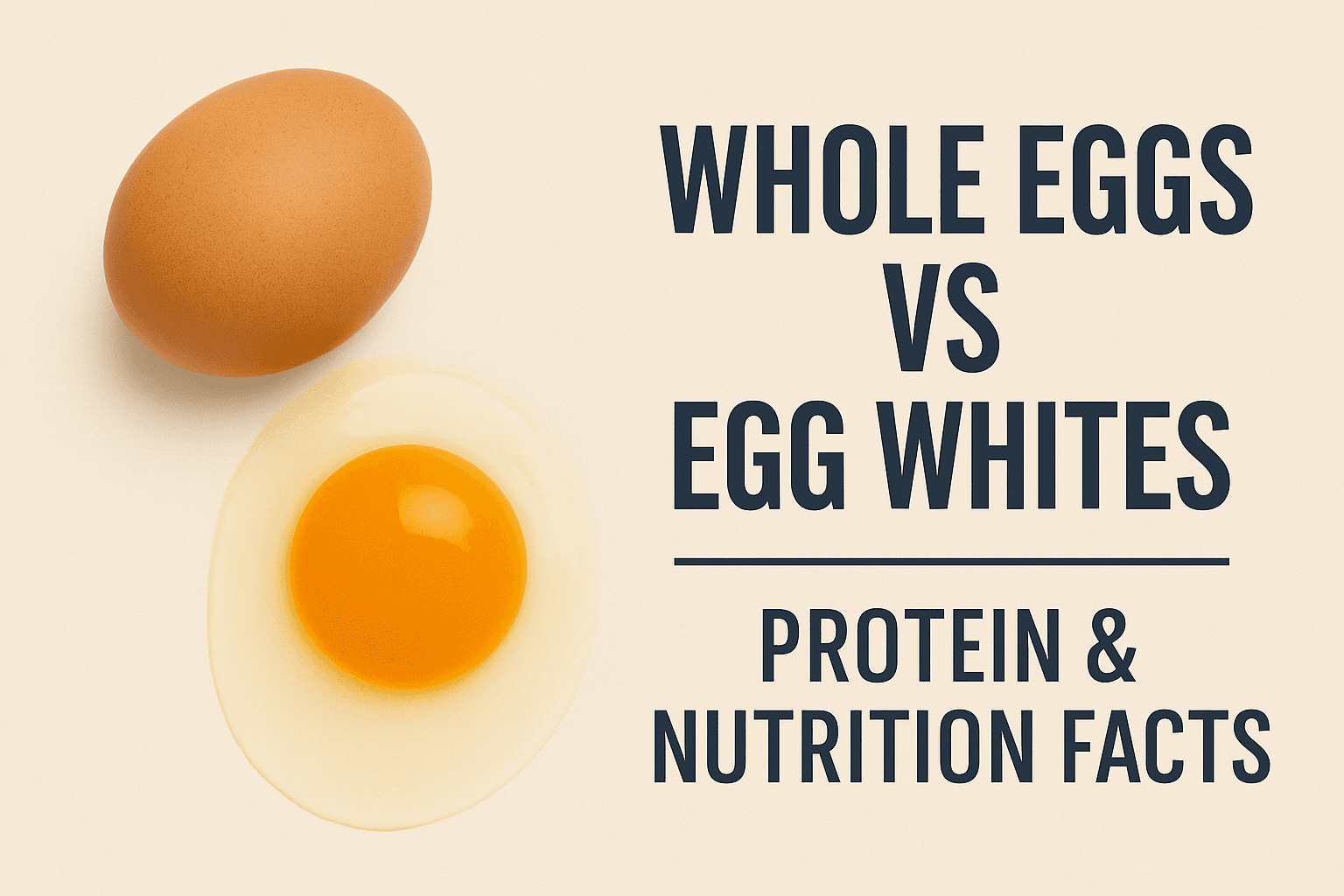
Whole eggs vs egg whites — the age-old debate in nutrition and fitness circles — continues to spark conversation among cooks, athletes, and health-conscious eaters. Eggs are among the most affordable and versatile sources of high-quality protein. While egg whites are praised as a lean, fat-free protein, yolks are often misunderstood because of their fat and cholesterol. Yet the yolk is also packed with vitamins, minerals, and healthy fats that make eggs one of the most complete foods available. This article explores whole eggs vs egg whites, comparing their protein content, nutritional value, and health impact so you can decide which option—or combination—best suits your goals.
Understanding Whole Eggs vs Egg Whites: Protein Distribution
An egg consists of two main parts: the white (albumen) and the yolk. The white is mostly water and proteins, while the yolk contains fats, vitamins, minerals and additional proteins. According to a Houston Methodist wellness dietitian, eggs provide high-quality protein with all essential amino acids, and roughly 40 % of the egg’s protein is in the yolk while 60 % is in the white.
A large whole egg contains about 6 grams of protein, whereas the white alone contains around 4 grams, so removing the yolk reduces total protein by roughly one-third.
The USDA estimates that a large egg (~50 g) contains about 6.3 g of protein in total — the white contributes ≈3.6 g and the yolk ≈2.7 g. The UT Physicians library confirms a whole egg delivers 71 calories and 6.3 g protein, while an egg white provides 17 calories and 3.6 g.
Table 1 – Nutritional Comparison of a Large Whole Egg vs Its White
| Nutrient (per large egg) | Whole egg | Egg white |
|---|---|---|
| Calories | ≈70–71 kcal | ≈17–20 kcal |
| Protein | ≈6.0–6.3 g | ≈3.6–4 g |
| Fat | ≈4.5–5 g (mostly unsaturated) | 0 g |
| Cholesterol | ≈180–207 mg | 0 mg |
| Key vitamins | Vitamins A, D, E, K, B12, folate | Small amounts of B vitamins |
| Minerals | Iron, zinc, selenium, phosphorus | Trace amounts of potassium and magnesium |
As Table 1 shows, whole eggs vs egg whites differ in calories,, fat and cholesterol than egg whites, but they also provide more protein and an array of micronutrients. The fat in whole eggs is primarily unsaturated, which is beneficial for heart health
protein quality : whole eggs vs egg white
Egg protein is considered a “complete” or high‑biological‑value protein. It supplies all nine essential amino acids in the right proportions for human needs. This quality holds true for both the white and the yolk; the difference lies in quantity. Healthline notes that protein is distributed fairly evenly across the egg’s parts, but egg whites deliver a higher protein‑to‑calorie ratio. If you consumed the same 74 calories from egg whites as from a whole egg, you’d receive nearly 15 g of protein from the whites compared with 6.2 g from a single whole egg. Thus, egg whites can be useful for those seeking to boost protein intake without significantly increasing calories.
However, protein quality isn’t just about grams per calorie. A 2017 study in the American Journal of Clinical Nutrition found that muscle-protein synthesis was 40 % higher in those eating whole eggs vs egg whites after exercise. The fat and vitamins in yolk help the body absorb and use protein more effectively — a “natural food matrix” effect.
Micronutrients in whole eggs vs egg white
The egg yolk is often viewed negatively because of its fat and cholesterol, but it houses most of the egg’s vitamins, minerals and antioxidants. Houston Methodist points out that egg yolks contain vitamin D, one of the few natural dietary sources of this nutrient, along with other vitamins and antioxidants. UT Physicians adds that the yolk provides vitamins A, D, E, K and B‑complex, plus minerals like iron, zinc and choline. Choline is crucial for brain development and neurotransmission, and two eggs can supply 10 %–30 % of an adult’s daily vitamin requirements.
Lutein and zeaxanthin, carotenoids concentrated in the yolk, contribute to eye health and may reduce the risk of age‑related macular degeneration. These antioxidants are fat‑soluble, meaning the fat in the yolk aids their absorption. Egg whites, by contrast, offer small amounts of B vitamins but little else.
Calories, Fat and Cholesterol whole eggs vs egg white
Many people choose egg whites to avoid the fat and cholesterol in yolks. A large whole egg contains about 4.5–5 grams of fat, mostly monounsaturated and polyunsaturated fat. Egg whites have virtually zero fat. Cholesterol also resides solely in the yolk—roughly 180–207 mg per egg, whereas egg whites contain none. Dietary cholesterol was once thought to directly increase blood cholesterol, but research now shows that saturated and trans fats have a greater impact on blood cholesterol than cholesterol in foods. Houston Methodist notes that most egg fat is unsaturated and therefore heart‑healthy.
Recent studies show that moderate intake of whole eggs vs egg whites does not raise heart-disease risk for healthy individuals. In fact, the lecithin in yolk may reduce cholesterol absorption. People with high cholesterol should limit yolks but can enjoy more whites.
Protein Utilization and Muscle Building
The 2017 exercise study mentioned above suggests that whole eggs may be more effective than egg whites for muscle growth and repair. Participants who ate whole eggs after resistance training experienced a 40 % greater muscle‑protein synthesis response compared with those who ate egg whites with the same protein content. Researchers believe the additional micronutrients and healthy fats in the yolk enhance amino acid uptake and stimulate muscle‑building pathways. This finding does not mean that egg whites are useless; rather, it highlights that whole‑food proteins may outperform isolated proteins in certain contexts.
Egg whites still have advantages. Because they are almost pure protein and low in calories, egg whites provide a higher protein‑to‑calorie ratio. Healthline estimates that consuming the same calories as one whole egg in egg whites would supply nearly 15 g of protein compared with 6.2 g in one egg. For people aiming to increase protein intake while minimizing calories—such as bodybuilders cutting weight—egg whites can be a useful tool. For those seeking maximal muscle synthesis or nutrient density, whole eggs (or a mix of whole eggs plus extra whites) may be a better option. A mix of whole eggs vs egg whites gives the best results — high protein with balanced nutrients.
Who Should Choose Egg Whites?
While whole eggs offer more nutrients, there are situations where egg whites are preferable. People with hypercholesterolemia, genetic predispositions (such as ApoE4), or high risk for heart disease may need to limit dietary cholesterol. Healthline notes that egg whites are free of cholesterol and fat. Individuals following low‑calorie or low‑fat diets can use egg whites to add lean protein without significantly raising calorie intake. Egg allergies tend to be triggered more often by proteins in the white, though some people are allergic to yolk proteins as well; thus, always consult a healthcare provider if you suspect an egg allergy.
People who simply dislike the taste or texture of yolks may also choose egg whites, as modern liquid egg products make it easy to separate whites. However, dietitians advise that there is no evidence to support limiting whole eggs unless medically necessary; exclusive reliance on whites leads to loss of valuable nutrients. For most healthy adults, combining whole eggs with extra whites can increase protein intake without sacrificing the yolk’s benefits.
Benefits of Including Whole Eggs
Besides providing high‑quality protein, whole eggs supply numerous micronutrients and health benefits:
- Vitamin and mineral powerhouse – Yolks contain fat‑soluble vitamins A, D, E and K, B vitamins, folate and minerals like iron, zinc and selenium. These nutrients support vision, immunity, red blood cell formation, bone health and DNA synthesis.
- Choline for brain health – Choline in egg yolks is crucial for neurotransmitter production and brain development; two eggs can provide 10 %–30 % of daily vitamin needs.
- Antioxidants – Lutein and zeaxanthin in yolks protect the eyes from macular degeneration and oxidative damage.
- Omega‑3 fats – Some eggs are enriched with omega‑3 fatty acids (by feeding hens flaxseed). Omega‑3s are essential fats that support heart and brain health; look for “omega‑3” or “EPA/DHA” on labels.
- Satiety and weight management – The combination of protein and fat in whole eggs promotes satiety and can help control appetite. High‑protein diets are linked to increased lean muscle mass, reduced body fat and improved gut health.
Cooking and Combining: Maximizing Benefits
How you prepare eggs matters. Overcooking can degrade vitamins and damage fats; lightly cooked eggs retain more nutrients. Soft‑boiled, poached or gently scrambled eggs keep yolks creamy and preserve antioxidants. Avoid eating raw egg whites, as raw whites contain the protein avidin, which binds biotin and can inhibit its absorption. Cooking denatures avidin and makes egg proteins easier to digest.
Combining whole eggs with extra whites is a practical strategy: for example, scramble one whole egg with two or three whites. This mix increases protein content without adding excessive fat or cholesterol. When preparing omelets or frittatas, include vegetables, herbs and lean meats for additional nutrients. Choose high‑quality eggs—pasture‑raised or omega‑3 enriched—for the best nutrient profile.
Conclusion
Both whole eggs and egg whites are excellent sources of complete protein. Whole eggs provide more total protein and a wealth of vitamins, minerals, antioxidants and healthy fats; they also promote muscle‑protein synthesis more effectively than egg whites alone. Egg whites, on the other hand, offer a higher protein‑to‑calorie ratio and are free of fat and cholesterol. For most healthy people, eating one to two whole eggs per day is safe and nutritious. Individuals with high cholesterol, diabetes or certain genetic traits may need to limit yolks and rely more on whites.
Ultimately, the choice between whole eggs and egg whites depends on your personal health goals and dietary needs. A balanced approach—using whole eggs for their rich nutrient profile and adding egg whites to increase protein while keeping calories in check—can give you the best of both worlds. Consult a healthcare professional or registered dietitian if you have specific health concerns or dietary restrictions.
FAQ
1. Which has more protein, whole eggs or egg whites?
A large whole egg contains about 6.0–6.3 g of protein, while the egg white alone has ≈3.6–4 g. However, the white has a higher protein‑to‑calorie ratio. Consuming the same calories from whites would deliver ~15 g of protein vs. 6 g from a single egg.
2. Are egg whites healthier than yolks?
Egg whites are fat‑ and cholesterol‑free and provide lean protein. Yolks, however, contain most of the egg’s vitamins, minerals, antioxidants and essential fatty acids. For most people, including the yolk offers greater nutritional benefits and doesn’t raise cholesterol.
3. Can eating eggs raise my cholesterol?
Research shows that dietary cholesterol has a modest effect on blood cholesterol compared with saturated and trans fats. For healthy individuals, up to one to two eggs per day is considered safe. People with hypercholesterolemia or heart disease risk should consult a healthcare provider and may opt for more egg whites.
4. How many egg whites equal one whole egg for protein?
Since a whole egg has ~6.3 g of protein and a single white has ~3.6 g, about two egg whites provide roughly the same protein as one whole egg. However, you’d still miss out on the yolk’s micronutrients.
5. Is it safe to eat raw egg whites?
Raw egg whites may contain avidin, a protein that binds biotin and reduces its absorption, and they pose a risk of Salmonella contamination. Cooking egg whites denatures avidin and reduces the risk of foodborne illness. Pasteurized liquid egg whites are safer but may contain additives; always check labels