Vitamin D vs Calcium Supplement: Which Is More Important and How to Take Them
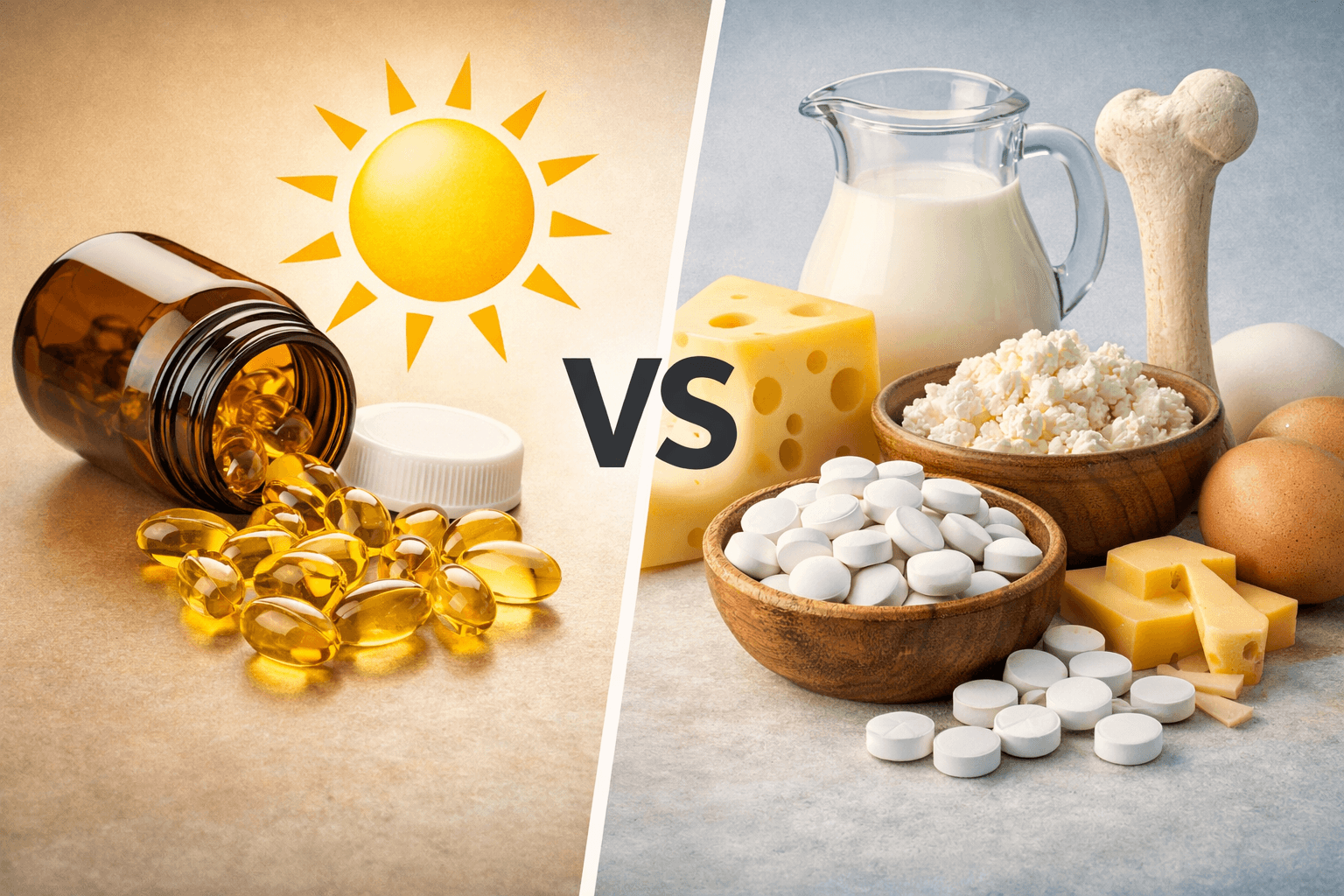
The supplement aisle can be overwhelming. Shelves overflow with bottles of calcium and vitamin D, and conflicting advice about which one is essential or whether you need both. Should you take a Vitamin D vs Calcium supplement daily, or can a balanced diet cover your needs? This article looks at the science behind each nutrient, unpacks why they’re often paired together, and offers guidance on how to get the right amounts from diet, sunlight and supplements. Instead of making one vitamin the villain, we’ll explain how they work as a team to keep your bones strong and your body functioning properly.
Understanding the Difference: What Do Vitamin D and Calcium Do?
Vitamin D: A hormone for calcium absorption and more
Vitamin D is technically a hormone. According to Johns Hopkins Medicine, it helps the body absorb calcium and phosphorous, supports muscle movement, communicates with nerves, modulates the immune system, and assists hormonal secretion and blood vessel flow. Without enough vitamin D, the parathyroid glands produce excess parathyroid hormone, leading to a condition called hyperparathyroidism. This can cause bone weakening and an increased risk of fractures. Deficiency in vitamin D also results in skeletal deformities (rickets) in children and muscle weakness in older adults.
Calcium: Building blocks for bones and beyond
Calcium is a mineral and the most abundant one in the body. NIAMS explains that bones are partly made of calcium phosphate, which hardens and strengthens bone. Since the body cannot make calcium, it must come from food, drinks or supplements. Beyond skeletons, calcium aids muscles, heart rhythms and nerve transmission; if dietary intake is low, the body takes calcium from bones, making them weaker and increasing the risk of osteoporosis.
Summary
- Vitamin D helps the gut absorb calcium, maintains adequate blood calcium levels, supports muscle and immune function, and prevents bone deformities.
- Calcium forms the hard structure of bones and teeth, keeps muscles and nerves working, and is pulled from bones if dietary intake falls short.
- Lack of either nutrient triggers bone demineralisation and elevates fracture risk.
Recommended Intakes and Dietary Sources
How much vitamin D do you need?
The National Institutes of Health’s Office of Dietary Supplements (ODS) states that adults generally need 15 mcg (600 IU) of vitamin D per day, increasing to 20 mcg (800 IU) for people over 70 years. These recommendations assume minimal sun exposure because sunlight can stimulate vitamin D production in the skin. Children need 10–15 mcg (400–600 IU) daily.
Food sources and sunlight: Few foods naturally provide vitamin D. Fatty fish like trout, salmon and mackerel, and fish liver oils are among the best sources. In the United States, most dietary vitamin D comes from fortified foods such as milk, yogurt and breakfast cereals. The NIAMS notes that most Americans do not consume enough vitamin D, even though the body can produce some with sun exposure. However, factors like season, latitude, skin pigmentation and sunscreen can limit synthesis, so many people benefit from dietary or supplemental vitamin D.
How much calcium do you need?
The ODS recommends 1,000 mg of calcium daily for adults aged 19–50 years and 1,000 mg for men aged 51–70 years. Women over 50 and men over 70 require about 1,200 mg per day. Children and teens have higher needs (1,300 mg) to support bone growth.
Food sources: Dairy products (milk, yogurt, cheese) are rich natural sources of calcium. Other foods include fish with edible bones (sardines, salmon), leafy greens like kale and broccoli, tofu set with calcium, and fortified juices or cereals. However, plant foods high in oxalic or phytic acids (e.g., spinach, beans) reduce calcium absorption.
Why vitamin D matters for calcium absorption
Calcium absorption occurs via two mechanisms—active transport and passive diffusion. Active transport is most effective at low intakes and requires vitamin D. Without sufficient vitamin D, the gut absorbs far less calcium, and the body must mobilize calcium from bone to maintain blood levels. The ODS notes that vitamin D ensures adequate calcium and phosphate concentrations for bone mineralization and muscle function.
Vitamin D vs Calcium: Which Is More Important?
The question “Vitamin D vs Calcium — which is more important?” is somewhat misleading. Both nutrients are essential and work together. Here’s why:
- Calcium is the main structural component of bones and teeth. Without sufficient dietary calcium, the body withdraws calcium from bones, weakening them.
- Vitamin D is required for calcium absorption. ODS data show that active transport of calcium in the gut requires vitamin D. Without vitamin D, your body cannot effectively absorb dietary calcium, no matter how much you consume.
- Deficiency of either nutrient causes bone problems. Lack of vitamin D leads to rickets in children and osteomalacia in adults. Inadequate calcium intake increases osteoporosis risk.
- They support functions beyond bones. Vitamin D modulates immune responses, nerve communication and blood vessel function, while calcium is needed for muscle contraction, blood clotting and nerve transmission.
Instead of choosing one over the other, think of vitamin D and calcium as partners. Vitamin D ensures that the calcium you eat is absorbed and used effectively, while calcium provides the raw material for strong bones. For most people, vitamin D status often limits calcium utilization because sun exposure and diet may be inadequate. In that sense, vitamin D may appear “more important,” but only because it allows you to use calcium properly.
Should You Supplement? Facts and Myths
Why supplements might be needed
- Low dietary intake: If your diet lacks dairy or fortified foods, you may struggle to meet calcium or vitamin D recommendations. Vegans, people with lactose intolerance and older adults often need supplements.
- Limited sun exposure: Those who live at high latitudes, spend little time outdoors, wear sunscreen or have dark skin may not produce enough vitamin D.
- Medical conditions: Conditions like celiac disease, inflammatory bowel disease, kidney disorders or endocrine issues can impair absorption or activation of vitamin D and calcium.
When food is better than pills
The BoneHealth & Osteoporosis Foundation emphasises that food is the best way to get calcium; supplements should be used only when dietary intake is inadequate. Calcium supplements can cause constipation, kidney stones and, in excess, may contribute to calcification of blood vessels. The same source notes that more calcium isn’t always better—consuming more than you need does not build extra bone and may increase risk of kidney stones.
Vitamin D supplements are helpful when sun exposure is insufficient and dietary sources are limited. Adults generally need 600–800 IU per day, and those over 50 years may need up to 1,000 IU. The upper safe limit for adults is 4,000 IU per day. High doses beyond this range can cause hypercalcemia (too much calcium in the blood) and may lead to blood vessel calcification.
Taking them together or separately?
The BoneHealth & Osteoporosis Foundation states that vitamin D supplements do not have to be taken at the exact same time as calcium; vitamin D is needed for absorption, but you can take them at different times of the day. Calcium carbonate should be taken with food because stomach acid improves absorption, whereas calcium citrate is well absorbed with or without food. Vitamin D supplements (D2 or D3) can be taken with or without food. Dividing calcium doses into 500–600 mg increments improves absorption and reduces gastrointestinal discomfort.
Don’t forget Vitamin K and Magnesium
While this article focuses on vitamin D vs calcium, research shows that vitamin K works alongside vitamin D to direct calcium into bones and away from soft tissues. Healthline summarises evidence that vitamin D improves calcium absorption but cannot control where calcium ends up; vitamin K activates proteins that deposit calcium in bones and prevent calcification of blood vessels. Magnesium is another cofactor necessary for vitamin D activation. A balanced diet rich in leafy greens, nuts and whole grains helps provide these cofactors.
Best Practices for Taking Vitamin D and Calcium Supplements
- Meet your needs through food first. Prioritize calcium-rich foods like dairy products, fortified plant milks, sardines, tofu and green vegetables. For vitamin D, include fatty fish and fortified milk or cereals.
- Get safe sun exposure. Aim for short periods (10–15 minutes) of midday sun on arms and legs a few times per week. Take care to avoid sunburn and consider your skin type, season and latitude.
- Choose the right supplement form. Calcium carbonate is cheaper but requires stomach acid; take it with meals. Calcium citrate costs more but absorbs well with or without food. Vitamin D3 (cholecalciferol) is the form the body produces; it may raise blood levels more effectively than D2.
- Take appropriate doses. For adults, aim for 600–800 IU of vitamin D (up to 1,000 IU for older adults) and 1,000–1,200 mg of calcium. Don’t exceed the tolerable upper intake levels (4,000 IU for vitamin D and 2,000–2,500 mg for calcium unless advised by a doctor). Split calcium into 500–600 mg doses for better absorption.
- Consider timing. If taking both supplements, you can space them out. Take vitamin D with a meal containing healthy fats (to improve absorption), and take calcium later in the day or with another meal. Avoid taking calcium at the same time as high‑fiber meals or certain medications (e.g., thyroid hormone, some antibiotics) because fiber and drugs can interfere with absorption.
- Check supplement quality. Look for products verified by United States Pharmacopeia (USP) or other reputable third‑party testing. These labels ensure that the supplement contains the stated amount of nutrient and is free of contaminants.
- Consult your healthcare provider. If you have kidney disease, parathyroid disorders, sarcoidosis or other medical conditions, your provider may adjust your vitamin D or calcium doses. Routine testing of blood levels of vitamin D and calcium may be necessary for individuals on high‑dose supplements.
Conclusion: A Balanced Approach to Bone Health
In the debate of Vitamin D vs Calcium, the answer isn’t either/or. Calcium provides the building blocks for bones and teeth, while vitamin D ensures those blocks get delivered and used properly. Without adequate vitamin D, your body cannot absorb calcium efficiently. Without enough calcium, vitamin D has nothing to work with, forcing the body to pull calcium from bones and weakening them.
For most people, a varied diet rich in dairy or fortified plant milks, fish, leafy greens, nuts and mushrooms will supply calcium and vitamin D. Safe sun exposure and fortified foods help maintain vitamin D levels. Supplements can fill gaps when diet and sunlight are insufficient, but more is not necessarily better. Exceeding recommended doses can cause kidney stones, constipation or dangerous calcification of blood vessels. Always consult a healthcare professional before starting or adjusting supplements. By focusing on whole foods, balanced nutrient intake and moderate supplementation, you can support strong bones, a healthy immune system and overall vitality.
Frequently Asked Questions (FAQ) for Vitamin D vs Calcium
Is vitamin D more important than calcium for bone health?
No. Vitamin D and calcium work together. Calcium forms the structure of bones, and vitamin D ensures your body absorbs it. Deficiency of either nutrient leads to weak bones, so you need adequate amounts of both.
Can I get enough vitamin D from sunlight alone?
Sunlight helps the skin make vitamin D, but production depends on factors like season, latitude, skin pigmentation and sunscreen use. Many Americans do not make enough vitamin D from sunlight and rely on fortified foods or supplements.
Should vitamin D and calcium supplements be taken together?
You don’t have to take them at the exact same time. Vitamin D is required for calcium absorption, but you can space supplements throughout the day. Calcium carbonate should be taken with food, whereas calcium citrate and vitamin D can be taken with or without food.
What are signs of vitamin D or calcium deficiency?
Vitamin D deficiency can cause bone pain, muscle weakness, fatigue and, in children, rickets. Calcium deficiency may lead to brittle nails, muscle cramps, numbness and tingling or, over time, osteoporosis.
Are there risks to taking too much vitamin D or calcium?
Yes. Excessive vitamin D intake can cause high blood calcium (hypercalcemia), leading to nausea, weakness, and calcification of blood vessels. Too much calcium can cause constipation, kidney stones and may contribute to vascular calcification. Stay within recommended intake ranges and consult a healthcare professional before high-dose supplementation.
Do I need other nutrients for bone health?
Besides vitamin D and calcium, nutrients like vitamin K and magnesium help direct calcium into bones and activate vitamin D. A balanced diet with leafy greens, nuts, seeds and whole grains provides these cofactors