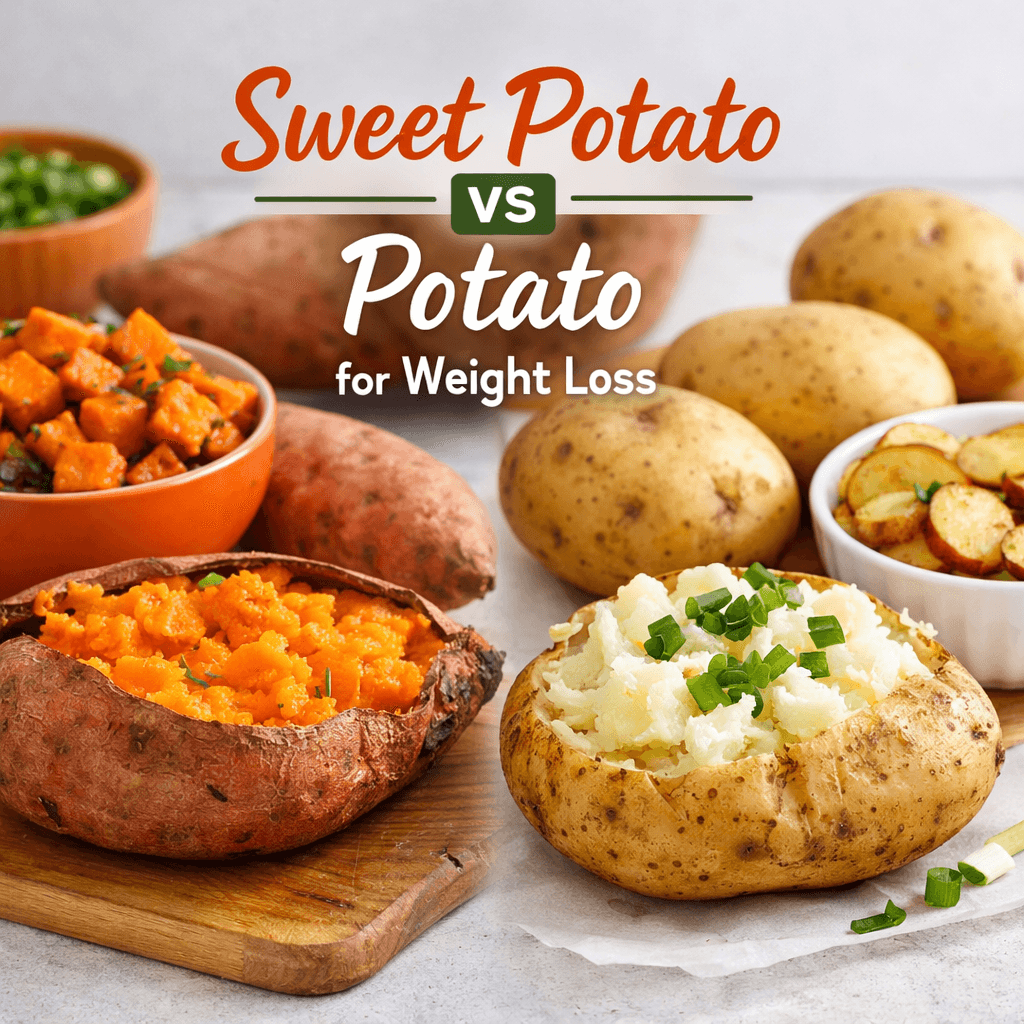
Sweet Potato vs Potato: Which One Is Better for Weight Loss?
When people talk about losing weight, root vegetables like potatoes often get a bad rap. Regular (white) potatoes have been blamed for weight gain and blood‑sugar spikes, while sweet potatoes are sometimes labeled a “superfood.” But is the orange-fleshed tuber really superior for slimming down? Both types of potatoes are nutrient‑dense, inexpensive and versatile, and they occupy a unique spot between vegetables and starches. To understand how they fit into a healthy diet, this article compares sweet potato vs potato for weight loss. We’ll look at calories, fiber, vitamins and minerals, glycemic index, satiety, and current research on weight management, then offer practical tips on how to enjoy either spud without sabotaging your goals.
Nutritional Overview: Sweet Potato vs White Potato for Weight Loss
Calories and macronutrients tell only part of the story, but they’re a good place to start. A 3.5‑ounce (100‑gram) serving of cooked potato with the skin offers roughly the same calories and macronutrients for both varieties. White potatoes and sweet potatoes each provide about 90–92 calories, 2 grams of protein, 0.15 grams of fat and 21 grams of carbohydrates per 100 grams. The main nutritional differences lie in fiber and micronutrients:
| Nutrient (per 100 g cooked with skin) | Sweet potato | White potato | Evidence |
|---|---|---|---|
| Calories | ~90 kcal | ~92 kcal | Healthline comparison of 3.5‑oz servings |
| Protein | 2 g | 2 g | Healthline |
| Total carbs | 21 g | 21 g | Healthline |
| Fiber | 3.3 g | 2.1 g | Sweet potatoes contain more dietary fiber than white potatoes |
| Vitamin A | 107 % DV | 0.1 % DV | Sweet potatoes are rich in beta‑carotene (converted to vitamin A) |
| Vitamin C | 22 % DV | 14 % DV | Healthline nutrient comparison |
| Potassium | 10 % DV | 17 % DV | White potatoes are higher in potassium |
| Vitamin B6 | 17 % DV | 12 % DV | Healthline |
| Calories per medium (5 oz) potato | ~112 kcal | 110–168 kcal depending on variety | USDA figures for sweet potato and Idaho Potato Commission for white potato |
Key takeaway: sweet potatoes contain more fiber and beta‑carotene, while white potatoes provide more potassium and vitamin C. Both are low‑fat, low‑sodium foods that deliver complex carbohydrates and can fit into a calorie‑controlled diet.
Vitamins and Minerals for Weight Loss: Sweet Potato vs White Potato
Sweet potato advantages for weight loss
Sweet potatoes stand out for their beta‑carotene content—the compound that gives them their orange hue. A single medium sweet potato (about 130 g) supplies 102 % of the daily value for vitamin A and about 3.5 g of fiber. The viscous soluble fiber in sweet potatoes forms a gel in the digestive tract, slowing digestion and increasing feelings of fullness. They also provide vitamin C, potassium and vitamin B6, which supports metabolic processes.
Beyond basic nutrients, sweet potatoes contain antioxidants such as anthocyanins and other polyphenols. Purple sweet potatoes, for instance, have anthocyanins that may help manage blood sugar and support gut health. Antioxidants like beta‑carotene and anthocyanins help neutralize free radicals and reduce inflammation, factors that can influence weight management indirectly.
White potato advantages for weight loss
White potatoes are not nutrition villains; they’re among the best sources of potassium. A medium Idaho® potato provides 620 milligrams of potassium, about 15 % of the recommended daily intake—almost twice as much as a banana. Potassium helps regulate blood pressure, supports muscle function and counterbalances sodium, making it important for heart health. White potatoes also supply 30 % of the daily value for vitamin C and are a good source of vitamin B6. These nutrients aid collagen production, immune function and metabolism.
Resistant starch and gut health for weight loss
Both potatoes and sweet potatoes contain resistant starch—a type of carbohydrate that escapes digestion in the small intestine and ferments in the colon. Cooling potatoes after cooking increases this resistant starch content, which can help moderate blood sugar and increase satiety. Research shows that resistant starch also feeds beneficial gut bacteria and may reduce appetite. Thus, preparing potatoes ahead of time and serving them cold or reheated (as in potato salad) is a strategy for maximizing weight‑loss benefits.
Glycemic Index and Blood Sugar Response: Sweet Potato vs Potato for Weight Loss
One reason sweet potatoes are perceived as “healthier” is their glycemic index (GI)—a measure of how quickly a food raises blood sugar. The GI of potatoes varies widely depending on variety and preparation. According to Healthline’s evidence‑based comparison, baked sweet potatoes can have a GI as high as 94, while boiled sweet potatoes may be as low as 44. White potatoes show similar variability: boiled red potatoes have a GI around 89, whereas baked Russet potatoes reach about 111. Foods with a GI over 70 are considered high and lead to quicker blood‑sugar spikes, while those under 55 are low and cause smaller changes.
Because sweet potatoes often fall in the medium‑to‑low range, people with diabetes or insulin resistance may choose them over white potatoes. However, the differences are not absolute—some sweet potatoes can be high‑GI depending on cooking method. The Harvard Nutrition Source notes that sweet potatoes have a slightly lower glycemic load than white potatoes, leading to smaller blood‑sugar rises, but cautions that consuming large portions of any potato can still raise blood sugar. Boiling and cooling potatoes (of either type) lowers the GI by increasing resistant starch.
Fiber, Satiety and Calorie Density: Sweet Potato vs Potato for Weight Loss
Fiber and fullness for weight loss
Fiber is a major factor in weight management because it adds bulk without calories and slows digestion. Sweet potatoes contain around 3.3 g fiber per 100 g, while white potatoes provide about 2 g per 100 g. Both values rise slightly when you keep the skin on—the skin holds roughly half the total fiber content. The soluble fiber in sweet potatoes forms a gel in the digestive tract, which delays stomach emptying and increases satiety. Numerous studies show that higher fiber intake is associated with sustained weight loss; one review of 48 studies found that increasing fiber helped participants maintain at least 5 % body weight loss over 12 months.
Satiety index and weight loss
Beyond fiber, potatoes excel at satisfying hunger. A 2018 study cited by Health.com found that participants who ate potatoes consumed fewer calories at subsequent meals than those who ate rice or pasta. Potatoes scored the highest on the “satiety index,” meaning they were more filling per calorie than other starchy foods. This high satiety is attributed to their low calorie density, high water content and presence of resistant starch. Because people tend to eat similar weights of food regardless of calorie content, choosing heavier, low‑calorie foods like potatoes can naturally reduce total energy intake.
Sweet Potato vs Potato for Weight Loss: What Does Research Say?
White potato studies on weight loss
Several clinical studies suggest that potatoes can support weight loss when cooked healthfully. Researchers from Louisiana State University’s Pennington Biomedical Research Center conducted a controlled feeding trial in overweight adults. Participants replaced roughly 40 % of their usual meat intake with white potatoes (prepared by boiling with the skin and refrigerating to boost resistant starch) or with beans and peas. Participants felt fuller, ate fewer calories and lost weight, and potatoes performed as well as beans and peas for weight loss and blood‑glucose control. The lead dietitian, Dr. Candida Rebello, noted that the study did not restrict portion sizes; instead, the researchers lowered the meal’s energy density by adding potatoes, allowing participants to lose weight “with little effort”.
An earlier prospective study following adults for four years found that increasing potato intake—particularly fried potatoes—was associated with weight gain, whereas boiled or baked potatoes had a much smaller effect. The difference underscores that preparation matters: frying adds fat and calories, turning a low‑calorie food into a high‑energy snack. Health.com notes that a medium Russet potato contains 168 calories when baked, but French fries and loaded toppings multiply that number dramatically.
Sweet potato weight loss research
There is less direct research on sweet potatoes and weight loss, but evidence points to similar mechanisms. In an eight‑week trial, office workers who replaced one meal per day with a formula containing 132 g of white sweet potato experienced about a 5 % reduction in body weight and body fat compared with a control group. The effect was likely due to reduced calorie intake rather than a unique fat‑burning property of sweet potatoes. Sweet potatoes are 77 % water and 13 % fiber when raw, allowing them to deliver long‑lasting energy with relatively few calories.
Healthy Preparation Tips for Weight Loss
How you cook and serve potatoes determines whether they support or sabotage weight‑loss goals.
- Boil or steam and cool: Boiling potatoes with the skin on and cooling them increases resistant starch, lowers the glycemic impact and enhances satiety. Cold potato salads made with yogurt or mustard instead of mayonnaise are a tasty way to harness this effect.
- Bake or roast with minimal fat: Baking or roasting sweet potatoes and white potatoes is one of the healthiest methods. A drizzle of olive oil and herbs is plenty; avoid butter, cheese and bacon, which add saturated fat and calories.
- Leave the skin on: The potato skin provides about half the total fiber. Scrub the skin well before cooking and enjoy it for extra nutrients.
- Pair with lean proteins and non‑starchy vegetables: Combining potatoes with protein (fish, chicken, beans) and plenty of low‑carb vegetables slows digestion and prevents blood‑sugar spikes. This balanced plate helps control hunger and calorie intake.
- Watch portion sizes: Even healthy potatoes can add up. A standard serving is one medium potato or ½ cup of sweet potato cubes. Fill half your plate with non‑starchy vegetables, one quarter with lean protein and one quarter with a starchy side like potatoes or whole grains.
- Avoid fried and ultra‑processed forms: French fries, chips and tater tots contain added oil and salt, drastically increasing calorie density and linking them to weight gain and type 2 diabetes. Reserve them for occasional treats.
Sweet Potato vs Potato for Weight Loss: Which Is Better?
When comparing sweet potato vs potato for weight loss, there is no clear “winner.” Both are nutritious, satiating and relatively low in calories when prepared appropriately. Sweet potatoes offer more fiber and vitamin A, giving them a slight edge for fullness and eye health. White potatoes provide more potassium and vitamin C, crucial for blood pressure regulation and immune support. The glycemic index of each tuber ranges widely depending on variety and cooking method; boiling either one lowers their GI.
Ultimately, weight loss results from creating a calorie deficit through diet and activity. Both sweet potatoes and white potatoes can fit into this framework when you:
- Choose healthy cooking methods like boiling, baking or roasting.
- Eat the skin for extra fiber.
- Watch portion sizes and avoid energy‑dense toppings.
- Include them as part of a balanced plate with protein and vegetables.
Variety is also valuable. Dietitians at the Cleveland Clinic emphasize using both types of potatoes rather than relying on one, noting that preparation method matters more than variety. Rotating sweet and white potatoes can prevent boredom and ensure a broader range of nutrients.
FAQs
1. Are sweet potatoes lower in calories than white potatoes?
A 100‑gram serving of cooked sweet potato has about 90 calories, while the same amount of white potato has about 92 calories. The difference is negligible. Portion size and preparation method (e.g., frying vs baking) have a greater impact on calorie intake than the type of potato.
2. Which potato has a lower glycemic index?
Sweet potatoes generally have a lower glycemic index than white potatoes, but the range is wide. Boiled sweet potatoes may have a GI around 44–54, whereas baked sweet potatoes can reach 94. Boiled red potatoes have a GI near 89 and baked Russet potatoes about 111. Choosing boiled or steamed potatoes and cooling them before eating lowers the GI for either type.
3. How does fiber support weight loss?
Fiber adds bulk without adding many calories. Soluble fiber in sweet potatoes forms a gel in the gut, slowing digestion and increasing satiety. Both potatoes and sweet potatoes supply dietary fiber; eating the skin doubles the fiber content. Studies show that higher fiber intake is linked to sustained weight loss.
4. Are potatoes bad for weight loss?
Potatoes themselves are low in fat and provide important nutrients. Weight gain is more strongly associated with how potatoes are prepared and what you add to them. Fried potatoes and toppings like butter, cheese and bacon dramatically increase calories and saturated fat. Boiling, baking or roasting potatoes and pairing them with lean proteins and vegetables can make them part of a successful weight‑loss plan.
5. Can I eat potatoes on a low‑carb diet?
Both sweet potatoes and white potatoes are starchy and relatively high in carbohydrates (around 21 g per 100 g). If you’re following a very low‑carb or ketogenic diet, you may need to limit or avoid them. However, moderate‑carb diets can include small portions of potatoes, especially when balanced with non‑starchy vegetables and protein.
Conclusion
Choosing between sweet potato and white potato isn’t about picking a “good” or “bad” tuber; it’s about understanding their nutritional profiles and preparing them wisely. Sweet potatoes shine in fiber and beta‑carotene, while white potatoes excel in potassium and vitamin C. Both provide complex carbohydrates, resistant starch and a high satiety index that can help you feel full on fewer calories. Studies show that including potatoes in a balanced diet—especially when they replace energy‑dense meats or refined grains—can support weight loss and maintain blood‑sugar control. For the best results, cook potatoes by boiling, baking or roasting, keep the skin on, watch your portions and avoid heavy toppings. Whether you prefer the sweet, earthy notes of orange-fleshed varieties or the fluffy texture of a Russet, both potatoes can be allies on your journey toward healthy weight management.