Soaked almonds vs soaked walnuts: Which nut is healthier and why?
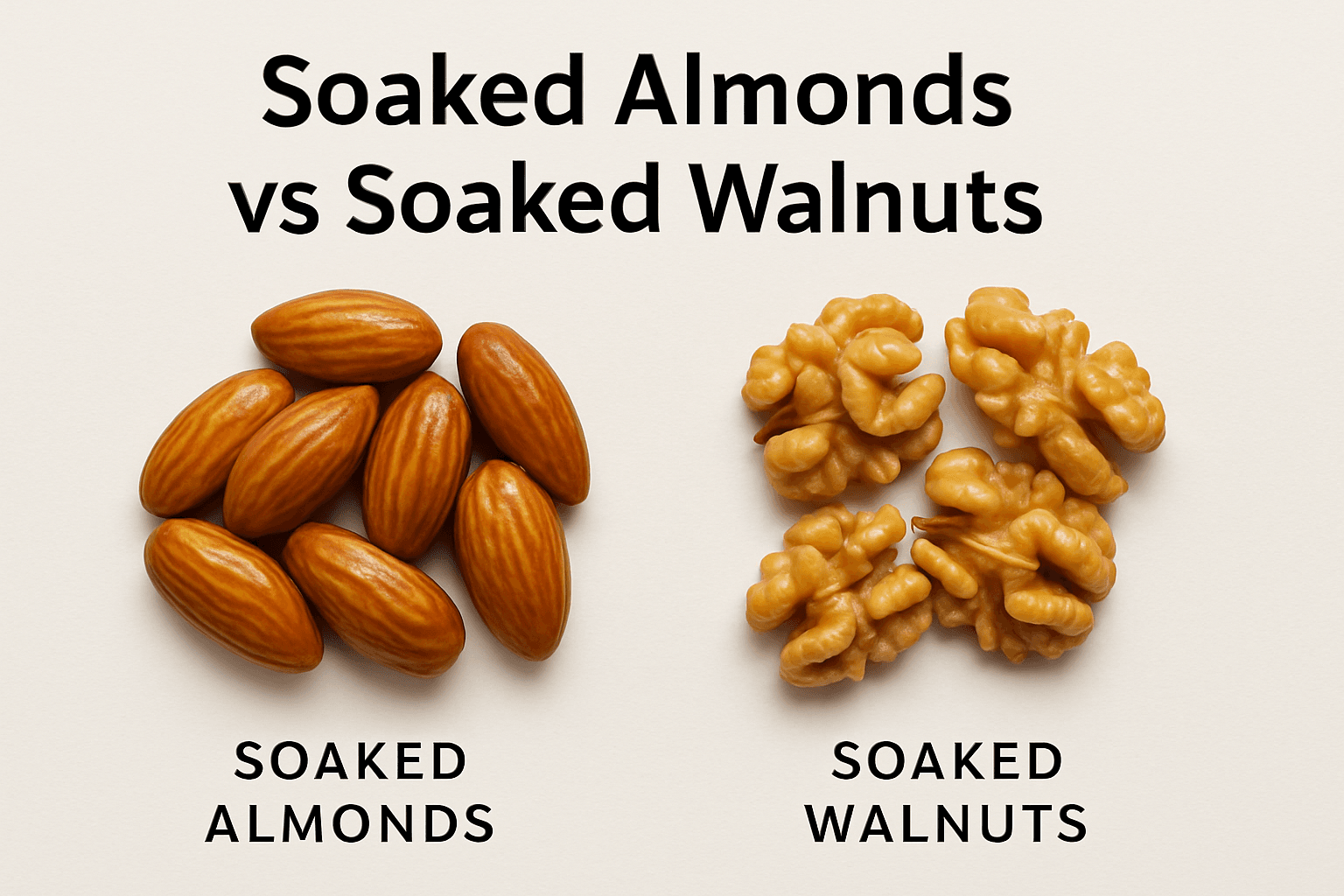
Nuts are among the most nutrient-dense foods on the planet. Almonds and walnuts, in particular, provide healthy fats, plant-based protein, fiber, vitamins and minerals. When soaked overnight, some people feel these nuts are easier to digest and their nutrients become more available. But when we compare soaked almonds vs soaked walnuts, which one takes the crown in terms of health benefits? This article compares both soaked almonds and soaked walnuts, explores why soaking makes a difference, and helps you choose the right nut for your needs.
Soaked Almonds vs Soaked Walnuts: Nutrition Comparison
A 30-gram serving (about a handful) of almonds or walnuts is packed with nutrients, but the balance varies slightly. When comparing soaked almonds vs soaked walnuts, it’s clear that both nuts offer impressive nutrition with different strengths. According to the USDA data compiled by Healthline, walnuts provide about 185 calories, 18.5 g fat, 4.3 g protein and 2 g fiber, while almonds offer 170 calories, 15 g fat, 6 g protein and 3 g fiberhealthline.com. Almonds deliver more minerals such as magnesium and phosphorus, whereas walnuts shine for their omega-3 fatty acid contenthealthline.com. Walnuts are the nut with the highest alpha-linolenic acid (ALA) content – a plant-based omega-3 linked to reduced inflammation and improved heart and brain healthhealthline.com.
| Nutrient (per 30 g) | Walnuts | Almonds |
|---|---|---|
| Calories | ~185 kcal | ~170 kcal |
| Total fat | 18.5 g | 15 g |
| Protein | 4.3 g | 6 g |
| Carbohydrates | 4 g | 6 g |
| Fiber | 2 g | 3 g |
| Vitamin E | 1.3 % DV | 45 % DVhealthline.com |
| Magnesium | 11 % DV | 19 % DVhealthline.com |
| Omega‑3 fatty acids | High in ALAhealthline.com | Low |
Both nuts also provide calcium and potassium, minerals that help counteract the blood‑pressure‑raising effects of sodiumhealthline.com.
Why soak nuts?
Plant foods naturally contain phytic acid – a compound that binds minerals like zinc, iron and calcium and reduces their absorption. Walnuts and almonds contain phytic acid and enzyme inhibitors that may make them harder to digest. When comparing soaked almonds vs soaked walnuts, one key reason people soak nuts is to reduce these antinutrients and initiate the first stage of germination.
Research shows that soaking nuts in salt water helps break down phytic acid and deactivate enzyme inhibitors. A blog from Good Form Foods explains that phytic acid in walnuts binds minerals, limiting absorption. Soaking reduces phytic acid content and activates sprouting, leading to better mineral absorption, easier digestion and improved bioavailability; it can reduce phytic acid by 20–50% depending on the methodgoodformfoods.com. Traditional cultures around the world soak or ferment nuts and seeds – an Ayurvedic practice in India involves soaking almonds for better digestion.
For almonds, evidence is mixed. A Healthline review notes that soaking almonds at room temperature for 24 hours decreases phytic acid by less than 5%, and soaking chopped almonds in salt water reduces phytic acid by about 4%healthline.com. Some studies found that soaking does not significantly improve digestive symptoms and may not increase mineral availability. However, soaking makes almonds softer and less bitter, making them easier to chew and possibly improving fat absorptionhealthline.com. Raw almonds still offer abundant nutrients, but some people prefer the texture and digestibility of soaked nuts — especially when comparing soaked almonds vs soaked walnuts for overall comfort and ease of digestion.
Benefits of soaked almonds
Soaked almonds combine the inherent benefits of almonds with easier digestibility and enhanced nutrient availability. Evidence and expert commentary suggest the following advantages:
Soaked Almonds vs Soaked Walnuts for Digestion
Raw almonds have enzyme inhibitors that complicate digestion. Soaking overnight “kills these inhibitors,” making almonds more easily digestible and enhancing uptake of vitamins, minerals and antioxidantsmedanta.org. Removing the skin (which contains tannins) further improves absorptionmedanta.org.
Soaked Almonds vs Soaked Walnuts for Brain Function
Almonds are often called brain food. They contain riboflavin and L‑carnitine, nutrients that support brain performance and memory. A Medanta health article explains that consuming soaked almonds on an empty stomach helps the brain absorb these nutrients and improves concentration and mental clarity throughout the day. Vitamin E, magnesium and antioxidants protect neurons from oxidative stress and support nerve functionhealthline.com. Dr Aditya Gupta of Artemis Hospital notes that vitamin E in almonds plays a critical role in maintaining cognitive health, and magnesium helps reduce stress‑related brain fog.
Soaked Almonds vs Soaked Walnuts for Heart Health
Soaked almonds are rich in monounsaturated fats, vitamin E and magnesium. These compounds help reduce bad LDL cholesterol while increasing good HDL cholesterol, thereby lowering the risk of heart disease and preventing arterial clogging. Population studies link regular almond intake to weight loss, reduced LDL levels and improved blood sugar controlhealthline.com.
Soaked Almonds vs Soaked Walnuts for Weight Loss
Because almonds deliver healthy fats, protein and fiber, they provide sustained energy. Soaked almonds release energy slowly, keeping blood sugar levels stable and preventing energy dips. Their protein and fiber promote satiety, helping with weight management and reducing unnecessary snacking. In clinical studies, including almonds in weight‑loss diets led to greater reductions in body weight and visceral fathealthline.com. Researchers attribute this to the appetite‑suppressing effects of the fats, proteins and fibershealthline.com.
Skin, bones and immunity
Almonds’ antioxidants and vitamin E combat oxidative stress, promoting youthful skin and reducing blemishesmedanta.org. Their calcium, phosphorus and magnesium support bone density and teeth healthmedanta.org. High antioxidant content, vitamin E and zinc boost immunity and help fight infections.
Blood sugar control and gut health
Soaked almonds have a low glycemic index and high magnesium levels, making them beneficial for people with diabetesmedanta.org. They also act as prebiotics – food for beneficial gut bacteria – supporting digestive health and reducing bloatingmedanta.org. By alkalising the body and regulating stomach acid levels, soaked almonds can help treat acidity and heartburnmedanta.org.
Benefits of soaked walnuts
Walnuts are prized for their unique fatty acid profile. Soaking them can enhance digestibility and may amplify certain benefits.
Easier digestion and reduced anti‑nutrients
Walnuts contain phytic acid, which binds minerals such as zinc, iron, calcium and magnesium. When comparing soaked almonds vs soaked walnuts, soaking plays a key role in reducing these antinutrients. Soaking walnuts in salt water breaks down phytic acid and starts germination. This reduces antinutrient content, deactivates enzyme inhibitors, improves mineral absorption, enhances bioavailability and creates a smoother, less bitter nutgoodformfoods.com. HealthShots notes that soaking makes walnuts easier to digest and reduces the heat (pitta) of the nut, which can irritate those with a weak .
Reduces inflammation
Polyphenolic compounds in walnuts help reduce inflammation, and soaking makes these compounds more accessible. HealthShots explains that including soaked walnuts in your daily diet may reduce inflammation; polyphenolic compounds in walnut oil contribute to the anti‑inflammatory effectshealthshots.com. Chronic inflammation is linked to numerous diseases, so this benefit is significant.
Heart health
Walnuts are naturally high in monounsaturated and polyunsaturated fats, including plant‑based omega‑3s (ALA). Soaked walnuts continue to offer these heart‑healthy fats. Eating walnuts has been associated with lower total and LDL cholesterol, lower triglycerides and lower apoprotein B. HealthShots notes that a handful of walnuts (≈28 g) contains 2.5 g of ALA, 4 g of protein and 2 g of fiber. These nutrients can reduce bad cholesterol and may reduce the risk of cardiovascular disease.
Helps manage type 2 diabetes
Walnuts are high in fiber and have a low glycemic index. Soaked walnuts may help manage type 2 diabetes by lowering blood sugar levels and improving insulin sensitivity. Fiber slows digestion, providing a gradual release of sugar and preventing spikes in blood glucose.
Brain health and cognitive function
Walnuts’ combination of polyunsaturated fats, polyphenols and vitamin E reduces inflammation and oxidative stress in the brain. HealthShots reports that eating walnuts has been shown to enhance processing speed, mental flexibility and memory. An earlier Healthline review notes that higher walnut intake is associated with better reaction times and memoryhealthline.com, and ALA and antioxidants in walnuts help reduce inflammation‑induced brain damagehealthline.com.
Additional benefits
Walnuts also support weight management because their fiber and healthy fats promote satiety. However, the research on weight loss is mixed; one study found greater weight loss when walnuts were included in a calorie‑controlled diethealthline.com. Walnuts may also improve skin health due to vitamin E and help clear poreshealthshots.com.
Comparing soaked almonds and soaked walnuts
Weight loss and metabolic health
When it comes to weight management and blood sugar control, almonds have the edge. Randomised trials show that incorporating almonds into weight‑loss diets leads to greater reduction in body weight, especially visceral fat, compared with diets without almondshealthline.com. Researchers attribute this to the appetite‑suppressing effects of almonds’ fat, protein and fiberhealthline.com and the incomplete absorption of calories due to almond cell wallshealthline.com. Almonds also improve blood sugar control by slowing stomach emptying and lowering the glycemic index of mealshealthline.com.
Walnuts contribute healthy fats and fiber that support satiety, but studies on their effect on weight loss are limited and yield mixed resultshealthline.com.
Keto‑friendliness and carbohydrate content
Both almonds and walnuts can fit into low‑carb or ketogenic diets. Almonds have a slightly higher fiber content, but walnuts have a slightly lower net carb count (2 g versus 3 g per ounce)healthline.com. This difference is minor; either nut can be included in a keto diet as long as you monitor portion sizes.
Heart health
Both nuts support heart health. Walnuts are rich in ALA and polyphenols that lower LDL cholesterol and blood pressurehealthline.com, while almonds’ antioxidants (vitamin E and flavonoids) and unsaturated fats lower triglycerides, total cholesterol and LDL cholesterolhealthline.com. Clinical studies show that eating about 60 g of almonds per day can reduce total cholesterol by 6 % and LDL cholesterol by 12 %healthline.com, and about 100 g of almonds per day may reduce total cholesterol by 21 % and LDL cholesterol by 29 %healthline.com. Walnuts have been shown to lower total cholesterol by about 3 %, LDL by 4 % and triglycerides by 5.5 %. Both nuts are valuable additions to a heart‑healthy diet.
Brain health
Walnuts take the lead in brain health because of their high ALA and antioxidant content. Studies link higher walnut intake with better memory and faster reaction timeshealthline.com. Animal research suggests walnuts improve memory performancehealthline.com. In contrast, human studies on almonds and cognitive function have shown no significant improvementshealthline.com. However, almonds still provide vitamin E, magnesium and B vitamins that support nerve function and may reduce stress and anxiety.
Digestibility and mineral absorption
Soaked almonds and walnuts both aim to reduce antinutrients and enzyme inhibitors. Soaking walnuts appears to reduce phytic acid more substantially (20–50 % reduction), whereas soaking almonds results in only a modest reduction (around 4–5 %)healthline.com. That said, the primary benefit of soaking almonds may be improved texture and digestibility rather than dramatic nutrient changeshealthline.com. If you have a sensitive stomach or prefer softer nuts, soaking both almonds and walnuts can help.
Potential downsides
- Allergies: Both nuts can trigger allergic reactions. Walnuts tend to be more allergenic than almonds, but cross‑allergies are possiblehealthline.com.
- Antinutrients: Even with soaking, both nuts still contain phytic acid. This compound can bind minerals and inhibit their absorptionhealthline.com. However, phytic acid also acts as an antioxidant and may protect against heart disease and some cancershealthline.com.
- Calorie density: Nuts are calorie‑dense. Large portions may lead to weight gain if not accounted for within your overall calorie intakehealthline.com.
Tips for soaking and eating
- Soak overnight: Place 5–10 almonds or walnuts in a bowl, cover with warm water and add a pinch of salt. Let them sit for 8–12 hours at room temperaturehealthline.com.
- Rinse and peel: Drain the water in the morning. Almond skins contain tannins that interfere with nutrient absorption, so peeling is recommended for better bioavailability. Walnuts can be eaten with skins, but soaking will soften them.
- Store properly: If you soak a large batch, pat the nuts dry and store them in an airtight container in the refrigerator for up to a weekhealthline.com.
- Enjoy creatively: Eat soaked nuts on an empty stomach in the morning for better absorption, or add them to smoothies, oatmeal, salads or yoghurt for a nutrient boost.
- Moderation: A handful (around 5–7 nuts) per day is usually sufficient to reap benefits without adding excessive calories.
Which nut is healthier?
Both soaked almonds and soaked walnuts are healthful. Your choice depends on your personal health goals:
- For weight management and blood sugar control: Soaked almonds may offer a slight advantage because their fiber, protein and healthy fats enhance satiety and improve glycemic controlhealthline.com.
- For brain health: Soaked walnuts are the better pick thanks to their high ALA content and antioxidants, which are linked to better cognitive functionhealthline.com.
- For heart health: Both nuts lower cholesterol and support cardiovascular health. Walnuts provide more omega‑3s, while almonds supply more vitamin E and mineralshealthline.com.
- For digestion and mineral absorption: Soaking walnuts may more effectively reduce antinutrients and improve mineral availability, but the difference is not dramatic. Soaking almonds primarily softens them and may make them easier to eat.
In reality, you don’t have to choose one over the other. Enjoy a mix of soaked almonds and walnuts in moderation to reap the unique benefits each nut offers.
Conclusion
Soaked almonds and soaked walnuts, both offer powerful health benefits — but in slightly different ways. Almonds are excellent for brain function, glowing skin, controlled blood sugar, and long-lasting energy. Walnuts, on the other hand, are rich in plant-based omega-3, making them superb for heart health, reducing inflammation, improving memory, and supporting overall brain performance.
If your goal is weight loss, digestion, glowing skin, or daily energy, soaked almonds are ideal.
If your goal is heart health, inflammation control, mental sharpness, or stronger brain function, soaked walnuts are the better pick.
Including both nuts in moderation gives you the best of both worlds.
✅ FAQ (Schema Friendly)
Q1. Are soaked almonds healthier than soaked walnuts?
Both are healthy, but almonds support brain and skin health while walnuts are richer in omega-3 for heart and brain function.
Q2. How many soaked almonds should I eat daily?
5–7 soaked almonds per day are ideal.
Q3. How many soaked walnuts per day?
1–2 soaked walnuts daily are enough because they are calorie-dense.
Q4. Why should nuts be soaked?
Soaking reduces phytic acid, improves digestion, and increases nutrient absorption.
Q5. Which nut is better for weight loss?
Almonds keep you full longer, while walnuts help balance appetite and hormones. Both support weight loss.