Iron Rich Foods for Women: 6 Powerful Sources to Boost Your Iron Levels
Iron is a vital mineral that transports oxygen throughout the body and supports energy production, cognitive function, and immune health. For women, meeting daily iron needs is especially important due to monthly menstrual losses, pregnancy, and breastfeeding. When iron intake is low, iron-deficiency anemia can develop, leading to fatigue, dizziness, and poor concentration. Including iron rich foods for women in a balanced daily diet can help prevent deficiency and maintain overall health—especially when you know which foods provide the most iron and how to maximize absorption.
Iron Rich Foods for Women: Why They Matter
The U.S. Dietary Guidelines recommend that non‑pregnant women aged 19–50 consume 18 mg of iron daily, while pregnant women require 27 mg and breastfeeding women around 9 mg; post‑menopausal women need about 8 mg. Because plant‑based (non‑heme) iron isn’t absorbed as efficiently as the heme iron found in animal foods, vegetarians and vegans are encouraged to aim for nearly twice the standard amount.
Two types of iron exist in food. Heme iron, found in meat, fish and poultry, is the form most readily absorbed, with up to 30 % absorption. Non‑heme iron comes from plant foods like legumes, nuts and leafy greens; only 2–10 % of non‑heme iron is absorbed. Eating heme and non‑heme sources together and pairing plant foods with vitamin C‑rich fruits or vegetables (e.g., citrus, tomatoes, peppers) can boost absorption.
Choosing the Best Iron Foods for Women
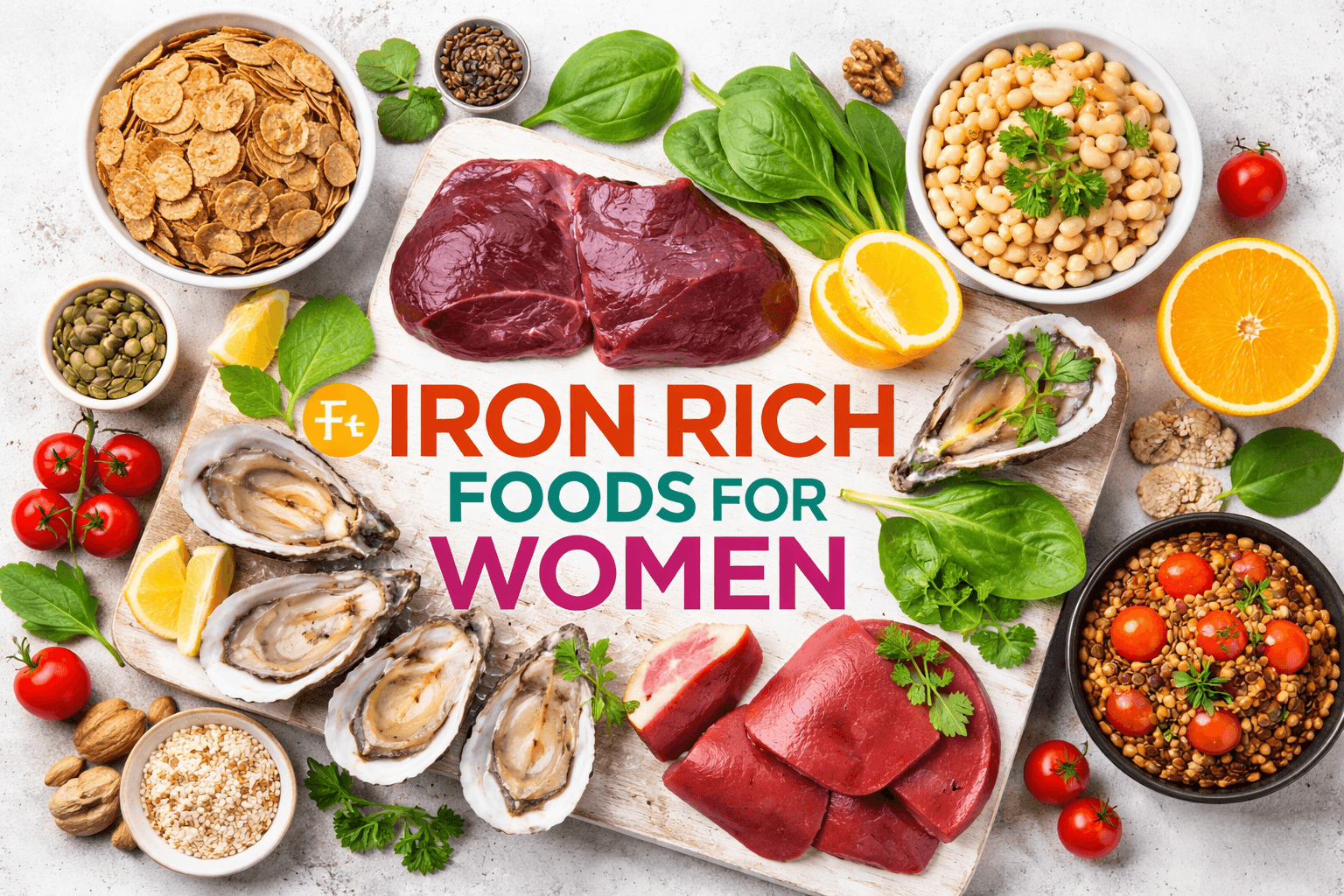
When choosing foods to meet your iron needs, it helps to diversify sources. Below are six iron‑rich foods that are readily available in the United States. Together they illustrate a mix of heme and non‑heme sources, along with practical tips to help you hit your daily targets.
Fortified Breakfast Cereals for Women’s Iron Needs
Fortified cereals are among the most concentrated non‑heme sources of iron. Many brands are enriched to supply 100 % of the daily value, providing about 18 mg of iron per serving. Look for whole‑grain cereals with minimal added sugar and check the label for iron and other micronutrient content. Pair your cereal with vitamin C‑rich fruit (such as strawberries or oranges) and a source of protein like nuts or yogurt to improve absorption and provide sustained energy. Because this is a fortified product rather than a naturally iron‑rich food, moderation is key, and it should be part of a balanced breakfast rather than your sole source of iron.
Oysters & Shellfish: Heme Iron for Women
Shellfish are stars when it comes to heme iron. Eastern oysters contain about 8 mg of iron per 3‑ounce cooked portion—nearly half the daily value. Other shellfish such as clams, scallops and mussels also deliver heme iron. Because heme iron is absorbed more efficiently than plant‑based iron, a small serving can make a significant contribution toward your daily needs. In addition to iron, oysters provide high‑quality protein, zinc and vitamin B₁₂, making them a nutrient‑dense option. Serve them steamed, baked or grilled; for a vitamin C boost, squeeze fresh lemon juice on top.
White Beans & Legumes: Plant Iron for Women
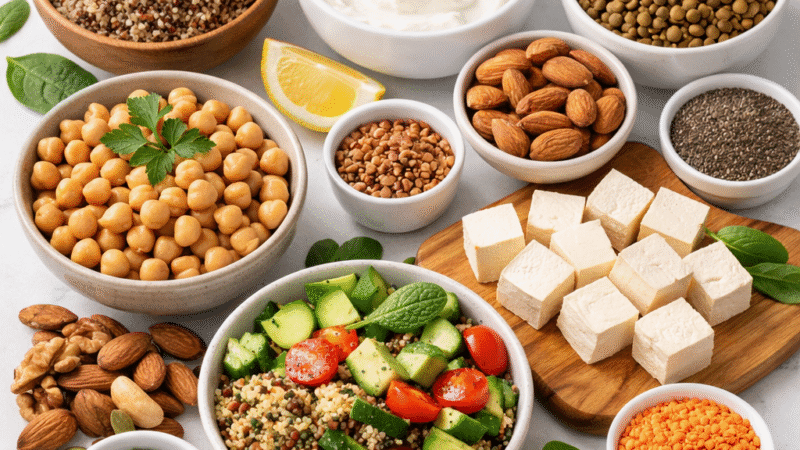
Legumes are a cornerstone of plant‑based diets and provide iron along with fiber, protein and folate. A one‑cup serving of canned white beans contains roughly 8 mg of iron. Other beans — including kidney beans, chickpeas and lentils — offer between 2 mg and 8 mg per serving. Because non‑heme iron is absorbed less efficiently than heme iron, pairing beans with vitamin C‑rich produce like tomatoes or bell peppers enhances uptake. Try adding white beans to soups, stews or salads, or purée them into a spread. Legumes are also high in soluble fiber, which supports heart health and helps keep you full.
Beef Liver & Lean Red Meat: Top Iron Foods for Women
Organ meats offer some of the highest concentrations of heme iron. Beef liver supplies about 5 mg of iron per 3‑ounce portion. While liver’s strong flavor can be polarizing, incorporating it occasionally can help prevent deficiency, especially for women with heavy menstrual bleeding. Lean cuts of beef and lamb also contribute smaller amounts (~2 mg per 3‑ounce serving). Because red meat also provides high‑quality protein, vitamin B₁₂ and zinc, moderate consumption can be beneficial. To minimize saturated fat and cholesterol intake, choose lean cuts (e.g., sirloin or round) and limit organ meats to occasional servings. If you follow a plant‑based diet, consider iron‑fortified plant burgers or mushrooms sautéed in iron‑rich cast‑iron pans as alternatives.
Lentils & Pulses: Iron-Rich Vegetarian Options for Women
Lentils, a type of pulse, pack significant nutrition in a tiny package. A half‑cup of cooked lentils delivers around 3 mg of iron. They also provide about 9 g of protein and are rich in fiber, folate and potassium. Lentils cook quickly compared with other legumes, making them convenient for weeknight meals. Try simmering lentils in vegetable broth with onions, garlic and spices to make a hearty stew, or blend them into spreads like hummus. Since lentils contain non‑heme iron, serve them with vitamin C‑rich ingredients (such as tomatoes or a side salad with citrus) to enhance absorption.
Spinach and Leafy Greens (non‑heme)
Dark leafy greens are synonymous with nutrition, and iron is no exception. Half a cup of cooked spinach contains about 3 mg of iron. Spinach also delivers vitamin K, vitamin A, magnesium and antioxidants. However, its non‑heme iron is bound by compounds like polyphenols and oxalates, which reduce absorption. To maximize the benefit, lightly cook spinach to reduce oxalates and pair it with vitamin C‑rich foods like bell peppers or citrus fruits. Other leafy greens — including kale, beet greens and Swiss chard — provide smaller but meaningful amounts of iron.
Comparing Iron Sources for Women
The table below summarizes iron content for the highlighted foods. Values are approximate and based on data from the U.S. Department of Agriculture’s FoodData Central. Remember that absorption varies based on heme versus non‑heme sources, overall diet and individual iron status.
| Food (per cooked serving) | Type of iron | Approximate iron (mg) | % Daily Value* | Key nutrients and tips |
|---|---|---|---|---|
| Fortified breakfast cereal, 1 serving | Non‑heme (fortified) | 18 mg | 100 % | Choose whole‑grain cereals with minimal added sugar; pair with vitamin C‑rich fruit. |
| Oysters (eastern), 3 oz | Heme | 8 mg | 44 % | Provides protein, zinc and vitamin B₁₂; serve steamed or grilled with lemon. |
| White beans (canned), 1 cup | Non‑heme | 8 mg | 44 % | High fiber and plant protein; pair with tomatoes or peppers to boost absorption. |
| Beef liver, 3 oz | Heme | 5 mg | 28 % | Rich in protein and B vitamins; enjoy in moderation to limit saturated fat. |
| Lentils, cooked, ½ cup | Non‑heme | 3 mg | 17 % | Quick‑cooking legume; combine with vitamin C‑rich foods to enhance iron uptake. |
| Spinach, cooked, ½ cup | Non‑heme | 3 mg | 17 % | Contains vitamins A and K; cook lightly and pair with citrus or peppers. |
*The Daily Value (DV) for iron is 18 mg for adults and children over four years old.
Iron Absorption Tips for Women
Simply eating iron‑rich foods may not be enough if your body cannot absorb the mineral efficiently. Here are strategies to get the most from your meals:
- Combine heme and non‑heme sources. Consuming meat, poultry or seafood alongside plant foods improves non‑heme iron absorption. For example, toss spinach into a beef stir‑fry or serve beans with grilled salmon.
- Add vitamin C. Vitamin C converts non‑heme iron into a more absorbable form. Add citrus fruits, tomatoes, bell peppers, strawberries or broccoli to meals containing legumes or greens.
- Cook with cast‑iron. Using a cast‑iron skillet can transfer small amounts of iron into your food, particularly when cooking acidic dishes like tomato sauce.
- Limit inhibitors. Substances such as phytates (found in whole grains and beans), calcium, polyphenols (in tea and coffee) and some soy proteins can reduce iron absorption. You don’t need to avoid these foods altogether, but consider spacing them away from iron‑rich meals or pairing them with vitamin C.
- Beware of supplementation. Taking iron supplements without medical supervision can lead to side effects such as constipation and, in rare cases, iron overload. Always consult a healthcare provider before starting a supplement.
Frequently Asked Questions (FAQ)
Q1. How much iron do women need each day? The recommended dietary allowance depends on life stage. Women aged 19–50 need 18 mg daily, pregnant women need 27 mg, breastfeeding women require 9 mg and women over 51 need 8 mg. Vegetarian women should aim for nearly double these amounts because plant‑based iron is less bioavailable.
Q2. What are signs of iron deficiency? Symptoms of iron‑deficiency anemia include fatigue, shortness of breath, dizziness, pale skin, cold hands and feet, and difficulty concentrating. If you experience these signs, consult your doctor for a blood test and appropriate treatment.
Q3. Can vegetarians and vegans meet their iron needs through diet alone? Yes. Plant foods like beans, lentils, tofu, fortified cereals, nuts, seeds and leafy greens contain non‑heme iron. Because non‑heme iron is less readily absorbed, vegetarians are encouraged to consume nearly twice the standard iron recommendations and to pair these foods with vitamin C‑rich produce. Cooking in cast‑iron pans and including fortified foods can also help.
Q4. What factors enhance or inhibit iron absorption? Vitamin C and the presence of heme iron enhance absorption, while phytates (in whole grains and legumes), polyphenols (in tea and coffee), and calcium can inhibit it. Eating a varied diet and spacing inhibitors away from iron‑rich meals minimizes their impact.
Q5. Should I take an iron supplement? Supplements should only be taken under medical supervision. High doses of supplemental iron (e.g., ≥45 mg/day) may cause gastrointestinal side effects and, over time, iron overload. A healthcare provider can assess your status and recommend the appropriate dosage or dietary adjustments.
Conclusion
Iron is essential for oxygen transport, muscle function and many biochemical reactions. Because women have higher iron requirements due to menstruation, pregnancy and breastfeeding, they must pay special attention to their iron intake. The six iron‑rich foods highlighted here — fortified breakfast cereal, oysters, white beans, beef liver, lentils and spinach — provide a mix of heme and non‑heme iron to help you meet your daily needs. By combining these foods thoughtfully, pairing plant sources with vitamin C and being mindful of absorption inhibitors, you can support healthy iron levels and overall well‑being. Always consult a healthcare professional before starting supplements or making significant dietary changes, and enjoy exploring the diverse flavors and health benefits of these iron‑rich foods.