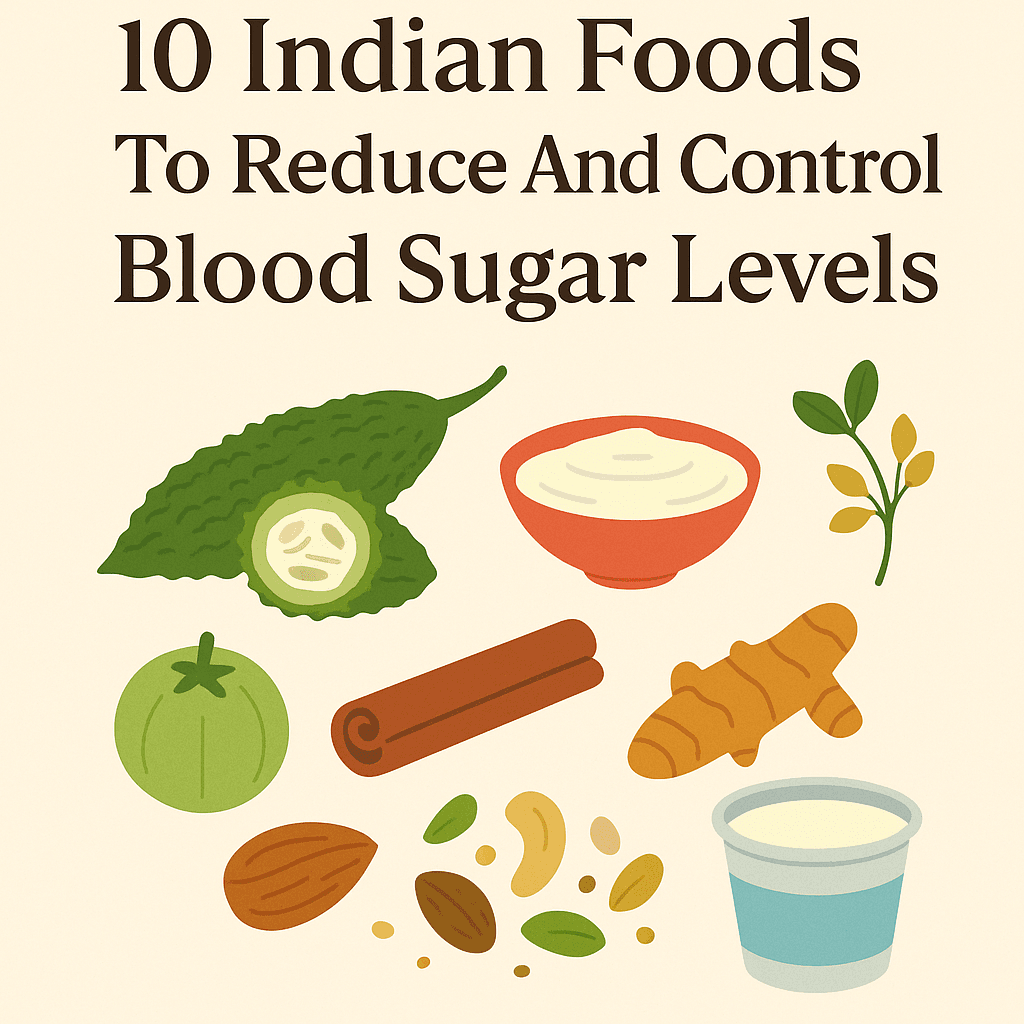
10 Indian Foods To Reduce And Control Blood Sugar Levels
Diabetes is one of the most common chronic diseases in India. Managing blood glucose isn’t only about medications; what you eat plays a powerful role. Refined carbohydrates cause rapid spikes in blood sugar, whereas foods rich in fibre, phytochemicals and healthy fats slow digestion and support insulin function. Indian foods for diabetes are gaining attention because many traditional ingredients help stabilize glucose levels and improve insulin response. Indian cuisine offers a treasure trove of ingredients that have been used in Ayurvedic and folk medicine for centuries, and modern research is now validating their blood-sugar-lowering properties.
Below are ten Indian foods — from bitter vegetables to probiotic-rich dairy — that have been shown to help reduce and control blood sugar levels. Each section explains why the food works, cites scientific evidence and gives practical tips for adding it to your meals. If you have diabetes or pre-diabetes, discuss these ideas with your doctor or dietitian, especially if you’re on medication.
When it comes to controlling blood sugar, traditional Indian foods for diabetes provide both taste and health benefits, making them ideal for daily meals.
Top 10 Indian Foods for Diabetes Control
1. Bitter Gourd (Karela) – A Powerful Indian Food for Diabetes
Among the top Indian foods for diabetes, bitter gourd (karela) is widely known for its insulin-like compounds that help regulate glucose levels.Modern studies reveal why this vegetable is so potent. Bitter gourd contains charantin, a mixture of steroidal saponins, polypeptide‑p, an insulin‑like protein, and other compounds that mimic insulin or stimulate its secretion. These constituents can lower blood glucose levels by enhancing cellular uptake of glucose. Research summarised in the journal Plants notes that the fruit juice influences both glucose and lipid metabolism, and long‑term extracts show benefits in diabetes management.
Why it helps:
- Insulin‑like action: Polypeptide‑p acts similarly to insulin and may reduce blood glucose when consumed regularly.
- Stimulates insulin secretion: Charantin and vicine stimulate the pancreas to secrete more insulin, helping transport sugar into cells.
How to use it:
- Drink karela juice made from fresh bitter gourd in the morning. The Tata 1mg article recommends drinking diluted karela juice on an empty stomach.
- Add sliced bitter gourd to stir‑fries, sabzi or stuff them with spices and bake.
- Combine with onions, tomatoes and spices to temper the bitterness.
2. Fenugreek Seeds – Traditional Indian Food for Blood Sugar Control
Fenugreek seeds are another classic example of Indian foods for diabetes, rich in soluble fibre that slows carbohydrate absorption. They are rich in soluble fibre, which slows the absorption of carbohydrates and sugars. A meta‑analysis of ten clinical trials showed that consuming 5–25 g of fenugreek seeds per day significantly reduced fasting blood glucose, post‑prandial glucose and HbA1c levels; doses of 10 g/day combined with diet and exercise improved fasting glucose and HbA1c over six months. Another article from Tata 1mg notes that fenugreek seeds soaked overnight and taken in the morning may enhance glucose tolerance.
Why it helps:
- High fibre content: Methi seeds are packed with soluble fibre, which forms a gel in the gut and slows the absorption of sugar into the bloodstream.
- Improves insulin sensitivity: The fibre and amino acids in fenugreek may help the body use insulin more efficiently, leading to lower blood glucose levels.
How to use it:
- Soak one or two teaspoons of fenugreek seeds in water overnight and drink the water (or chew the seeds) in the morning.
- Add ground methi to rotis, dosa batter or spice blends.
- Use fenugreek leaves (methi saag) in parathas or curries for additional benefits.
3. Amla (Indian Gooseberry) – Antioxidant-Rich Indian Food for Diabetes
Amla, or Indian gooseberry, stands out in the list of Indian foods for diabetes for its ability to enhance insulin sensitivity and reduce oxidative stress. It also helps regulate blood sugar. A health article notes that amla’s soluble fibre slows sugar absorption, reducing post‑meal spikes, and it contains chromium, a mineral that enhances insulin sensitivity. Regular consumption of amla has been shown to improve fasting and post‑meal blood sugar and help prevent the formation of advanced glycation end-products that contribute to diabetic complications.
Why it helps:
- Slows carbohydrate digestion: The soluble fibre in amla slows gastric emptying, leading to more gradual rises in blood glucose.
- Improves insulin sensitivity: Chromium and polyphenols enhance the body’s response to insulin.
How to use it:
- Drink amla juice mixed with water and a pinch of black salt.
- Eat fresh amla with a pinch of chilli powder and salt.
- Use powdered amla (amla churna) in smoothies or sprinkle it over fruit salads.
4. Black Plum (Jamun)
Jamun, also known as Indian blackberry or Java plum, is a seasonal fruit with a low glycaemic index. While most research is pre‑clinical, jamun seeds and pulp contain jamboline and other alkaloids thought to slow the conversion of starch to sugar.
Why it helps:
- Slow carbohydrate digestion: Jamboline and ellagic acid may inhibit enzymes that convert starch to sugar, lowering post‑meal glucose.
- Low glycaemic index: Jamun has little impact on blood sugar when eaten in moderation.
How to use it:
- Enjoy fresh jamun in season as a snack or dessert.
- Dry and powder jamun seeds and mix a small spoonful with water or curd.
- Add jamun pulp to smoothies or yoghurt.
5. Cinnamon – A Spicy Aid in Diabetes Management
Cinnamon not only adds flavour but also belongs to those Indian foods for diabetes proven to improve fasting glucose in several studies. A 2025 randomized, double‑blind trial tested Ceylon cinnamon extract. Participants receiving the extract experienced greater reductions in fasting blood sugar compared with placebo; the mean difference was 8.59 mg/dL. In type 2 diabetes patients, the extract produced a notable reduction in fasting blood sugar (standardized coefficient –63 mg/dL). The study concluded that cinnamon extract safely and significantly lowers fasting blood sugar.
Why it helps:
- Improves insulin sensitivity: Cinnamon contains polyphenols that mimic insulin and improve its signalling, helping cells use glucose more effectively.
- Slows gastric emptying: The spice may delay the rate at which food leaves the stomach, moderating post‑meal blood sugar.
How to use it:
- Stir ½ teaspoon of ground cinnamon into your morning oatmeal, chai or smoothie.
- Use cinnamon sticks to flavour dals, curries and pulavs.
- Choose Ceylon cinnamon (true cinnamon) for daily use, as it contains lower coumarin levels than cassia.
6. Okra (Lady’s Finger) – A Fibre-Rich Indian Food for Diabetes
Okra is a fibre‑rich vegetable commonly used in Indian curries. Recent research shows that it does more than provide crunch. A 2023 double‑blind randomized trial giving 1,000 mg of okra powder three times daily for 12 weeks found significant reductions in fasting blood glucose, HbA1c, total cholesterol and C‑reactive protein without adverse effects. Meta‑analyses of multiple trials reported pooled reductions in fasting blood glucose (≈14.6–39.6 mg/dL) and HbA1c (–0.42 % to –0.46 %) with okra supplementation. Mechanistic studies suggest that okra’s mucilage forms a gel in the gut that slows glucose diffusion, while polyphenols inhibit carbohydrate‑digesting enzymes and modulate PPARs and GLUT4 expression.
Why it helps:
- Slows glucose absorption: Sticky mucilage and soluble fibre form a gel that reduces sugar uptake.
- Enzyme inhibition: Polyphenols in okra inhibit alpha‑glucosidase and alpha‑amylase, slowing carbohydrate breakdown.
- Anti‑inflammatory and gut benefits: Okra’s compounds reduce inflammation and improve gut microbiota, which may indirectly improve insulin sensitivity.
How to use it:
- Prepare bhindi masala with onions and tomatoes.
- Roast or grill okra to reduce sliminess while retaining the fibre.
- Add chopped okra to sambar or lentil stews for extra thickness.
7. Turmeric – Golden Spice Among Indian Foods for Diabetes
Turmeric is an Ayurvedic spice that perfectly fits the category of Indian foods for diabetes, thanks to curcumin’s effect on insulin receptors It also influences glucose metabolism. A 2025 Journal of Diabetes Research study in obese rats found that curcumin supplementation activated insulin signalling pathways, leading to a 59 % reduction in blood glucose and a 53 % decrease in HbA1c. Curcumin may increase glucose uptake by muscle cells, inhibit gluconeogenesis in the liver and reduce inflammation that interferes with insulin activity.
Why it helps:
- Activates insulin signalling: Curcumin increases AMPK and other pathways that allow cells to absorb glucosepmc.ncbi.nlm.nih.gov.
- Reduces inflammation: It lowers levels of inflammatory cytokines that can worsen insulin resistance.
How to use it:
- Add ½–1 teaspoon of turmeric powder to curries, dals, soups or rice.
- Drink golden milk (haldi doodh) by simmering turmeric with milk and a dash of black pepper (pepper enhances curcumin absorption).
- Use fresh turmeric root grated into chutneys or pickles.
8. Nuts & Seeds – Healthy Indian Foods for Diabetes Diet
Including almonds and flax seeds in your diet complements other Indian foods for diabetes, providing healthy fats and fibre to balance meals.. Multiple studies illustrate their benefits:
- A 2017 trial found that daily almond consumption for 24 weeks helped control blood sugar levels and decreased heart disease risk in people with type 2 diabetes. A subsequent 2021 review showed that almonds reduce LDL cholesterol, triglycerides and total cholesterol.
- An observational study involving 34,121 participants found that those who ate walnuts were half as likely to develop diabetes compared with non‑consumers.
- A randomized trial demonstrated that a cashew‑enriched diet improved HDL cholesterol and lowered blood pressure without worsening blood glucose or body weight.
- Studies show that pistachio extracts slow carbohydrate digestion and reduce blood glucose absorption while providing antioxidants.
- Tree nuts including peanuts reduce total cholesterol and triglycerides, which is beneficial because dyslipidaemia often accompanies diabetes.
Why they help:
- Low carbohydrate density: Nuts contain mostly fats and protein, causing minimal blood sugar spikes.
- Rich in magnesium and fibre: These nutrients improve insulin sensitivity and slow glucose uptake.
- Healthy fats: Mono‑ and polyunsaturated fats improve lipid profiles, reducing cardiovascular risk alongside diabetes.
How to use them:
- Snack on a handful of almonds, walnuts or pistachios between meals.
- Sprinkle flaxseeds or chia seeds onto yogurt or porridge for fibre and omega‑3 fats.
- Use ground nut flour (e.g., almond flour) in low‑carb baking.
9. Whole Grains, Millets and Pulses
Replacing refined grains with whole grains and millets is an effective way to stabilise blood sugar. The Whole Grains Council summarised a 2024 review of 29 randomised controlled trials assessing whole grains in people with diabetes. The researchers found that brown rice significantly improved HbA1c and body mass index, oats improved cholesterol and millets improved body weight.
Pulses — lentils, chickpeas, kidney beans and other legumes — also have impressive glycaemic benefits. A 2022 meta‑analysis showed that pulse consumption significantly reduced post‑prandial glucose in healthy adults and people with type 2 diabetes, and long‑term intake reduced fasting blood glucose and HbA1c. A review on lentils found that small servings (50–100 g) reduced post‑prandial glucose by at least 20 %, and 100 g of cooked lentils reduced the area under the glucose curve by 54 % compared with control foods. These effects are due to lentils’ high fibre and protein content, which slow starch digestion and possibly modify interactions between proteins and starch.
Why they help:
- Low glycaemic index: Whole grains, millets and pulses digest slowly, preventing blood sugar spikes.
- High in fibre and resistant starch: This slows carbohydrate absorption and feeds beneficial gut bacteria.
- Rich in micronutrients: Millets and pulses contain magnesium, zinc and B‑vitamins essential for glucose metabolism.
How to use them:
- Replace white rice with brown rice, red rice or parboiled rice.
- Cook millets (bajra, jowar, ragi) as porridge, khichdi or rotis.
- Include lentils (masoor), chickpeas (chana), kidney beans (rajma) and black gram (urad) in dal, sprouts or salads.
10. Yogurt and Probiotics (Dahi)
Fermented dairy products like yogurt provide probiotics that support gut health and may improve glycaemic control. A prospective analysis of over 100,000 participants found that people who ate yogurt daily had an 18 % lower risk of developing type 2 diabetes. A 2025 network meta‑analysis reported that specific probiotic formulations — such as yogurt containing Lactobacillus acidophilus La5 and Bifidobacterium Bb12 — achieved the greatest reductions in fasting plasma glucose and HbA1c and also improved lipid profiles. Probiotics appear to modulate gut microbiota, improve insulin sensitivity and reduce insulin resistance.
Why it helps:
- Enhances gut microbiota: A balanced gut flora influences energy metabolism and insulin sensitivity.
- Provides protein and calcium: High‑quality protein and minerals support satiety and bone health without spiking glucose.
How to use it:
- Eat plain unsweetened yogurt or curd as a side dish with meals.
- Make raita with cucumber, carrots or beetroot for extra fibre.
- Blend yogurt into smoothies or buttermilk (chaas) and avoid flavoured varieties with added sugars.
Extra Tip: Add More Greens
While this list focuses on ten foods, don’t forget the power of leafy greens. A meta‑analysis of six studies involving over 220,000 participants found that eating 1.5 extra servings of green leafy vegetables per day reduced the risk of type 2 diabetes by 14 %. Greens like spinach are rich in magnesium, nitrates and antioxidants, which may improve insulin sensitivity. Recent research shows that spinach‑derived thylakoid supplementation combined with high‑intensity functional training improved metabolic health and significantly reduced fasting blood glucose and insulin in overweight and obese women. Incorporate palak, methi leaves, drumstick leaves and other greens into meals for extra fibre and nutrients.
Conclusion
India’s culinary heritage offers a wealth of foods that support healthy blood sugar levels. Bitter gourd’s insulin‑like compounds, fenugreek’s soluble fibre, amla’s chromium and antioxidants, jamun’s enzyme‑blocking alkaloids, cinnamon’s insulin‑mimicking polyphenols, okra’s mucilage and polyphenols, turmeric’s curcumin, the healthy fats in nuts and seeds, the slow‑digesting carbs in whole grains and pulses, and the probiotic benefits of yogurt all play different yet complementary roles in keeping glucose in check.
A balanced diet that emphasises these foods, combined with regular physical activity and medical guidance, can make diabetes management more effective. Choose whole, minimally processed ingredients, watch portion sizes and combine carbohydrates with protein, fibre and healthy fats to slow their absorption. Remember that individual responses vary; monitor your blood glucose and adjust accordingly. With mindful eating and the right ingredients, you can enjoy delicious Indian meals while supporting stable blood sugar.
Frequently Asked Questions (FAQ)
1. Can these foods replace my diabetes medication?
These foods can complement your diabetes management but should not replace prescribed medication. Always consult a healthcare professional before making major changes to your treatment.
2. How quickly will I see a change in my blood sugar after adding these foods?
Effects vary. Some people notice improvements within a few weeks, especially when combining dietary changes with regular exercise and weight management. However, factors such as medication, overall diet and genetics influence results.
3. Do I need to eat all ten foods every day?
No. Variety is key. Rotate these foods throughout the week to keep meals enjoyable and ensure a broad range of nutrients.
4. Are there any side effects to eating these foods?
Most of these foods are safe in culinary amounts. However, bitter gourd and fenugreek can lower blood sugar significantly; monitor your levels to avoid hypoglycaemia. People with kidney issues should moderate high‑potassium foods like amla and nuts. Excess cinnamon (especially cassia) can harm the liver due to high coumarin content; stick to recommended amounts and use Ceylon cinnamon.
5. Can I consume these foods if I’m pregnant or breastfeeding?
In culinary amounts, most of these foods are safe. Pregnant women should avoid large doses of bitter gourd and fenugreek supplements. Consult your doctor for personalised advice.