How to Strengthen Immunity Naturally: Foods, Habits, and Ayurvedic Remedies
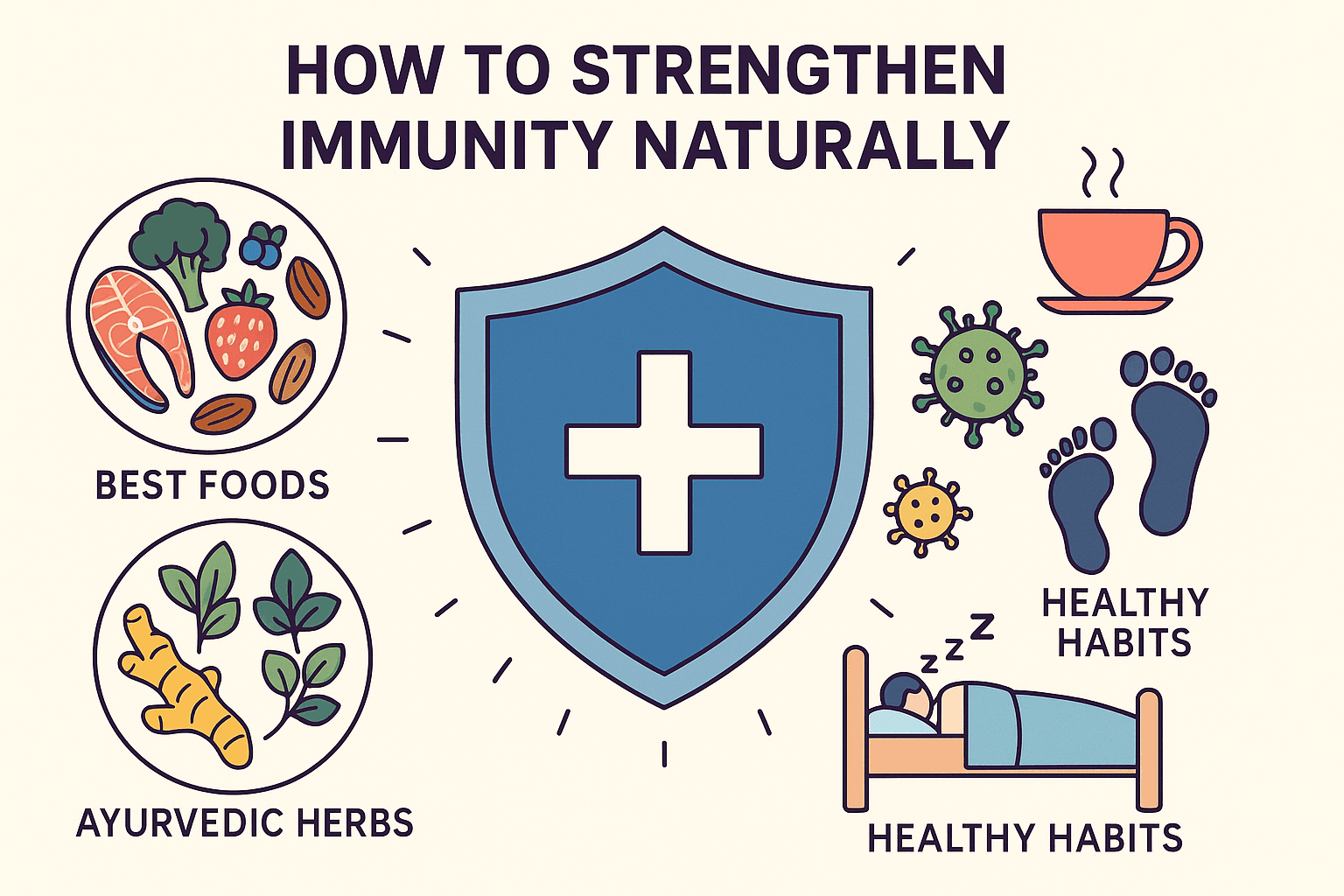
Our immune system is a complex defense network that fights viruses, bacteria, and other pathogens to keep the body healthy. Due to today’s hectic lifestyle, pollution, and processed diet, immunity can become weak. In this blog, we’ll discuss “How to Strengthen Immunity Naturally” — including natural foods, healthy habits, Ayurvedic herbs, and things to avoid — explained in easy language. Let’s see, step by step, how to boost immunity naturally through food, habits, and home remedies.
Best Foods: How to Strengthen Immunity Naturally
A balanced diet is essential for strong immunity. Immune cells require several vitamins and minerals to function properly. A 2022 article revealed that vitamins A, B-complex (B1, B2, B3, B12), C, D, and E along with zinc and selenium play a crucial role in immune function. You can easily include these nutrients in your diet through natural foods.
Fruits and Berries for Better Immunity
Berries like strawberries, blueberries, raspberries, and cranberries are packed with vitamins, minerals, and phenolic compounds. A 2021 review showed that berries play a beneficial role in strengthening the immune system. About 80 g of berries (one handful) is a recommended portion for adults. Add mixed berries to your breakfast cereal, smoothies, or snacks.
Leafy Green Vegetables: Natural Immunity Boosters
Dark leafy greens such as broccoli, kale, spinach, bok choy, and mustard greens are rich in vitamins A, C, and B vitamins. Two broccoli spears or two heaped tablespoons of cooked spinach equal one serving. Adding these to stir-fries, soups, or salads can help boost immunity.
Oily Fish and Omega-3: Strengthen Immunity with Good Fats
Oily fish like salmon, tuna, mackerel, and sardines are rich in omega-3 fatty acids, which play a key role in immune health. These fish are also sources of vitamins A and D. Eating 140 g of cooked oily fish once a week is recommended. For vegetarians, walnuts, chia seeds, flaxseed oil, or fortified cereals are good omega-3 alternatives.
Nuts & Seeds: Everyday Immunity Support
Almonds, sunflower seeds, pumpkin seeds, and flaxseeds provide omega-3 fatty acids, vitamin E, antioxidants, and selenium — all known to enhance immune function. A handful of nuts or a tablespoon of seeds daily is beneficial. You can add them to trail mix, salads, or yogurt bowls.
Dark Chocolate: The Sweet Way to Boost Immunity
Dark chocolate contains polyphenols, flavonoids, and minerals such as zinc, selenium, and B-vitamins that help modulate immune function. Choose chocolate with at least 70 % cocoa for best results.
Turmeric (Haldi): The Golden Immunity Booster
Turmeric is a traditional spice containing curcumin, a compound with powerful antioxidant and anti-inflammatory properties. It helps modulate B-cell function and strengthen immune response. Add ½ teaspoon of turmeric to milk (turmeric latte), curries, or smoothies daily.
Ginger: Natural Immunity Enhancer
We use ginger in tea, curries, and pickles. According to the Cleveland Clinic, ginger shots support digestion, ease pain, and help boost the immune system. Rich in antibacterial, antiviral, and antioxidant properties, ginger also provides vitamin C, magnesium, and potassium. Try ginger tea, kadha, or smoothies to reap its benefits.
Green Tea & Fermented Foods: Natural Immunity Drinks
Green tea’s polyphenols help regulate immune pathways, while fermented foods like kimchi, sauerkraut, and kefir contain probiotics that balance gut bacteria and support immunity. Having a small bowl of fermented food or drinking kefir daily improves gut and immune health.
Daily Routine & Habits: How to Strengthen Immunity Fast
Beyond diet, some daily habits significantly impact immunity. According to CU Anschutz Health and Wellness Center, the immune system needs a steady nutrient supply and healthy lifestyle choices. Here are key daily habits:
1. Stay Hydrated
Water doesn’t just quench thirst — it’s essential for immunity. Proper hydration helps transport oxygen to cells, flush out toxins, and support the lymphatic system. Men should aim for 3.7 L (15.5 cups) and women 2.7 L (11.5 cups) of water daily. Adjust intake based on your activity level.
2. Sleep 7–8 Hours
At least seven hours of quality sleep each night is vital for a strong immune system. Lack of sleep affects immune components and increases disease risk. Avoid screens before bed, maintain a regular sleep schedule, and sleep in a dark, quiet room to improve sleep quality.
3. Manage Stress
Chronic stress elevates cortisol levels, which suppress immune responses. Experts suggest mindfulness, exercise, and deep-breathing to reduce stress. Yoga, meditation, journaling, and hobbies are simple ways to keep stress low.
4. Moderate Exercise
Moderate physical activity helps flush bacteria from lungs, circulates antibodies and WBCs, and temporarily raises body temperature — all of which strengthen immunity. Avoid over-exercising, which can suppress immune function. 20–30 minutes of brisk walking, cycling, or dancing daily is ideal.
5. Avoid Smoking & Alcohol
Smoking weakens the immune system and increases the risk of autoimmune diseases, while excessive alcohol disrupts immune cell production. To maintain strong immunity, quit smoking and limit or avoid alcohol.
6. Maintain Good Hygiene
Along with a balanced immune system, hygiene is essential. Regular hand-washing, covering coughs and sneezes, and maintaining distance from sick individuals reduce infection spread and prevent unnecessary strain on the immune system.
Ayurvedic Herbs & Remedies for Strong Immunity
Ayurveda has long used certain herbs to strengthen immunity — and modern research supports their benefits.
Giloy (Tinospora cordifolia)
Also known as Amrita, Giloy activates immune cells, modulates inflammation, and enhances the body’s defense mechanisms. It also has antipyretic properties and helps raise platelet count in dengue or chronic fever. Take 2–3 teaspoons of Giloy juice with water on an empty stomach, or use kadha/powder form under medical guidance.
Ashwagandha (Withania somnifera)
Ashwagandha supports stress relief and immunity. Capsules or powder (400–600 mg per day) can be taken after consulting a healthcare provider, especially for long-term use.
Tulsi (Holy Basil)
Known as the “Elixir of Life,” Tulsi’s active compound eugenol has anti-inflammatory properties that can inhibit viral activity. Studies show Tulsi improves fatigue levels and immune markers. Enjoy Tulsi tea, raw leaves, or a homemade kadha (Tulsi-ginger-turmeric). Pregnant or breastfeeding women should avoid supplements.
Ginger & Turmeric: Herbal Synergy
Together, ginger and turmeric offer anti-inflammatory, antibiotic, and antiviral effects. Ginger shots with lemon/orange juice add vitamin C, while both herbs in kadha, soups, or curries multiply their health benefits.
Vitamins, Minerals & Modern Supplements
Modern supplements such as vitamin C, vitamin D, zinc, and selenium are popular for supporting immunity.
- Vitamin C aids WBC function.
- Vitamin D activates immune receptors and reduces inflammation.
- Zinc helps immune cell development.
If your diet lacks these nutrients, take supplements only under a doctor’s supervision — as excessive doses can cause toxicity (for instance, too much vitamin D can cause calcium buildup).
Common Mistakes: Why Immunity Becomes Weak
Strengthening immunity isn’t just about what to eat — it’s also about what to avoid.
High Sugar & Processed Foods
Foods like candy, cake, and soft drinks raise blood sugar and inflammatory markers (TNF-alpha, CRP, IL-6), slowing down immune responses. Limit added sugars and sugary beverages.
Too Much Salt
Excess salt (above 12 g/day) increases inflammatory markers and decreases anti-inflammatory proteins, raising autoimmune risk. Processed snacks, chips, and instant foods often contain hidden salt — limit them for better immune health.
Excess Omega-6 and Fried Foods
High omega-6 and low omega-3 diets (common in sunflower or soybean oils) create inflammation. Fried foods form AGEs (advanced glycation end products) that damage cells. Avoid deep-fried and trans-fat foods.
Smoking, Alcohol & Sedentary Lifestyle
Smoking damages the lungs and suppresses immunity; alcohol disrupts gut health. A sedentary lifestyle promotes obesity and metabolic syndrome, both linked to weak immunity. Regular movement improves resistance to diseases.
Over-Supplementation & Quick Fixes
There’s no magic pill for instant immunity. Relying on unverified supplements or fad diets can harm you. Consistency in diet and lifestyle is the only sustainable way.
Conclusion
Building strong immunity is not a one-time act but a holistic lifestyle practice. Include balanced nutrition, hydration, fermented foods, 7 hours of sleep, stress control, exercise, and hygiene for lasting benefits. Ayurvedic herbs like Giloy, Ashwagandha, and Tulsi, backed by modern research, can be used safely under medical guidance. Avoid junk, sugar, salt, and alcohol to reduce immune stress. Remember — there’s no magic supplement for immunity; a balanced lifestyle is the real secret.
Frequently Asked Questions (FAQ)
Q1. How long does it take to build immunity?
Immunity doesn’t improve overnight. With a balanced diet, regular exercise, good sleep, and stress control, results can appear within 4–6 weeks.
Q2. Is vitamin C supplementation necessary?
If you eat amla, citrus fruits, berries, and fresh vegetables daily, extra supplements aren’t needed.
Q3. Can Ashwagandha be taken daily?
Yes, studies show it improves immune markers in adults without major side effects — but always consult a doctor first.
Q4. When and how should Giloy juice be taken?
Take 2–3 teaspoons of Giloy juice diluted in equal water on an empty stomach every morning.
Q5. How many hours of sleep are needed for strong immunity?
Experts recommend at least 7 hours of uninterrupted sleep each night.
Q6. Which fruits and vegetables are best for immunity?
Berries, citrus fruits, amla, papaya, broccoli, spinach, kale, and carrots are all immunity-supporting foods.
Q7. Does daily exercise improve immunity?
Yes, moderate exercise enhances circulation of white blood cells and helps flush bacteria from the lungs.
Q8. Should sugary or fast foods be completely avoided?
Not entirely — but moderation is key. Reduce them to maintain overall immune balance.