Cow Milk vs Buffalo Milk: Which One Has More Protein?
Milk is a staple in many American diets. It’s in our morning coffee, smoothies, breakfast cereals, and comfort foods. While cow’s milk is by far the most common dairy choice in the USA, consumers are becoming more curious about alternatives like buffalo milk. One of the main questions people ask when comparing Cow Milk vs Buffalo Milk Protein is how the protein content actually differs. Does buffalo milk offer more protein than cow milk? How much more? And does the extra protein make buffalo milk a better choice for muscle-building or long-lasting satiety? This article explores these questions in depth, highlighting the nutritional differences between cow and buffalo milk, how they taste, and how they fit into different health goals.
Understanding Milk Proteins: Casein and Whey
All animal milks contain two broad categories of protein: casein and whey. Casein makes up roughly 80 % of the total protein in cow milk and contributes to milk’s white color and ability to form cheese curds. Whey proteins account for the remaining 20 % and include lactose‑binding proteins, growth factors and immunoglobulins. The ratio of casein to whey can influence how milk is digested and how it is used in food production.
Buffalo milk has a higher casein-to-protein ratio than cow milk. Because casein is linked to calcium molecules in the milk, this higher ratio increases buffalo milk’s calcium content and its suitability for cheese making. The dense casein micelles also make buffalo milk naturally thicker and creamier than cow milk. Both milks still contain whey proteins with biologically active compounds, but the slight difference in their proportions contributes to differences in mouthfeel, digestibility and how they interact with your body.
Cow Milk Nutrition: Protein Content & Benefits
Cow milk is the default dairy milk in most U.S. households, and its nutritional profile is well documented. According to the Food and Agriculture Organization (FAO), cow milk contains about 3.5 % protein and 5 % lactose, along with 3–4 % fat. A typical 8‑ounce (240 ml) serving of whole cow milk provides around 8 grams of protein. The protein comes mostly from casein, but whey proteins like beta‑lactoglobulin and lactoferrin contribute bioactive peptides and immune‑boosting effects.
Cow milk’s lower fat content (around 3.6 % fat) makes it lighter and slightly sweet tasting. Many people find cow milk easier to digest than buffalo milk, especially those who have difficulty breaking down high levels of fat. The presence of lactase enzymes in pasteurized cow milk products and the popularity of lactose‑free cow milk also make it an accessible choice for Americans with mild lactose intolerance.
Nutritionally, cow milk provides high‑quality complete protein with all nine essential amino acids, along with calcium, phosphorus, riboflavin and vitamin B12. Its moderate fat content includes a mixture of saturated and unsaturated fats. Because the fat content is lower than buffalo milk, cow milk may be better suited to people watching their calorie intake or who prefer a lighter taste. Cow milk is also fortified with vitamin D in the USA, which enhances calcium absorption.
Buffalo Milk Nutrition: Protein Content & Benefits
Buffalo milk isn’t as ubiquitous in the U.S. as cow milk, but it’s the dominant milk in many parts of South and Southeast Asia. When buffalo milk is available in the U.S., it’s often sold as an artisan ingredient for specialty cheeses like mozzarella and burrata. The nutritional profile of buffalo milk is quite different from cow milk.
First, buffalo milk has a very high fat content—about twice that of cow milk. A typical serving contains 7–8 % fat, which is why buffalo milk is so rich, creamy and suitable for decadent cheeses. More important for our discussion, buffalo milk’s protein concentration is higher, averaging around 4.5 %. Healthline reports that an 8‑ounce (240 ml) serving of buffalo milk provides around 9 grams of protein, compared with 8 grams in cow milk. The additional gram may not sound like much, but combined with its higher fat content and thicker texture, buffalo milk is more satiating and may keep you feeling full longer.
Buffalo milk’s protein is not just more abundant—it also has a different composition. Casein accounts for about 89 % of the total protein in buffalo milk, compared with roughly 80 % in cow milk. Casein‑derived peptides in buffalo milk have been shown to promote bone density and strength in animal studies. Buffalo milk also provides higher levels of vitamins and minerals like calcium, phosphorus, potassium and magnesium. Studies have found that beta‑lactoglobulin—a primary whey protein—may help lower blood pressure by inhibiting the angiotensin‑converting enzyme, and the high potassium content of buffalo milk supports cardiovascular health.
While buffalo milk contains more protein and nutrients, its high fat and calorie content means it’s not ideal for everyone. A cup of buffalo milk can contain nearly twice the calories of cow milk. People watching their weight or saturated fat intake may find cow milk or plant‑based alternatives more appropriate. Buffalo milk can also be harder to digest because of its higher fat concentration, and people with lactose intolerance may experience greater discomfort.
Protein Comparison: Cow Milk vs Buffalo Milk
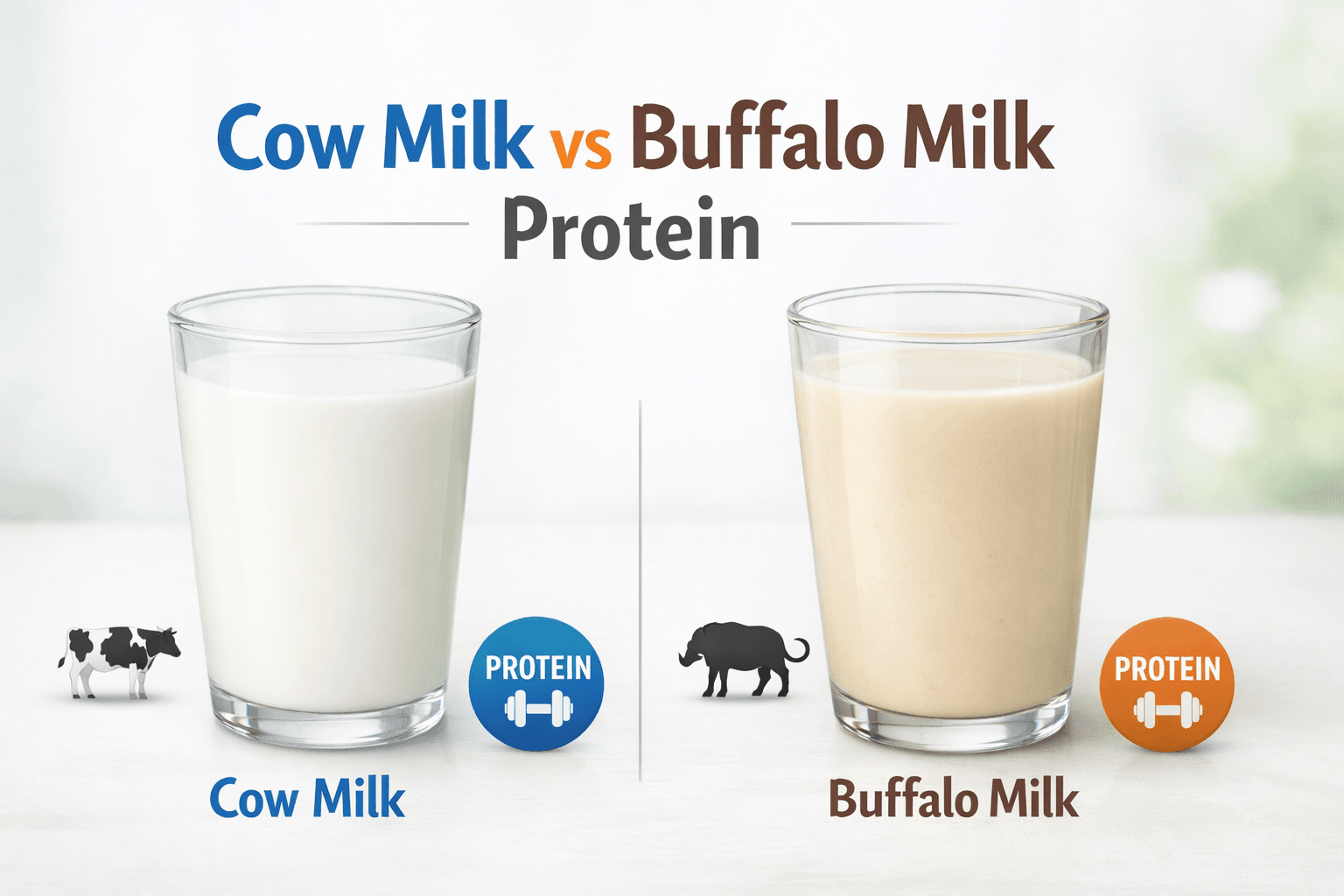
So which milk comes out ahead in the protein game? The data show that buffalo milk contains more protein both by percentage and by serving size. Cow milk protein content: approximately 3.2–3.5 % (around 8 g per 8‑oz serving). Buffalo milk protein content: approximately 4.5 % (about 9 g per 8‑oz serving). That translates to roughly a 28 % higher protein concentration in buffalo milk.
Here’s a quick comparison table summarizing key nutritional components for one cup (8 oz or ~240 ml) of whole milk. Note that values can vary by animal breed, feed, and processing method.
| Component | Cow Milk (8 oz) | Buffalo Milk (8 oz) | Notes |
|---|---|---|---|
| Protein | ~8 g | ~9 g | Buffalo milk has about 1 g more protein per serving |
| Protein % of total | 3.2–3.5 % | ~4.5 % | Buffalo milk contains more casein |
| Fat | ~3.6 % (7–8 g) | ~7–8 % (15–17 g) | Buffalo milk has about double the fat |
| Lactose | ~5 % | ~5–6 % (slightly higher) | Buffalo milk tastes slightly less sweet due to fat masking sweetness |
| Calories | ~150 kcal | ~240 kcal | Buffalo milk is significantly more calorie-dense |
| Calcium | 21 % DV | 32 % DV | Buffalo milk offers more calcium and minerals |
| Texture/Flavor | Light, slightly sweet | Thick, creamy | Buffalo milk’s high fat makes it ideal for cheese and ghee |
The extra protein in buffalo milk may benefit people looking to increase protein intake for muscle growth or satiety, but it comes with additional fat and calories. If you drink several cups of milk a day, those extra grams of protein may not outweigh the added calories. Cow milk, though lower in protein, still provides a complete amino acid profile and a lighter caloric load.
Which Milk Is Better for Muscle Building?
Protein is essential for muscle repair and growth. Many athletes and gym enthusiasts look to milk as an inexpensive source of high‑quality protein. Both cow and buffalo milk supply all essential amino acids, including leucine, which plays a key role in muscle protein synthesis. Because buffalo milk contains slightly more protein per serving, it could offer a marginal advantage for building or maintaining muscle mass. The higher fat content might also slow gastric emptying, leading to sustained amino acid absorption and prolonged satiety.
However, muscle gains depend more on total protein intake and overall diet quality than on small differences between milk types. You might find it easier to meet your protein goals by consuming two cups of cow milk (16 g protein) than one cup of buffalo milk (9 g protein) without consuming as much saturated fat or calories. For those who prefer plant‑based diets, soy milk or pea protein beverages offer similar protein levels with lower fat content.
If you love making protein shakes or smoothies, both milks blend well with fruit, oats and protein powder. Keep in mind that buffalo milk’s thick texture can change the mouthfeel of drinks and may not pair as well with delicate flavors. Cow milk’s neutral sweetness makes it more versatile for smoothies and baking.
Digestibility, Allergies & Lactose Intolerance
Digestibility is another factor to consider. Buffalo milk’s rich fat content makes it creamier but can also slow digestion. Some people find buffalo milk harder to digest, experiencing bloating or digestive discomfort. Cow milk generally contains slightly less lactose and fat, which may make it more tolerable for those with mild lactose intolerance. However, people with severe lactose intolerance or cow’s milk protein allergy should avoid both and opt for lactose‑free or plant‑based alternatives.
There’s a misconception that buffalo milk is safe for people with cow’s milk allergy. Research indicates that buffalo milk proteins can cross‑react with antibodies from cow milk allergy. In one study, all participants with IgE‑mediated cow’s milk allergy also reacted to buffalo milk. Therefore, if you have a diagnosed cow’s milk allergy, substituting buffalo milk is not advisable without medical supervision.
Culinary Uses and Availability
Buffalo milk is prized for making rich dairy products. Its high fat and casein content produce firmer curds and yield more cheese per liter than cow milk. That’s why authentic Italian mozzarella di bufala and Middle Eastern yogurts use buffalo milk. The creamy texture also lends itself to ghee, butter and ice cream. Because buffalo milk is not as common in U.S. grocery stores, you’re most likely to encounter it at specialty cheese shops or as imported dairy products.
Cow milk, on the other hand, is widely available and versatile. It’s used in everything from lattes to casseroles. The lighter taste makes it a good base for smoothies and baked goods. With the rise of lactose‑free and A2 cow milk products, there are plenty of options for those with digestive sensitivities.
Environmental and Ethical Considerations
It’s also worth considering the environmental footprint of dairy. Water buffalo produce less milk per animal compared with cows but require different grazing conditions and produce different methane emissions. Some small farms in the U.S. keep buffalo primarily for specialty cheese production. Sustainable dairying practices—such as pasture‑raised animals, feed management and waste reduction—can reduce environmental impact regardless of species. If you’re concerned about animal welfare, look for dairy farms that prioritize humane treatment and environmental stewardship.
Conclusion
When it comes to the question “Cow Milk vs Buffalo Milk: Which One Has More Protein?”, buffalo milk clearly contains more protein by percentage and per serving. Buffalo milk’s high casein content gives it a creamy texture and a rich nutrient profile, delivering about 9 grams of protein per cup. Cow milk, while lower in protein at around 8 grams per cup, still provides complete proteins and is lighter in fat and calories. Your choice should depend on your dietary goals, taste preference, and how your body tolerates fat and lactose. For everyday drinking and moderate calorie intake, cow milk remains an excellent source of nutrition. If you’re looking to increase satiety or enjoy cheese‑making and don’t mind extra calories, buffalo milk offers a luxurious alternative.
FAQ: Cow Milk vs Buffalo Milk Protein
1. Is buffalo milk higher in protein than cow milk?
Yes. Buffalo milk typically contains around 4.5 % protein, while cow milk averages 3.2–3.5 % protein. An 8‑ounce serving of buffalo milk provides roughly 9 g of protein compared with 8 g in cow milk.
2. Which milk is better for weight loss?
Cow milk may be better for weight loss because it has a lower fat content (about 3.6 %) and fewer calories compared with buffalo milk, which contains 7–8 % fat. However, both milks provide high‑quality protein and essential nutrients.
3. Can I substitute buffalo milk for cow milk in recipes?
You can, but expect differences in texture and flavor. Buffalo milk’s higher fat and protein content make baked goods and sauces richer and thicker. For a lighter, sweeter taste, cow milk is more suitable.
4. Is buffalo milk better for muscle building?
Buffalo milk offers slightly more protein per serving, which could aid muscle growth. Nonetheless, overall protein intake matters more than small differences between milks. Cow milk still provides complete proteins and is widely used by athletes.
5. Is buffalo milk available in the USA?
Buffalo milk is less common in mainstream grocery stores but can be found at specialty shops, particularly in the form of buffalo mozzarella or ghee. Some artisanal dairies in the U.S. produce buffalo milk products, but availability varies by region.
6. Can people with cow’s milk allergy drink buffalo milk?
Generally no. Studies show that proteins in buffalo milk can cross‑react with antibodies from cow’s milk allergy. People with a diagnosed cow’s milk allergy should avoid buffalo milk unless advised otherwise by a healthcare professional.