Chicken vs Fish: Which Is Better for Protein?
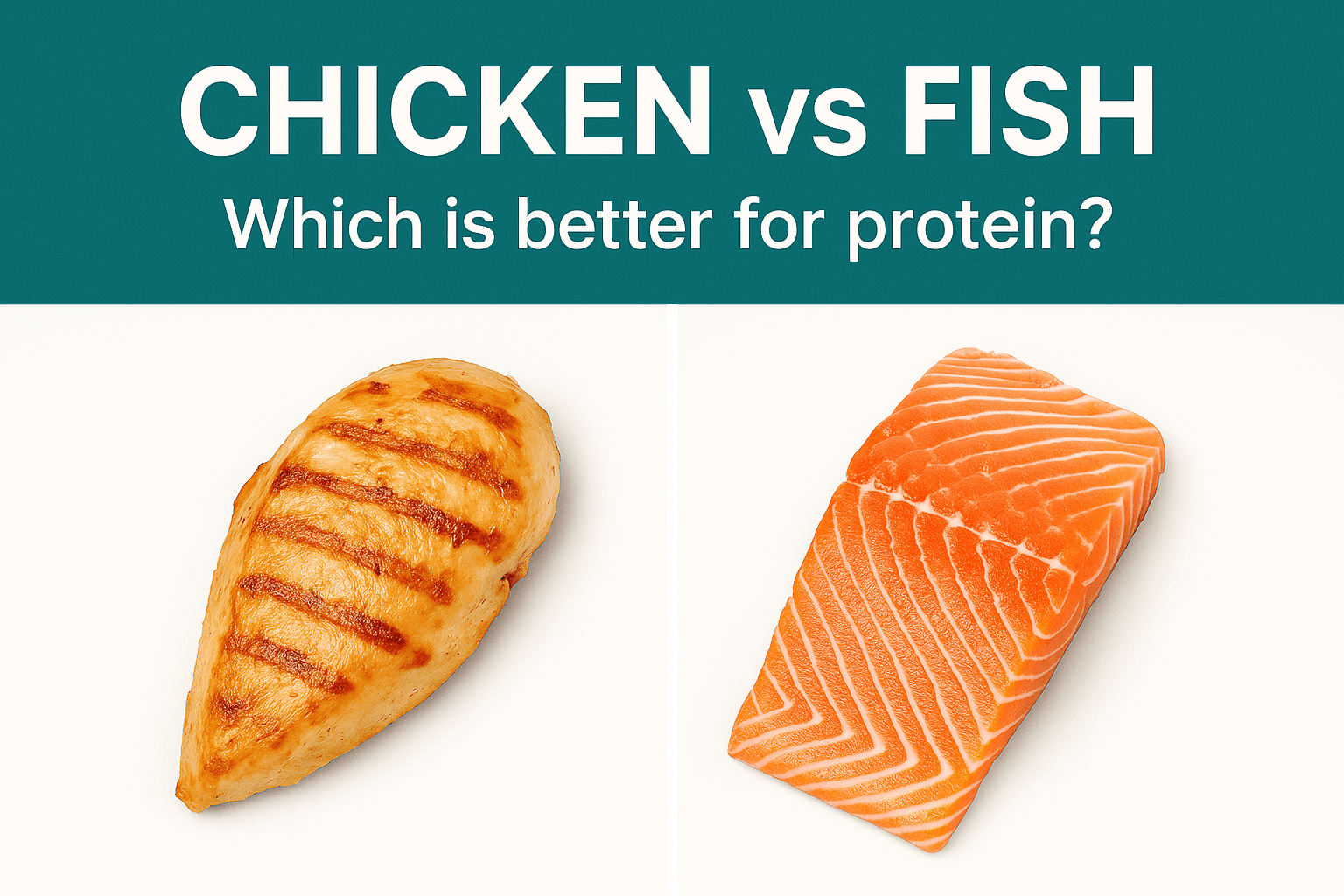
”When people talk about eating more protein, two foods usually come up: chicken and fish. Both are nutrient‑dense animal proteins, but they differ in flavor, fat profile and micronutrients. Understanding how much protein each provides, along with the vitamins and minerals they contain, helps you decide which is right for your dietary needs. This article compares the protein content of chicken and fish, explains other nutritional differences such as omega‑3 fatty acids and B vitamins, and offers guidance on choosing the right option for your goals.“This article clearly explains the Chicken vs Fish protein comparison to help you choose the right lean protein.”
Chicken vs Fish Protein: Nutritional Breakdown
When we talk about Chicken vs Fish protein, the first thing to compare is total protein per 100 grams.”
How much protein do we need?
Protein is essential for muscle maintenance, hormones and enzymes. The Harvard School of Public Health notes that the Recommended Dietary Allowance (RDA) is about 0.8 grams of protein per kilogram of body weighthealth.harvard.edu—roughly 0.36 grams per pound. This amount meets basic nutritional needs, although active individuals may require more. Spreading protein intake evenly across meals can also improve muscle synthesishealth.harvard.edu.
“Chicken vs Fish Protein: Which One Has More Protein?”
A 100‑gram (about 3.5 ounce) cooked portion is a common benchmark for comparing protein sources. Chicken breast has the most protein of all chicken cuts—32 g per 100 ghealthline.com—while thighs and drumsticks provide 25 g and 24 g respectivelyhealthline.com. Verywell Fit reports that most cooked fish provide around 6 g protein per ounce, which translates to 21–27 g per 100 g. The table below summarises typical values and highlights lean vs fatty optionsverywellfit.com.
| Food (cooked) | Approx. protein (g/100 g) | Notes |
|---|---|---|
| Chicken breast | 32 ghealthline.com | Leanest chicken cut with high protein; about 165 calories per 100 ghealthline.com. |
| Chicken thigh | 25 ghealthline.com | Slightly higher fat; richer taste. |
| Chicken drumstick | 24 ghealthline.com | Includes some dark meat and fat. |
| Tilapia | 26.2 gverywellfit.com | White fish, low in fat; moderate omega‑3. |
| Salmon (Atlantic) | ≈24.6 gverywellfit.com | Fatty fish; rich in omega‑3 fatseatingwell.com. |
| Sardines (canned in oil) | 24.6 gverywellfit.com | Provide calcium and omega‑3s; convenient canned option. |
| Shrimp | 24 gverywellfit.com | Lean, high‑protein seafood; low in fat. |
| Halibut | 22.5 gverywellfit.com | White fish; good source of selenium and phosphorus. |
| Tuna (canned in water) | 23.6 gverywellfit.com | High protein; may contain mercury so limit servings. |
Takeaway on protein content
While chicken breast tops the chart with 32 g per 100 g, many fish are close behind. Tilapia, salmon, sardines and shrimp deliver 22–26 g of protein per 100 gverywellfit.com. The differences become smaller when looking at standard serving sizes (3 oz/85 g) because portions vary. Thus, both chicken and fish can help you meet protein requirements, but chicken breast remains the most protein‑dense option per caloriehealthline.com.
Nutritional benefits beyond protein
Protein isn’t the only factor to consider. Vitamins, minerals and the type of fat also influence health outcomes. Understanding these differences helps tailor your diet to your personal goals.
“Chicken vs Fish Protein: Advantages of Eating Chicken”
Complete amino acid profile: Chicken is a complete protein, meaning it contains all nine essential amino acidsnationalchickencouncil.org. This makes it ideal for muscle building and maintenance.
Rich in B vitamins: Chicken, especially breast meat, is an excellent source of niacin (vitamin B3) and vitamin B6. A 3‑ounce (85 g) cooked chicken breast provides 11.4 mg of niacin, which is 71 % of the RDA for men and 81 % for womenhealthline.com. These B vitamins are crucial for energy metabolism and support nervous system health. Dark meat contains slightly less niacin but more vitamin B12 and minerals like iron and zincnationalchickencouncil.org.
Mineral content: Chicken provides iron, zinc and selenium. EatingWell notes that chicken is a good source of iron, zinc and seleniumeatingwell.com, minerals that support immune function and thyroid health. Dark meat offers more iron and zinc than white meatnationalchickencouncil.org.
Low in fat (if skinless): Chicken breast is one of the leanest animal proteins. A 3‑ounce serving of grilled skinless breast contains about 126 calories, 25 g of protein and only 3 g of fatyahoo.com. Removing the skin and using methods such as baking or grilling helps keep saturated fat low. For people following weight‑loss or bodybuilding diets, chicken breast provides high protein with minimal calorieshealthline.com.
“In the Chicken vs Fish protein debate, chicken breast often wins in pure protein density.”
“Chicken vs Fish Protein: Why Fish Is Healthier for Heart Health”
Omega‑3 fatty acids: Fish provide nutrients that chicken lacks: marine omega‑3 fatty acids. EatingWell explains that fatty fish such as salmon, tuna, mackerel and sardines are among the best sources of eicosapentaenoic acid (EPA) and docosahexaenoic acid (DHA)eatingwell.com. These long‑chain omega‑3s help lower triglycerides, reduce inflammation and may improve mental healtheatingwell.com. The American Heart Association states that fish and shellfish are good protein sources and that omega‑3–rich fish like salmon, sardines and herring can reduce the risk of heart failure, coronary heart disease and strokeheart.org.
Vitamins D and B12: Fish—particularly oily species—are one of the few whole‑food sources of vitamin D and vitamin B12. For example, a 100‑g serving of smoked salmon delivers 18 g of protein, along with high amounts of B12 (136 % DV), vitamin D (86 % DV) and seleniumhealthline.com. These nutrients support bone health, red blood cell production and immune function.
Minerals and calcium: Fish supplies minerals such as calcium, phosphorus and magnesiumeatingwell.com. Canned fish with bones (like sardines) provide significant amounts of calcium, while white fish such as halibut offer selenium and phosphorus. Fish is also naturally low in sodium when fresh; however, smoked or canned varieties may have high sodium levelshealthline.com.
Quality fats: Many fish provide unsaturated fats. Dietitians interviewed by TODAY.com explained that salmon contains around 5 g of fat per 3‑ounce serving, most of which is unsaturated fatyahoo.com. These heart‑healthy fats contrast with the small amount of saturated fat found in chicken breast. The American Heart Association suggests choosing fish high in omega‑3s and reminds consumers that saturated fats—present in red meat and some poultry—can raise cholesterolheart.org.
Fat content and heart health
Although chicken breast is very lean, dark cuts contain more fat and calories. A 3‑ounce serving of roasted chicken thigh has about 21 g of protein and 7 g of fatyahoo.com. Fish like salmon offer similar protein amounts with slightly higher fat (5 g per 3 oz) but those fats are largely mono‑ and polyunsaturatedyahoo.com. For people concerned about cholesterol or heart disease, the unsaturated fat and omega‑3s in fish may be preferable. The American Heart Association also notes that red meats generally have more saturated fat than skinless chicken or fishheart.org, which is why they recommend choosing lean poultry or fish.
Which protein source is best for your goals?
Choosing between chicken and fish depends on what you want to achieve and your personal preferences.“But the Chicken vs Fish protein comparison changes when we consider omega-3 fatty acids, where fish clearly leads.”
Muscle growth and recovery
If maximizing protein for muscle repair is your priority, chicken breast is hard to beat. With 32 g of protein per 100 ghealthline.com and minimal fat, it delivers more protein per calorie than most fish. Bodybuilders and athletes often rely on chicken breasts during “cutting” phases because they provide high protein with lower calorieshealthline.com. However, fish such as tilapia, salmon and tuna still supply more than 20 g of protein per 100 gverywellfit.com and offer nutrient diversity.
Weight loss and calorie control
For weight management, both chicken and lean fish are excellent. Skinless chicken breast has fewer calories and less fat than salmon, though tilapia and cod are similarly lean. White fish typically provide 22–26 g protein per 100 g with very little fatverywellfit.com. Because protein helps you feel full longer and preserves muscle mass, including either chicken breast or lean fish in meals can aid weight loss. Cooking methods matter: bake, grill or steam rather than frying or adding heavy saucesheart.org.
Heart health and inflammation
People prioritizing heart health may benefit from fish. Omega‑3‑rich fish like salmon, sardines and mackerel provide fats that can reduce inflammation and lower the risk of heart diseaseeatingwell.com. Regularly eating fish can also decrease the risk of heart failure and strokeheart.org. Chicken contains less saturated fat than red meat, but it lacks the omega‑3 boost found in fish. Therefore, alternating between chicken and fatty fish can offer heart‑healthy diversity.
Budget and availability
Chicken is widely available and often less expensive than fish, especially in regions far from the coast. It’s versatile and fits many cuisines. Fish can be pricier depending on type—wild salmon costs more than canned tuna or tilapia. Choosing frozen fish, canned sardines or affordable white fish can help balance costs while obtaining omega‑3s and minerals.
“Chicken vs Fish Protein: Which Should You Eat for Muscle Gain?”
When it comes to protein, both chicken and fish are excellent choices. Chicken breast offers the highest protein per calorie, making it ideal for muscle building and weight‑loss dietshealthline.com. Darker cuts still provide ample protein but with more fat and calories. Fish, meanwhile, supplies nearly as much protein, but its real advantage lies in omega‑3 fatty acids, vitamins D and B12, and minerals like calcium and seleniumeatingwell.com. These nutrients support heart health, brain function and overall wellness. Ultimately, the best choice depends on your goals: choose chicken for lean, high‑protein meals; choose fish—especially fatty varieties—for heart‑healthy fats and micronutrients. Incorporating both into your weekly rotation ensures you reap the unique benefits of eacheatingwell.com.“So the Chicken vs Fish protein choice depends entirely on your fitness goal and nutritional needs.”
FAQ
Q1: Which has more protein, chicken or fish?
Chicken breast has the most protein per 100 g at around 32 ghealthline.com. Many fish such as tilapia, salmon and sardines provide 22–26 g per 100 gverywellfit.com, so the difference is small. Lean chicken beats most fish for protein density, but both are high‑protein foods.
Q2: Is fish protein higher quality than chicken protein?
Both chicken and fish are complete proteins containing all essential amino acids. However, fish provides additional benefits like marine omega‑3 fatty acids, vitamin D and B12eatingwell.com. Chicken supplies more niacin and often more seleniumhealthline.com. Quality depends on what other nutrients you need.
Q3: Which is better for weight loss?
Skinless chicken breast is slightly lower in calories and fat—around 126 calories and 3 g of fat per 3 oz servingyahoo.com—making it ideal for low‑calorie diets. Lean white fish like tilapia and cod are similarly low in calories. Salmon and sardines contain more fat but provide beneficial omega‑3s. Choose lean cuts of chicken or fish and prepare them using healthy cooking methods (baking, grilling, steaming)heart.org.
Q4: Should I worry about mercury in fish?
Mercury levels vary among species. Large predatory fish (swordfish, bigeye tuna, shark) can contain elevated mercuryeatingwell.com. The FDA and American Heart Association recommend choosing low‑mercury options like salmon, sardines, tilapia and canned light tuna. For pregnant women and young children, follow government guidelines and limit high‑mercury fishheart.org.
Q5: Can I eat both chicken and fish in the same week?
Absolutely. EatingWell emphasizes that both chicken and fish are nutritious proteins and that varying your protein sources ensures you don’t miss out on any nutrientseatingwell.com. Aim for two servings of fatty fish per week for omega‑3s, and enjoy lean chicken dishes to meet protein goals without excess calories.